Best Korean Used Cars
- Best overall value: Hyundai Tucson and Kia Sportage compact SUVs — best parts availability, broadest model-year choice, proven African-market track record
- Best premium choice: Genesis G80 sedan or GV70 SUV — Korean luxury at half the price of comparable Mercedes/BMW
- Best off-road utility: SsangYong (now KG Mobility) Rexton or Korando — diesel 4×4 specialty Korea is known for
- Best commercial passenger: Kia Carnival 9-seat with 2.2 CRDi diesel — dominates fleet transport across African markets
- Browse all: SK AutoSphere carries verified inventory across all Korean brands with AI-assisted inspection and African-market pricing intelligence
Korea’s automotive industry produces more than just Hyundai and Kia. The full export catalog covers four major brand families with distinct positioning, plus a luxury sub-brand and several niche specialty makers.
For importers and buyers, knowing the full landscape helps you match brand to use case — and identify opportunities competitors miss.
This guide compares the main Korean automotive brands available for export, identifies the standout models from each, and explains which brand-and-model combinations make the most sense for different African and overseas market use cases.
The short version
- Hyundai and Kia jointly account for over 80% of Korean used vehicle exports.
- Genesis was spun off as Hyundai’s separate luxury brand in 2015.
- SsangYong rebranded to KG Mobility in 2023 after restructuring.
The Korean Automotive Landscape for Export
Six brand families produce vehicles in Korea, with three accounting for nearly 95% of export volume:
| Brand | Market Position | Export Volume Share | Parts Availability in Africa |
|---|---|---|---|
| Hyundai | Mainstream all-segment | ~45% | Excellent |
| Kia | Mainstream + commercial MPV | ~38% | Excellent |
| Genesis | Luxury (Hyundai sub-brand) | ~5% | Good (via Hyundai network) |
| KG Mobility (SsangYong) | Diesel SUV / off-road specialty | ~6% | Moderate |
| GM Korea (Chevrolet, Daewoo) | Mainstream economy | ~3% | Variable |
| Renault Korea | Mainstream sedan + crossover | ~3% | Variable |
Hyundai and Kia: The Volume Leaders
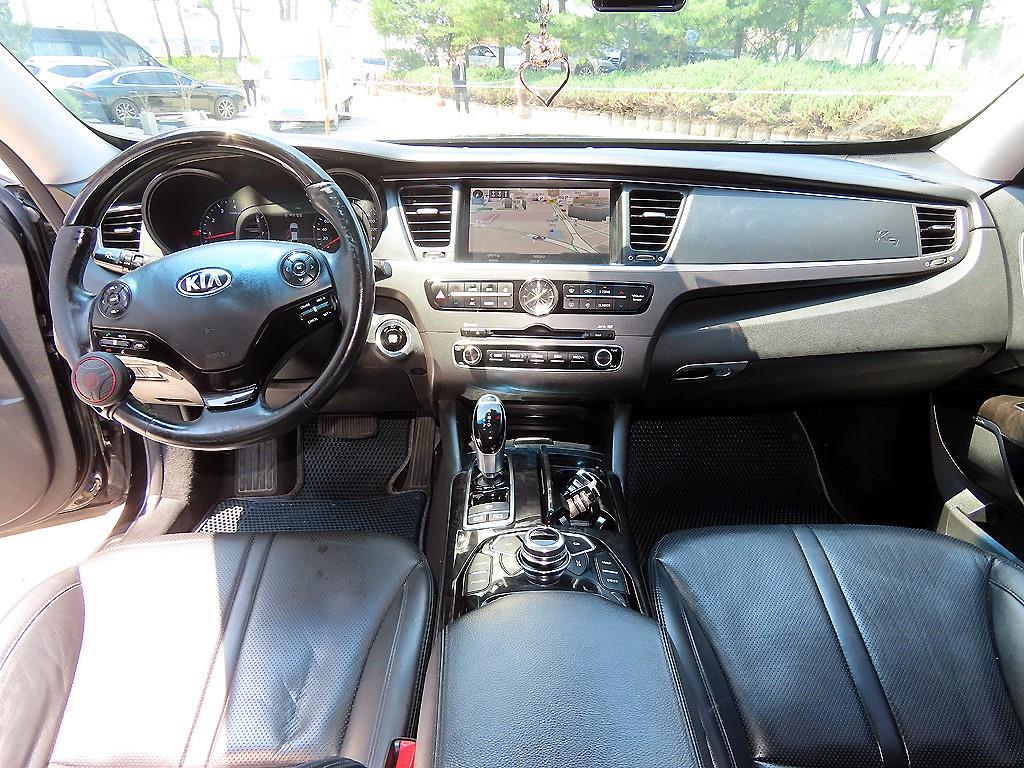
Hyundai and Kia jointly account for over 80% of Korean used vehicle exports. They share platforms, engines, and supply chains, so reliability profiles are essentially equivalent within matching generations.
The main differentiator at the brand level: Kia has the Carnival (no Hyundai equivalent), making Kia the dominant choice for commercial passenger transport. Hyundai has the Genesis sub-brand for luxury, so Hyundai dominates upmarket sedan and luxury SUV imports.
For most use cases, choose by specific model fit rather than brand preference. The Tucson and Sportage are essentially interchangeable; the Elantra and Cerato are essentially interchangeable; the Sorento and Santa Fe are essentially interchangeable.
Genesis: Korean Luxury at Mid-Market Price
Genesis was spun off as Hyundai’s separate luxury brand in 2015. The lineup competes directly with Mercedes-Benz, BMW, and Audi at significantly lower price points in both new and used markets.
Genesis G80 (Mid-Size Luxury Sedan)
The flagship sedan. Competes with Mercedes E-Class, BMW 5-Series, Audi A6. The 2nd generation (2017–2020) and current 3rd gen (2021+) are highly rated for build quality and refinement.
FOB Korea (2018–2020 G80): $18,000–$32,000. Equivalent used Mercedes E-Class or BMW 5-Series from the same year: $35,000–$55,000.
Genesis GV70 / GV80 (Luxury SUVs)
The SUV variants — GV70 (mid-size) and GV80 (full-size). Newer entries (2020+), so used inventory is still limited. Strong choice for upscale African and Middle Eastern markets where luxury SUV demand is high.
FOB Korea (2021–2022 GV70): $25,000–$40,000. Equivalent BMW X3 or Mercedes GLC: $40,000–$65,000.
Genesis G70 (Compact Luxury Sedan)
The smallest Genesis sedan. Competes with BMW 3-Series and Mercedes C-Class. 2018–2020 first generation offers the best used value.
FOB Korea: $15,000–$28,000.
KG Mobility (Formerly SsangYong): Diesel SUV Specialty
SsangYong rebranded to KG Mobility in 2023 after restructuring. The brand specializes in rugged diesel SUVs with off-road capability — a niche the major Korean brands don’t directly cover.
KG Mobility Rexton (Full-Size SUV)
Body-on-frame full-size SUV with genuine off-road capability. Competes with Toyota Land Cruiser Prado, Mitsubishi Pajero. 2.2 diesel engine is the standard export choice — durable, well-suited to African road conditions.
The 2018–2022 Y400/Y450 generation Rexton is the export sweet spot. FOB Korea: $14,000–$22,000.
KG Mobility Korando (Compact SUV)
Mid-size SUV with 4×4 capability. Diesel engine standard. Less refined than Tucson/Sportage but more capable off-road.
FOB Korea (2018–2021 generation): $7,500–$12,500.
KG Mobility Tivoli (Subcompact Crossover)
Entry-level KG crossover. 1.6L petrol and 1.6L diesel options. Distinctive boxy styling.
FOB Korea: $5,500–$9,500.
“The KG Mobility (SsangYong) Rexton is one of the most-overlooked Korean export options. For markets where genuine off-road capability matters — rural Sub-Saharan Africa, mountain regions, dirt roads beyond major cities — it delivers Land Cruiser-comparable function at half the price.”
GM Korea (Chevrolet, Daewoo)
Formerly known as Daewoo, now GM Korea selling under the Chevrolet brand for export. Lower volume than Hyundai/Kia but specific models have strong African market presence.
Chevrolet Spark (City Car)
Compact city car. Direct competitor to Kia Picanto and Hyundai i10. Lower retail price; slightly weaker parts availability in some African markets.
FOB Korea: $3,000–$5,500.
Chevrolet Captiva (Mid-Size SUV)
Mid-size SUV with 7-seat configurations. Diesel variants are robust. Best for budget-conscious family SUV buyers.
FOB Korea: $7,500–$12,000.
Chevrolet Cruze (Compact Sedan)
Mid-market compact sedan. Strong used inventory available. Lower brand prestige than Hyundai Elantra equivalents but priced accordingly.
FOB Korea: $5,000–$8,500.
Renault Korea (Renault Samsung Motors)
Renault’s Korean subsidiary produces market-specific variants with French-Korean platform mixing. Some interesting options for specific market needs.
Renault Samsung SM6 (Mid-Size Sedan)
Based on Renault Talisman with Korean trim packaging. Competitive alternative to Sonata/Optima at slightly lower used pricing.
FOB Korea: $7,000–$11,000.
Renault Samsung QM6 (Mid-Size SUV)
Korean-market version of Renault Koleos. 2.0L petrol and 1.7L diesel options. Decent alternative to Tucson/Sportage for buyers wanting French design language at Korean reliability infrastructure.
FOB Korea: $9,000–$14,500.
Brand Selection by Use Case
Match brand and model to your specific use case rather than picking by brand preference alone:
| Use Case | Best Choice | Alternative |
|---|---|---|
| Daily family car (urban roads) | Hyundai Tucson TL or Kia Sportage QL | Renault QM6, Chevrolet Captiva |
| Taxi / ride-share fleet | Hyundai Elantra AD or Kia Cerato BD | Hyundai Accent, Chevrolet Cruze |
| Commercial passenger transport | Kia Carnival YP/KA4 with 2.2 CRDi | Hyundai Starex H-1 |
| Off-road / rural roads | KG Mobility Rexton | Hyundai Santa Fe (mild off-road only) |
| Luxury daily driver | Genesis G80 or GV70 | Hyundai Sonata top trim |
| Budget city car | Kia Picanto JA | Chevrolet Spark, Hyundai i10 |
| Family SUV (mixed road) | Hyundai Santa Fe TM 2.2 CRDi | Kia Sorento UM 2.2 CRDi |
Korean Hybrid and Electric Options
Newer Korean vehicles include strong hybrid and electric variants worth considering for environmentally-conscious markets:
- Hyundai Ioniq 5 (BEV): Mid-size electric crossover, 2021+. Strong export presence in markets with EV charging infrastructure (RSA, Mauritius, some Caribbean).
- Hyundai Tucson Hybrid (2021+ TM): Petrol + electric. Best for markets with moderate charging infrastructure.
- Kia Niro (Hybrid + EV + PHEV variants): Compact crossover. The hybrid variant offers excellent fuel economy in mixed use.
- Kia EV6 (BEV): Electric crossover. Premium pricing; limited markets currently support widespread EV ownership.
- Genesis Electrified G80 / GV70: Luxury EVs. Niche export market.
For most African markets in 2026, traditional petrol and diesel powertrains remain the practical choice — EV charging infrastructure outside major cities is still developing. South Africa and Mauritius have the most-developed EV ecosystems among African destinations.
Brand-Level Cost Comparison: Same Configuration Across Brands
Approximate FOB Korea prices for equivalent 2018–2019 compact SUVs in similar trim and mileage:
| Model | Brand Tier | FOB Korea | Best For |
|---|---|---|---|
| Hyundai Tucson TL | Mainstream | $8,000–13,000 | Mass market, best parts availability |
| Kia Sportage QL | Mainstream | $7,500–12,000 | Slightly cheaper than Tucson, identical platform |
| Renault QM6 | Mainstream alt | $7,500–11,500 | Different styling, slightly weaker parts |
| Chevrolet Captiva | Budget | $6,500–10,500 | Lowest entry price, 7-seat option |
| KG Mobility Korando | Off-road specialty | $7,500–11,500 | Genuine 4×4 capability |
| Genesis GV70 | Luxury | $20,000–30,000 | Premium positioning, low used-market saturation |
Cross-Brand Engine Reliability Quick Reference
- Avoid: Hyundai/Kia Theta II GDI (2.0L and 2.4L, 2011–2018) — engine code G4K series
- Recommended: Hyundai/Kia 1.6L Gamma turbo (G4FJ, G4FD) — different engine family
- Recommended: Hyundai/Kia 2.2 CRDi diesel (D4HB, D4HA) — most reliable engine in the lineup
- Recommended: Hyundai/Kia 1.6L MPI (G4FA, G4FC) — older but proven
- KG Mobility 2.2 diesel: Different engine family, reliable, well-suited to African conditions
- Chevrolet 1.4L turbo: Decent reliability if maintained
- Renault 1.7 dCi: French diesel, robust but requires clean fuel
Common Brand-Selection Mistakes
1. Defaulting to Hyundai/Kia without considering specialty alternatives. KG Mobility Rexton for off-road, Genesis for luxury, Chevrolet for entry-budget — sometimes the better fit.
2. Overlooking the Carnival’s commercial economics. The 9-seat Carnival is dominant in fleet passenger transport for a reason. Don’t import a 5-seat SUV for a use case the Carnival is purpose-built for.
3. Buying lower-tier brand for short-term savings without TCO math. Save $1,500–2,500 at purchase, spend $3,000–5,000 extra in parts and delays over 3 years. Calculate total cost of ownership.
4. Confusing brand reliability with model reliability. The same brand can have great and problem-prone models in the same year. Always research the specific generation and engine code.
5. Not factoring brand prestige into resale strategy. Hyundai and Kia resell broadly. Genesis resells to a smaller premium market. KG Mobility resells to off-road buyers. Match the brand to your local resale target.
Frequently Asked Questions
Which Korean car brand has the best parts availability in Africa?
Hyundai and Kia tied — both have authorized dealer networks in every major African capital plus mature aftermarket parts supply chains. Genesis parts route through Hyundai networks. KG Mobility, Chevrolet, and Renault Korea have less-developed parts pipelines and longer delays for non-stock items.
Is Genesis worth importing for African markets?
In upscale urban markets (Lagos VI, Johannesburg, Cape Town, Accra East Legon, Nairobi Westlands) — yes. Genesis at half the price of equivalent Mercedes or BMW resells very well to upscale buyers familiar with the brand. In smaller-city markets where Genesis isn’t recognized, you may struggle at resale.
What’s the cheapest Korean used car to import?
Kia Picanto JA or Chevrolet Spark in the city car category — FOB Korea $3,000–$5,500. Total landed cost in African markets typically $6,500–$10,500 depending on destination. Best for budget-conscious daily transport rather than premium positioning.
Are KG Mobility (SsangYong) parts widely available?
Moderate availability — limited to major African cities with established 4×4 specialist garages. Smaller markets may require 2–4 week parts delays for non-stock items. Most consumable parts (filters, brake pads, suspension bushings) are stocked widely; engine-specific parts may require ordering.
Should I avoid the Theta II engine across all Korean brands?
Yes, regardless of brand. The Theta II GDI engine appears in Hyundai (Sonata, Santa Fe, Tucson, Optima Hybrid) and Kia (Optima, Sorento, some Sportage). Engine code verification is brand-independent — same G4K series codes to avoid across both brands.
Are Renault Korea vehicles a good budget alternative to Hyundai/Kia?
Mixed. The QM6 SUV and SM6 sedan are decent vehicles with different styling. Parts availability is the main concern — Renault parts in African markets sometimes route through general European distribution rather than dedicated Korean export pipelines. Recommended for buyers comfortable with longer parts-delay windows.
Where can I see verified inventory across all Korean brands?
Browse SK AutoSphere — verified Korean used inventory covering Hyundai, Kia, Genesis, KG Mobility, Chevrolet, and Renault Korea. Every listing includes brand-specific verification (engine codes, recall history, manufacturer documentation) plus Pricing Oracle benchmarks for African and overseas markets.
Last updated: May 2026
Sourcing Korean stock for your next container? Tell us the destination port, the model year you are targeting and the spec, and we come back with matched units and a landed figure per unit. Start at SK AutoSphere, or browse the parts catalogue.