Best Used Hyundai Models
- Best compact sedan: Hyundai Elantra (Avante) AD generation (2017–2020) — proven reliability, easy parts availability, fuel-efficient
- Best compact SUV: Hyundai Tucson TL generation (2016–2020) — strongest seller for African markets, durable
- Best mid-size SUV: Hyundai Santa Fe DM (2013–2018) or TM (2019+) — workhorse family choice
- Critical to verify: Avoid 2.0L and 2.4L Theta II GDI engines from 2011–2018 (recall history); 1.6L and 2.0L MPI engines from the same period are safe. SK AutoSphere verifies engine type during pre-export inspection
Hyundai is the most-imported used-car brand across African and Caribbean markets, with the Elantra, Tucson, and Santa Fe leading by volume. But not every Hyundai model from every year is equal — engine recalls, transmission generation differences, and trim-level reliability vary significantly across the catalog.
This guide ranks the best Hyundai used models for export markets by category, identifies the specific generations and engine codes to look for (and avoid), and explains the suitability factors for African-market resale and durability.
The short version
- Three factors drive Hyundai’s market share in African and overseas import markets: Parts availability.
- Compact Sedan: Hyundai Elantra (Korean name: Avante) The single most-imported Hyundai model across African markets.
- Between 2011 and 2018, Hyundai (and Kia) produced the Theta II GDI engine in 2.0L and 2.4L variants.
- The diesel-vs-petrol choice depends on three factors: fuel availability and quality in your country, intended use, and long-term ownership timeline.
Why Hyundai Dominates African Used-Car Imports
Three factors drive Hyundai’s market share in African and overseas import markets:
Parts availability. Hyundai has authorized dealer networks in every major African capital plus established aftermarket parts supply chains. A Tucson breakdown in Lagos or Accra is repairable with same-week parts; the same isn’t true for European used cars at the same price point.
Engine longevity (with engine-type caveats). Hyundai’s MPI and 1.6L turbo engines routinely deliver 250,000–350,000 km of service. The diesel CRDi engines run even longer with proper maintenance. The Theta II GDI engine generation (2011–2018) is a notable exception that needs explicit avoidance.
Cost-to-resale ratio. A 5-year-old Hyundai in good condition retains 50–60% of its original retail value in African markets — better than equivalent VW, Renault, or Peugeot at similar age. Korean export pricing keeps the entry-cost low, and the retained value at resale makes total ownership cost favorable.
Best Hyundai Models by Category
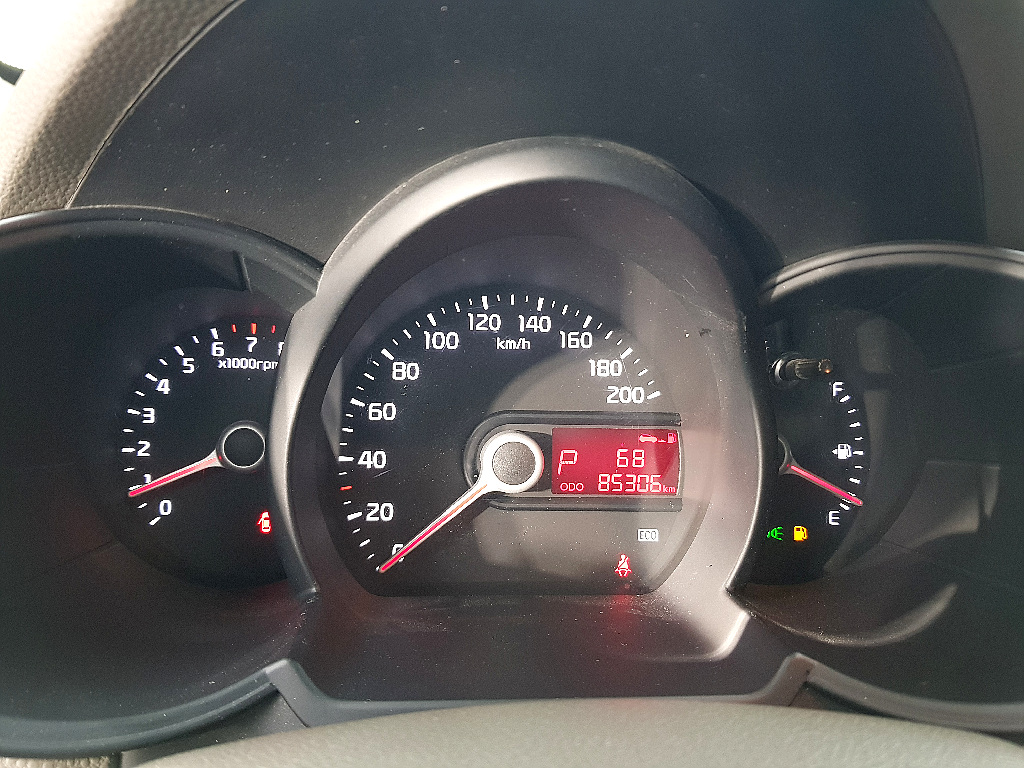
Compact Sedan: Hyundai Elantra (Korean name: Avante)
The single most-imported Hyundai model across African markets. The Elantra is positioned as Hyundai’s volume compact and combines low ownership cost with adequate space for taxi service or family use.
| Generation | Years | Notes |
|---|---|---|
| MD (5th gen) | 2011–2016 | Avoid 2.0L GDI variant. 1.6L MPI is solid. Common CVT issues on early years. |
| AD (6th gen) | 2017–2020 | Best balance for African market. 1.6L MPI + 6AT. Reliable. |
| CN7 (7th gen) | 2021–present | Newer model, premium pricing, less price advantage for typical importers. |
Sweet spot: 2018–2020 AD Elantra with 1.6L MPI and standard 6AT, 60,000–90,000 km, grade 3.5–4. FOB Korea typically $5,500–$7,500.
Mid-Size Sedan: Hyundai Sonata
The Sonata is larger, more comfortable, and pricier than the Elantra. Common in Caribbean markets and as upscale family vehicles in larger African cities.
- YF (6th gen, 2010–2014): Solid 2.4L MPI engine. Avoid 2.0L GDI Theta II variants from this generation.
- LF (7th gen, 2015–2019): Strong choice. 2.0L MPI is reliable. Avoid 2.0L GDI Theta II.
- DN8 (8th gen, 2020+): Newer styling, more technology. Higher cost.
Sweet spot: 2017–2019 LF Sonata 2.0L MPI, $7,000–$10,500 FOB Korea.
Compact SUV: Hyundai Tucson
The leading compact SUV import for African markets — combines higher ground clearance for road conditions with manageable running costs.
- IX35 / LM (2nd gen, 2010–2015): Reliable older option. Verify 2.0L is not Theta II. 2.0 CRDi diesel is excellent if available.
- TL (3rd gen, 2016–2020): Best choice for current African market import. 1.6L turbo (Gamma engine) is reliable. 2.0L CRDi diesel exceptional.
- NX4 (4th gen, 2021+): Latest generation, premium pricing.
Sweet spot: 2018–2020 TL Tucson 1.6T or 2.0 CRDi, 70,000–100,000 km, $8,500–$12,500 FOB Korea.
Mid-Size SUV: Hyundai Santa Fe
The family SUV workhorse — 7-seater versions especially popular in larger African households and Caribbean markets.
- CM (2nd gen, 2006–2012): Older but durable. 2.2 CRDi diesel is exceptional for long service life.
- DM (3rd gen, 2013–2018): Strong all-rounder. Avoid 2.4L GDI Theta II; the 2.2L CRDi diesel is the standout engine choice.
- TM (4th gen, 2019–2023): Modern equipment, more electronics. 2.2 CRDi remains the recommended engine.
Sweet spot: 2017–2019 DM or 2020–2022 TM Santa Fe with 2.2 CRDi diesel, $11,000–$15,500 FOB Korea.
Subcompact: Hyundai Accent / Verna
Entry-level Hyundai for cost-conscious markets. Common in Kenya, Tanzania, and East Africa for taxi and rideshare use.
- RB (4th gen, 2011–2017): 1.4L and 1.6L MPI engines. Reliable, basic, repairable.
- HC (5th gen, 2018+): Improved trim and infotainment. Higher cost.
Sweet spot: 2016–2018 RB Accent, 1.4L MPI, $3,500–$5,500 FOB Korea.
Large MPV: Hyundai Starex / H-1 / iLoad
Workhorse 9-12 passenger van. Heavily used in West African public transport, Caribbean tour operators, church and school transportation across Sub-Saharan Africa.
- TQ (2007–2018): 2.5 CRDi diesel is the export-market standard. Reliable, easy to fix, robust running gear.
FOB Korea: $7,500–$13,000 depending on year and seat configuration.
Subcompact SUV: Hyundai Kona
Newer compact crossover, growing in popularity. Most useful in markets where parking is tight (urban East Africa, Caribbean).
- OS (1st gen, 2018–2022): 1.6L turbo (Gamma) is reliable. Avoid early production CVT issues.
FOB Korea: $9,000–$13,500.
“The most-important reliability variable when buying a used Hyundai is not the model year but the engine code.
Theta II GDI engines from 2011 to 2018 have well-documented bearing failure issues — verifying the specific engine variant before purchase prevents the most common buyer’s-remorse case in the African import market.”
Theta II Engine: The Hyundai You Must Verify
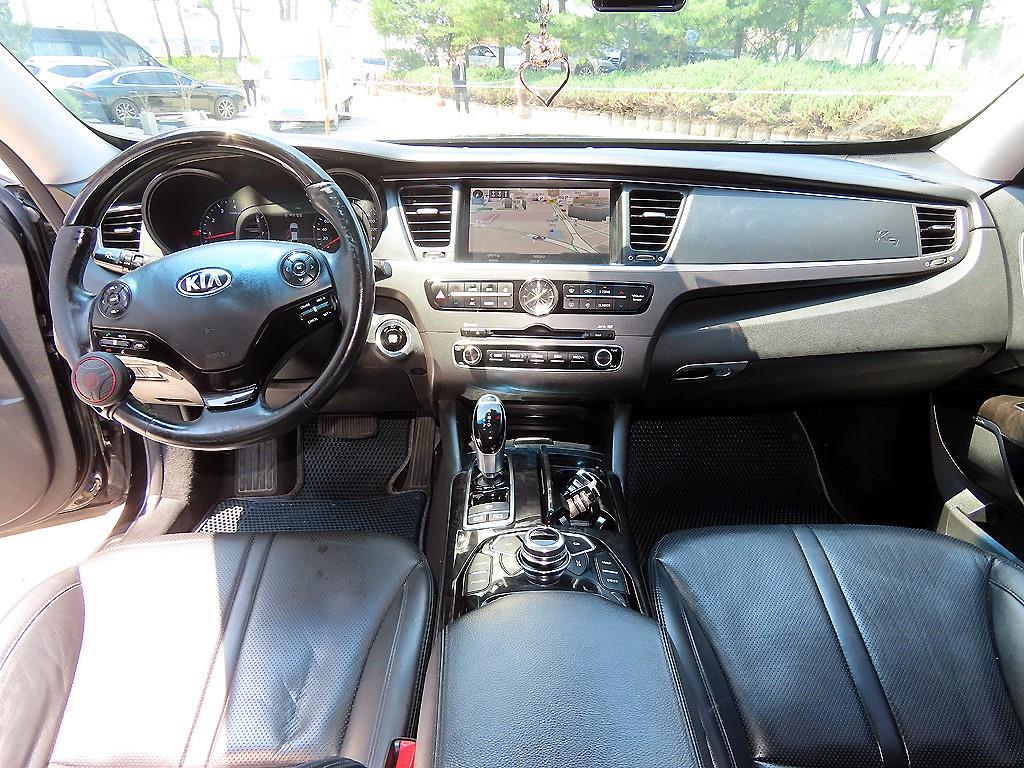
Between 2011 and 2018, Hyundai (and Kia) produced the Theta II GDI engine in 2.0L and 2.4L variants. The engine has documented manufacturing defects in the connecting-rod bearings that can cause catastrophic failure, often with no warning signs.
Hyundai and Kia conducted multiple recalls in the US, Korea, and Europe, but many Korean-domestic vehicles were sold to export markets before the recall coverage extended to second-hand buyers. The recall is not transferable to overseas owners in most cases.
Affected vehicles and engine types:
- Hyundai Sonata YF and LF — 2.0L and 2.4L GDI (Theta II)
- Hyundai Santa Fe DM — 2.4L GDI (Theta II)
- Hyundai Tucson IX35 and TL — 2.0L and 2.4L GDI (Theta II)
- Hyundai Sonata Hybrid — 2.0L GDI Hybrid (Theta II variant)
- Kia Optima — 2.0L and 2.4L GDI (Theta II)
- Kia Sorento UM — 2.4L GDI (Theta II)
Safe alternatives in the same model lineup:
- 1.6L Gamma turbo (Tucson TL, Elantra AD) — different engine family
- 2.0L MPI (non-GDI) — older injection system, more reliable
- 2.2L CRDi diesel — entirely different engine family, excellent reliability
- 1.6L MPI (Elantra MD, Accent) — different engine family
Diesel vs Petrol for African Markets
The diesel-vs-petrol choice depends on three factors: fuel availability and quality in your country, intended use, and long-term ownership timeline.
Diesel (CRDi) advantages for African markets:
- Better fuel economy on long-distance routes
- Lower engine wear at sustained loads (taxi, transport service use)
- Higher torque for fully-loaded passenger or goods transport
- Hyundai 2.2 CRDi is widely regarded as one of the most-durable Korean engines
Diesel disadvantages:
- Diesel quality varies significantly across African markets — DPF (diesel particulate filter) systems require low-sulfur diesel that’s not always available
- Higher repair cost when failures occur
- Modern CRDi systems (post-2015) are sensitive to fuel contamination
In markets where ULSD (ultra-low-sulfur diesel) is widely available (South Africa, Mauritius, Kenya’s main cities), diesel is the recommended choice. In markets where diesel quality is inconsistent (some Sub-Saharan rural areas, parts of West Africa), petrol MPI engines are the safer reliability choice.
What Trim Level to Look For
Korean-market Hyundai trims often have feature sets that exceed equivalent-year US or European trims. Common Korean trim levels:
- Smart / Modern: Base trim, manual seats, manual climate, basic infotainment — sufficient for taxi or fleet use
- Premium / Style: Mid-trim, automatic climate, larger infotainment, parking sensors — good family-vehicle balance
- Inspiration / Prestige: Top trim, leather, panoramic sunroof, advanced driver assistance — premium for upscale resale
For pure cost optimization, mid-trim (Premium/Style) usually offers the best price-to-feature ratio. Top trims carry premium pricing that doesn’t always recover at resale in price-sensitive African markets.
Realistic Total Cost for the Top 3 Hyundai Imports
Approximate landed costs for the three most-imported configurations for African markets, all 2018–2019 model years, grade 3.5, 70,000 km:
| Model + Engine | FOB Korea | Ghana Landed | Nigeria Landed | Kenya Landed |
|---|---|---|---|---|
| Elantra AD 1.6 MPI | $5,000–8,000 | ~$8,000–14,000 | ~$10,000–16,000 | ~$10,000–16,000 |
| Tucson TL 1.6T | $8,000–13,000 | ~$12,000–19,000 | ~$14,000–22,000 | ~$14,000–23,000 |
| Santa Fe DM 2.2 CRDi | $10,000–17,000 | ~$15,000–24,000 | ~$17,000–27,000 | ~$18,000–28,000 |
Common Hyundai Purchase Mistakes
1. Buying a Theta II engine model without verification. The single biggest reliability mistake. Always verify the engine code before deposit.
2. Choosing diesel for markets with poor fuel quality. Modern CRDi diesels need clean fuel. Match engine type to local conditions.
3. Buying based on year alone without considering generation. A 2017 Elantra MD and a 2017 Elantra AD are different cars with different reliability profiles (both years existed simultaneously during the transition).
4. Skipping the transmission verification. Some years/markets used CVT, others used standard automatic. CVT vehicles have different long-term maintenance profiles.
5. Overpaying for top trim. Mid-trim usually delivers the best long-term value for African market resale.
Frequently Asked Questions
What’s the most-imported Hyundai model in African markets?
The Elantra (Avante) holds the top volume position across West and East African markets, followed by the Tucson and Santa Fe in family vehicle categories. The Starex / H-1 dominates commercial passenger transport.
How do I verify the engine type isn’t a Theta II?
Engine code stamped on the block: Theta II GDI codes start with “G4K” (e.g., G4KD, G4KE, G4KH, G4KJ). Non-Theta-II engines use different code families (G4FD/G4FJ for Gamma turbo, D4HB/D4HA for diesel CRDi, G4FA for older MPI). Verified-vehicle services include this check as standard inspection.
Should I buy automatic or manual transmission?
Automatic is the dominant African market preference and resells better in most countries. Manual is cheaper at purchase but harder to resell. Stick with automatic unless your target market specifically prefers manual.
How long do Hyundai engines last with proper maintenance?
Non-Theta-II Hyundai gasoline engines routinely deliver 250,000–350,000 km. Hyundai 2.2 CRDi diesel engines run 350,000+ km in commercial fleet use. The maintenance variable is realistic — neglected oil changes shorten any engine’s life significantly.
Are Hyundai parts widely available across Africa?
Yes — every major African capital has authorized Hyundai dealer plus thriving aftermarket networks for parts. Hyundai is one of the easiest brands to maintain in African markets after Toyota. Some smaller markets (DRC, Madagascar) have parts delays of 1–3 weeks for non-stock items.
What’s the safest year range to buy a used Hyundai for Africa?
2016–2020 model years offer the best balance of modern features, proven reliability post-Theta-II era, parts availability, and acceptable import duty in age-limited markets. Newer than 2020 carries premium pricing; older than 2016 may run into age limits in Ghana, Nigeria, Kenya.
How do I get verified Hyundai listings without travelling to Korea?
Browse current verified inventory on SK AutoSphere — AI-assisted condition assessment, document inspection, engine-code verification, and regional pricing benchmarks. Individual buyers can browse listings; professional dealers can register for bulk listings and analytics through the Command Center.
Last updated: May 2026
Sourcing Korean stock for your next container? Tell us the destination port, the model year you are targeting and the spec, and we come back with matched units and a landed figure per unit. Start at SK AutoSphere, or browse the parts catalogue.