Cotonou as a Korean Vehicle Gateway: Benin’s Transit Trade and Its Policy Risk
The Port Autonome de Cotonou moves more used vehicles than its national market could ever absorb. Benin has a small population and a modest domestic fleet, yet its vehicle terminal is one of the busiest on the West African coast.
The reason is transit: Cotonou is the sea gateway for Niger, a competing gateway for Burkina Faso and Mali, and — historically and informally — a staging point for units that end up across the Nigerian border.
For an operator sourcing left-hand-drive Korean stock, Benin is attractive on paper and needs to be understood carefully in practice. Benin drives on the right, so Korean auction units are registrable.
The complication is that the port’s economics are built on a trade whose policy environment is not under Benin’s control.
The short version
- The first decision at Cotonou is not which clearing agent to appoint.
- A meaningful share of what has historically cleared Cotonou has ended up in Nigeria.
- Set the policy risk aside and the port has genuine operational advantages for Korean-origin cargo: Vehicle-handling depth.
- The ECOWAS transit regime that underpins the inland leg is under strain.
Two declarations, two completely different files
The first decision at Cotonou is not which clearing agent to appoint. It is whether the unit is entering Benin for home consumption or moving through under transit, and the two paths diverge immediately.
Home consumption means Beninese import duty, VAT and the domestic vehicle taxes apply, assessed on CIF value under the ECOWAS Common External Tariff structure. The unit is registered in Benin and can be sold domestically.
Transit means the unit moves under a customs transit regime with duties suspended, against a guarantee, to a declared inland destination.
The ECOWAS Inter-State Road Transit scheme — the ISRT, working from the TRIE convention — is the framework, and it requires a guarantee instrument, a sealed movement and discharge of the transit document at the destination customs office.
The failure mode is specific and expensive: a transit declaration that is never discharged. If the ISRT document is not closed out at the inland office, the guarantee is called and the duties suspended at Cotonou become payable by whoever stood behind the guarantee.
Importers who hand the inland leg to a transporter without controlling the discharge paperwork are carrying a liability they cannot see.
The Nigeria factor is a policy risk you cannot hedge

A meaningful share of what has historically cleared Cotonou has ended up in Nigeria. Nigeria’s own vehicle import policy, its tariff on used vehicles and its periodic restrictions on land-border movement of goods have made the Cotonou route commercially attractive at some points and worthless at others.
The 2019 land-border closure removed the route more or less overnight, and units already in the pipeline sat.
The lesson is not that the route is illegitimate — legitimate transit and re-export is ordinary trade. The lesson is that any business plan whose margin depends on the Benin–Nigeria land route is exposed to a unilateral policy decision with no notice period.
If Cotonou is in your routing, the demand you are serving should be demand that survives a closed land border: Niger, Burkina Faso, and the Beninese market itself.
What Cotonou is actually good at
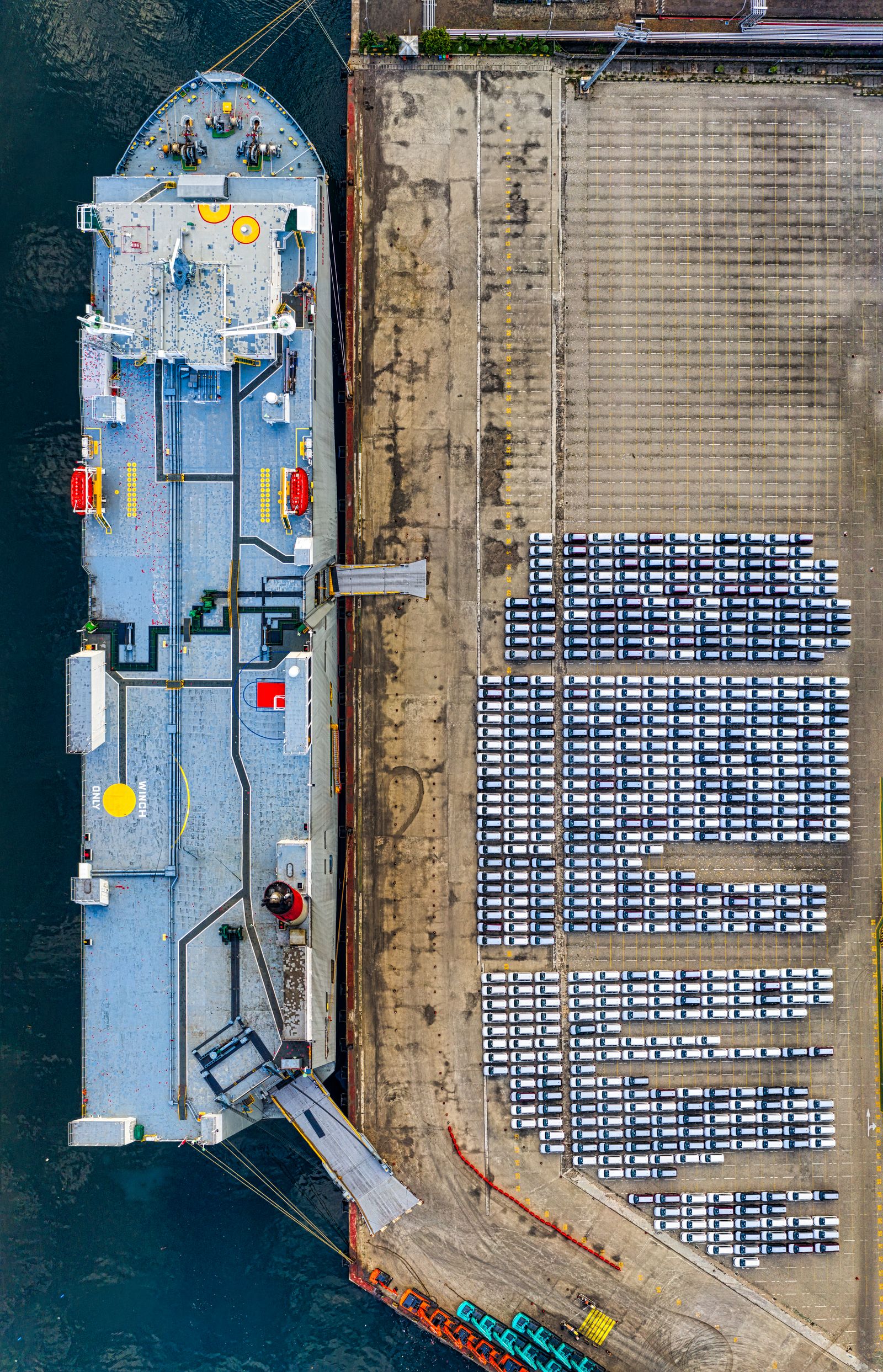
Set the policy risk aside and the port has genuine operational advantages for Korean-origin cargo:
- Vehicle-handling depth. The terminal has handled used-vehicle volume for decades, which means the yard, the surveyors and the clearing agents all know the cargo type. That is not true at every West African port.
- Corridor position for Niger. The Cotonou–Parakou–Malanville–Niamey axis is Niger’s principal import corridor, and Niger is a right-hand-traffic market that takes left-hand-drive units without modification.
- Competitive pressure with Lomé and Tema. Cotonou, Lomé and Tema compete for the same landlocked traffic, which keeps handling terms negotiable in a way they are not at a monopoly port.
The Sahel transit question has changed
The ECOWAS transit regime that underpins the inland leg is under strain. Mali, Burkina Faso and Niger announced their withdrawal from ECOWAS in January 2024 and have since formed the Alliance of Sahel States.
The transit conventions, the guarantee arrangements and the practical cooperation between customs administrations along those corridors are all downstream of a political relationship that is being renegotiated in real time.
For a Korea-to-Sahel lane this is not an abstraction. It affects which guarantee instrument your agent can use, whether an ISRT document is honoured end to end, how long a convoy waits at a border post, and whether the corridor is escorted.
Before quoting a delivered price to an inland buyer, confirm with the clearing agent what transit regime is actually operating on that corridor this month, not what the convention says.
The document set that keeps a Cotonou file moving
Whether the unit stays or transits, the core Korean-side documents are the same and their consistency is what matters:
- Commercial or proforma invoice showing the chassis number
- Bill of lading with consignee details matching the clearing entity
- Certificate of origin
- Korean export deregistration certificate
- Where the destination requires it, the pre-shipment conformity certificate for the inland market rather than for Benin
That last point is the one operators miss. A unit transiting to Niger has to satisfy Niger’s import requirements on arrival, not Benin’s.
Ordering the wrong conformity certificate — or none, because Benin did not ask for one — produces a vehicle that clears Cotonou cleanly and then stops at the inland border.
Establish the destination country’s requirements before the vessel is booked, and buy the certificate that the final customs office will actually want to see.
Sourcing Korean stock for your next container? Tell us the destination port, the model year you are targeting and the spec, and we come back with matched units and a landed figure per unit. Start at SK AutoSphere, or browse the parts catalogue.