Importing Korean Used Vehicles into Côte d’Ivoire: The Abidjan Buyer’s Playbook
Côte d’Ivoire’s vehicle import corridor has quietly become one of West Africa’s most active, yet most underserved by English-language trade guides.
Abidjan’s Port Autonome d’Abidjan handles over 20 million tonnes of cargo annually and serves as the logistics hub not just for Ivorians but for landlocked neighbours including Mali, Burkina Faso, and Niger.
For a Korean vehicle exporter, that means one container landed in Abidjan can realistically serve four markets. For an Abidjan dealer or fleet buyer, it means competition is intense and documentation shortcuts will cost you.
This guide covers exactly what Korean auction buyers and Abidjan-based importers need to know: BIVAC pre-shipment inspection, ECOWAS Common External Tariff rates, BCEAO remittance procedures, and the specific documentation sequence that clears vehicles at the Port d’Abidjan without delays.
The short version
- Abidjan’s dominant import brands have historically been Japanese (Toyota, Nissan) and French (Peugeot, Renault).
- Côte d’Ivoire is a BIVAC member country.
- There is no direct RoRo service from Busan to Abidjan as of 2026.
- Côte d’Ivoire applies the ECOWAS CET (Tarif Extérieur Commun — TEC CEDEAO).
Why do Korean vehicles suit the Ivorian market?
Abidjan’s dominant import brands have historically been Japanese (Toyota, Nissan) and French (Peugeot, Renault).
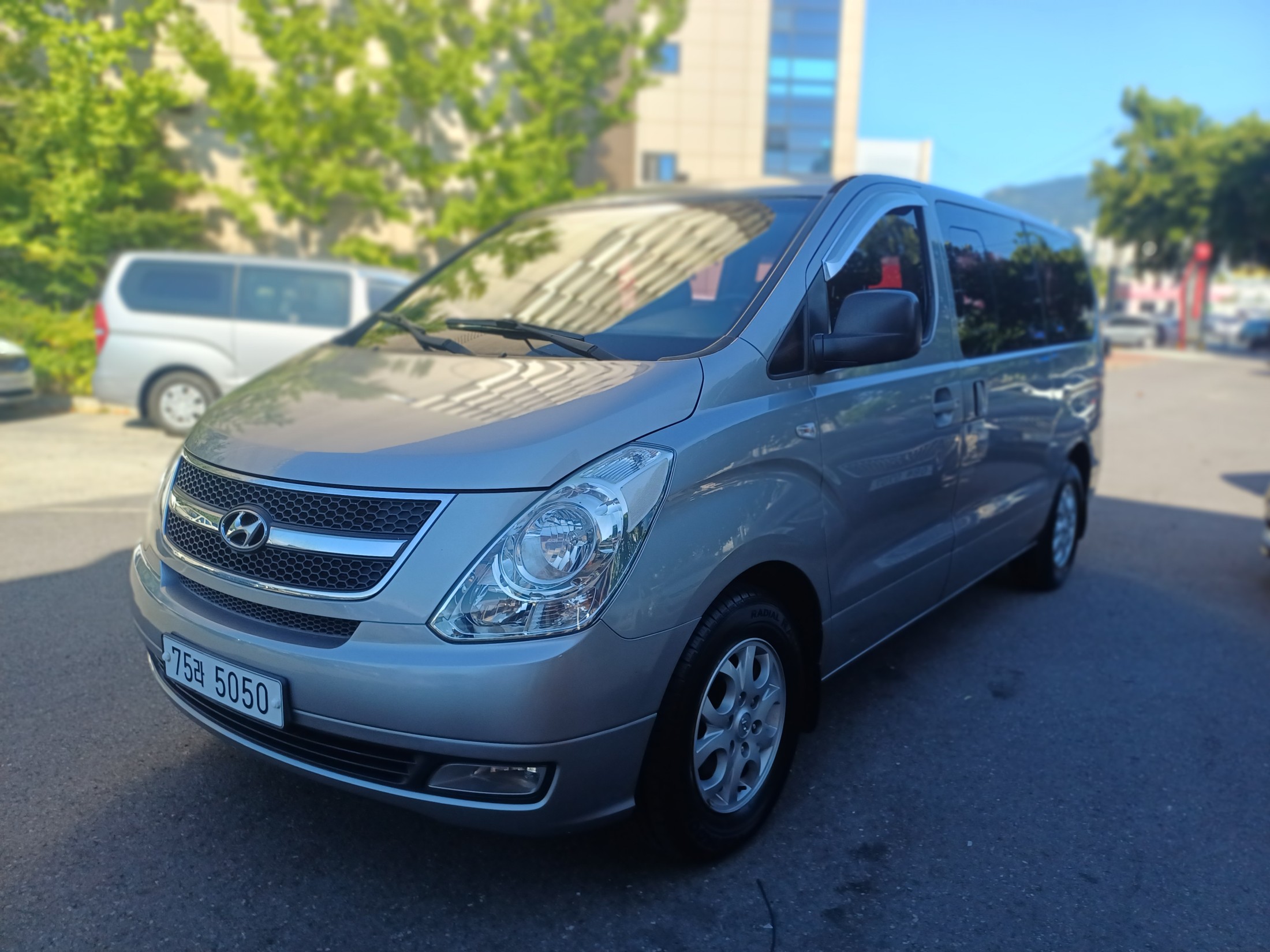
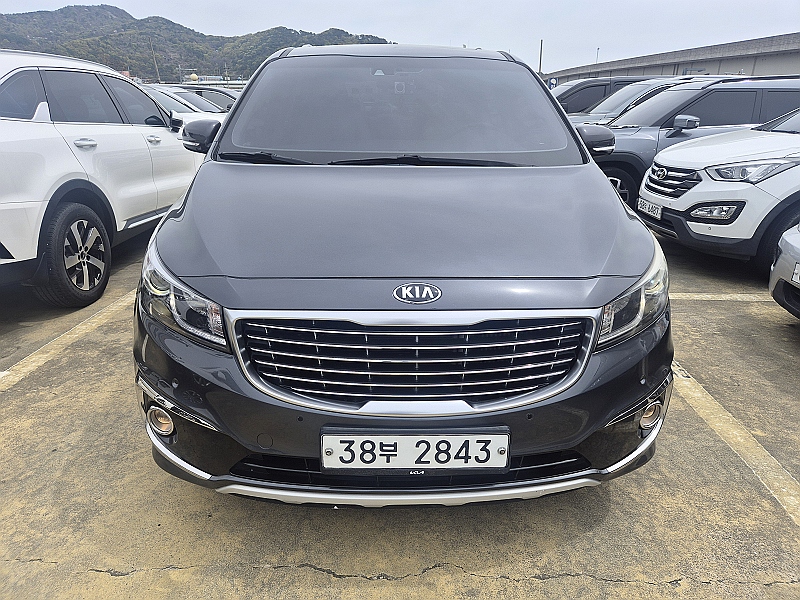
Korean makes — Hyundai and Kia above all — have taken significant share since 2018 as the Hyundai Tucson and Kia Sportage established a reputation for reliability on rough secondary roads around Yamoussoukro and in the north toward Korhogo.
Fleet buyers for mining and agribusiness operations in the interior now actively specify Korean 4WDs because spare parts availability through the Hyundai dealership on Boulevard Latrille, Abidjan, has improved dramatically.
For importers, the economics are also clearer. A 2019–2021 Hyundai Tucson with 60,000–80,000 km sourced through a Korean dealer auction (the Korean domestic listing market, or a licensed export agent) typically sits in the KRW 12,000,000–18,000,000 range (approximately $9,000–$14,000 USD at mid-2026 rates) before freight and duties.
After landing costs at Port d’Abidjan, landed-and-cleared prices range from CFA 12M to CFA 20M — still competitive against regional alternatives.
Step 1: Pre-Shipment BIVAC Inspection in Korea
Côte d’Ivoire is a BIVAC member country. BIVAC (Bureau Véritas/SGS inspection arm contracted by the Ivorian government) issues a Certificat de Vérification de Conformité (CVC) for imported goods above a value threshold. Vehicles almost always exceed the threshold and require a CVC.
What BIVAC checks:
– Vehicle identification: VIN against Korean auction sheet, odometer, colour
– Visible structural condition: no frame damage, functional lights, tyres
– Age eligibility: Côte d’Ivoire currently allows vehicles up to 7 years old for non-commercial passenger cars (verify with your customs broker at time of import — this limit has been debated in UEMOA circles)
– Export compliance: Korean export certificate (자동차양도증명서) present
The BIVAC process from Korea:
Your Korean export agent or freight forwarder books the BIVAC inspection at one of the SGS Korea inspection points. Average lead time is 3–5 business days after booking. The CVC is issued electronically and must accompany the Bill of Lading.
Cost: Approximately $150–280 USD per vehicle at the Korean inspection point, paid by the exporter/shipper.
If a vehicle fails BIVAC inspection, it cannot be cleared at Abidjan customs regardless of what the Bill of Lading says. For first-time importers, this is the single biggest documentary risk — choose a Korean export partner who has BIVAC-compliant export workflow already built into their process.
Step 2: Shipping — Busan to Abidjan
There is no direct RoRo service from Busan to Abidjan as of 2026. The standard routing is:
Option A — RoRo via Dakar or Tanger Med: Vehicles are driven onto a ro-ro vessel at Busan, transit via Dakar or Tanger Med, and continue to Abidjan. Transit time: 28–35 days. Cost per vehicle: approximately $1,100–$1,600 USD FOB Busan.
Option B — Container (groupage or FCL) via a consolidation hub: 20ft container (2–3 vehicles typically) shipped from Busan via Port Said or Algeciras. Transit time: 22–32 days. Cost per container: $2,800–$4,200 USD, depending on port congestion and season.
FCL gives more control over container condition and loading quality — important for higher-value vehicles.
Routing note for Francophone West Africa buyers: If you’re importing for onward trucking to Mali or Burkina Faso, container clearance at Abidjan under the ECOWAS Transit regime is significantly smoother than routing through Lomé or Cotonou, because the Abidjan–Ouagadougou corridor (CORRIDOU) has the most active transit broker networks.
Step 3: ECOWAS Common External Tariff (CET) Duties at Port d’Abidjan
Côte d’Ivoire applies the ECOWAS CET (Tarif Extérieur Commun — TEC CEDEAO). Used passenger vehicles fall under Band 4 (35% import duty) in most cases, though the exact rate depends on HS code classification and engine displacement.
Approximate duty calculation for a passenger vehicle (Hyundai Tucson 2020, 2.0L):
| Component | Rate | Basis |
|---|---|---|
| ECOWAS CET import duty | 35% | CIF value |
| ECOWAS Community Levy (PLC) | 0.5% | CIF value |
| UEMOA Community Levy | 1.0% | CIF value |
| Statistics Tax (Redevance Statistique) | 1.0% | CIF value |
| TVA (Taxe sur la Valeur Ajoutée) | 18% | CIF + duties |
On a CIF value of CFA 8,500,000 (~$11,000–17,000 USD), the total tax burden is approximately 55–60% of CIF, landing the vehicle at CFA 13,000,000–14,000,000 before customs agent fees and port handling.
Margins are tighter than Ghana (where ECOVISTA duties run lower) but demand in Abidjan is strong enough to support it.
Critical: The Direction Générale des Douanes et Droits Indirects (DGDDI) is the Ivorian customs authority.
Their valuation desk uses the Tableau de Valeur de Référence (reference value table) for vehicles — if your declared CIF value is significantly below the reference table value for the make/model/year, they will uplift the assessment.
Korean auction buyers sometimes see this on first imports; your customs broker needs to know the current reference values before you set the commercial invoice price.
Step 4: Documentation Package for Abidjan Clearance
Assemble these before the vessel arrives — customs clearance at Port d’Abidjan begins before discharge under a pre-arrival processing (PAD) system:
- Bill of Lading (Connaissement) — original or express release
- Commercial Invoice — declared CIF Abidjan value
- Korean Export Certificate (자동차양도증명서) — original
- BIVAC Certificat de Vérification de Conformité (CVC) — mandatory
- Insurance Certificate — marine insurance for the shipment
- Packing List / Vehicle Specification Sheet — VIN, colour, engine, mileage
- Korean Auction Grade Sheet (경매 성적서) if purchased via auction — helps support valuation
Language note: All documents presented to DGDDI must either be in French or accompanied by a certified French translation. Korean auction sheets in Korean-only are routinely held up.
If your Korean export agent doesn’t automatically include a French-translated summary of the auction sheet, request it explicitly — it typically adds 2–3 days and costs $30–80 per document from an accredited translation office in Seoul or Abidjan.
Step 5: BCEAO Remittance and Payment to Korea
Côte d’Ivoire is part of the UEMOA zone and uses the CFA franc (XOF), which is pegged to the Euro. International transfers to Korea are processed in USD or EUR through correspondent banks, cleared via the Banque Centrale des États de l’Afrique de l’Ouest (BCEAO) reporting framework.
What this means for buyers:
- T/T wire transfers (the most common payment method for Korea-Africa vehicle trade) require your bank to submit a dossier de domiciliation — a package of the pro forma invoice and import authorisation — before the wire can be processed. First-time importers are sometimes surprised that they cannot simply wire money to Korea; the bank compliance step adds 3–5 business days.
- FCFA to USD/KRW conversion: Your Ivorian bank converts XOF to USD for the Korea-side transfer. Exchange margins vary significantly between Ecobank, SGBCI, and Société Générale CI — get quotes from at least two banks for transfers above $8,000–12,000 equivalent.
- Letter of Credit (LC): Rarely used for used vehicles below $24,000–36,000 CIF because LC fees (1–3% of value) erode margins. T/T with a 30% advance and 70% on B/L is standard for established Korea-Côte d’Ivoire trade relationships.
Buyer Workflow Summary
| Step | Where | Who | Timeline |
|---|---|---|---|
| Source vehicle at Korean auction (the Korean domestic listing market/the export-facing aggregators) | Korea | You + Korean export agent | Day 0–5 |
| Pay auction + export fees, obtain 자동차양도증명서 | Korea | Export agent | Day 5–10 |
| BIVAC pre-shipment inspection + CVC issued | Korea (SGS inspection point) | Export agent + BIVAC | Day 10–15 |
| Load vessel (Busan) — RoRo or container | Korea | Freight forwarder | Day 15–20 |
| Submit pre-arrival customs dossier to DGDDI | Abidjan | Customs broker | Day 30+ |
| Vessel arrives Port d’Abidjan | Abidjan | — | Day 42–55 |
| Pay duties (ECOWAS CET + TVA) at DGDDI | Abidjan | Customs broker | Day 55–60 |
| Vehicle discharge and delivery | Abidjan | Port agent | Day 60–65 |
Total end-to-end: approximately 60–70 days from auction purchase to vehicle in Abidjan.
What mistakes cost Ivorian importers money?
1. Undervaluing on the commercial invoice. DGDDI’s reference value table will uplift your assessment and flag your importer file. Consistent accurate valuation builds a clean customs record; systematic undervaluation eventually leads to enhanced examination on all your shipments.
2. Skipping BIVAC or using an invalidated CVC. Vehicles that arrive without a valid CVC are placed in a temporary customs depot at the port while the BIVAC retroactive inspection is arranged — at your cost, typically $400–600 USD, plus port storage fees that accrue daily.
3. Ignoring the 7-year age limit. Importing a 2016 vehicle in 2024 is compliant; a 2015 vehicle may not be. Double-check the cut-off date in the year you’re importing — Ivorian authorities have tightened enforcement intermittently.
4. No French-translated documents. Even when customs agents can read English, the DGDDI processing system requires French-language inputs. Build translation into your timeline.
Working with SK AutoSphere
SK AutoSphere maintains export-ready vehicle packages that include BIVAC-compliant inspection reports, Korean auction sheet translations, and documentation summaries pre-formatted for French-speaking customs markets. For Abidjan importers, this reduces the documentation prep burden significantly and shortens clearance timelines.
Request a quote or ask about Côte d’Ivoire–specific sourcing: [contact form / WhatsApp concierge].
Research note: Duty rates are based on the ECOWAS TEC CEDEAO tariff schedule and UEMOA supplementary levies as understood at July 2026. Always verify current rates with a licensed Ivorian customs broker (commissionnaire en douane agréé) before finalizing your import budget.
Sourcing Korean stock for your next container? Tell us the destination port, the model year you are targeting and the spec, and we come back with matched units and a landed figure per unit. Start at SK AutoSphere, or browse the parts catalogue.