Importing a Korean Used Vehicle into Tanzania: TRA Duty Calculation, Dar es Salaam Port, and the 10-Year Age Limit Explained
Category: Import Guide | Market: East Africa — Tanzania | Word count: ~1,500 | Status: DRAFT — DO NOT PUBLISH
Tanzania is quietly becoming one of the most important entry points for Korean used vehicles heading into East and Central Africa.
The Port of Dar es Salaam sits on the TAZARA rail corridor and is within trucking range of Zambia, Malawi, the DRC’s eastern provinces, and Burundi — making it a hub not just for Tanzanian buyers but for regional importers who prefer DSM’s faster container turnaround over Mombasa’s chronic congestion.
If you are sourcing a Korean SUV, pickup, or commercial van for any market in that corridor, understanding Tanzania Revenue Authority (TRA) duties, the 10-year age ceiling, and the specific steps at TICTS (Tanzania International Container Terminal Services) is not optional knowledge — it is the difference between a landed vehicle and a stranded one.
This guide walks through the real procedure as of 2025-2026: duty structure, TRA Customs Import Value methodology, banking steps for duty payment, and what to expect at TICTS Berths 12–18.
The short version
- Tanzania’s Motor Vehicle (Prohibition of Importation) Regulations cap the age of imported used vehicles at 10 years from the year of manufacture.
- Tanzania applies the EAC (East African Community) Common External Tariff (CET) combined with domestic surcharges.
- TRA’s Customs Import Value is not what you paid.
- Once TRA issues your Import Declaration (ID) via the TANCIS (Tanzania Customs Integrated System) electronic portal, duty payment flows through the TRA Revenue Gateway.
The 10-Year Age Limit: Tanzania’s Hardest Rule
Tanzania’s Motor Vehicle (Prohibition of Importation) Regulations cap the age of imported used vehicles at 10 years from the year of manufacture. In 2026, that means the oldest vehicle you can legally import is a 2016 model year.
Vehicles manufactured in 2015 or earlier are prohibited outright — TRA will not assess duty on them; they will be detained at the port and either re-exported at your cost or destroyed.
This is stricter than Kenya’s 8-year rule (which counts from the year of registration, not manufacture, giving some flexibility) and far more aggressive than Uganda’s de facto regime, which applies selective enforcement rather than a hard rule.
Practical implication for Korean sourcing: On the Korean domestic listing market, Korea’s largest used-vehicle marketplace, filter by registration year 2016 or newer. Do not rely on model year alone — a “2016 model” may have been manufactured late 2015.
Request the Korean vehicle registration certificate (자동차등록증, jadongjcha deungnokjeung) and check the manufacture date (제작년월일), not just the model year printed on the listing. Korean dealers on the Korean domestic listing market will supply this document on request before you commit to an auction deposit.
Duty Structure: What TRA Actually Charges
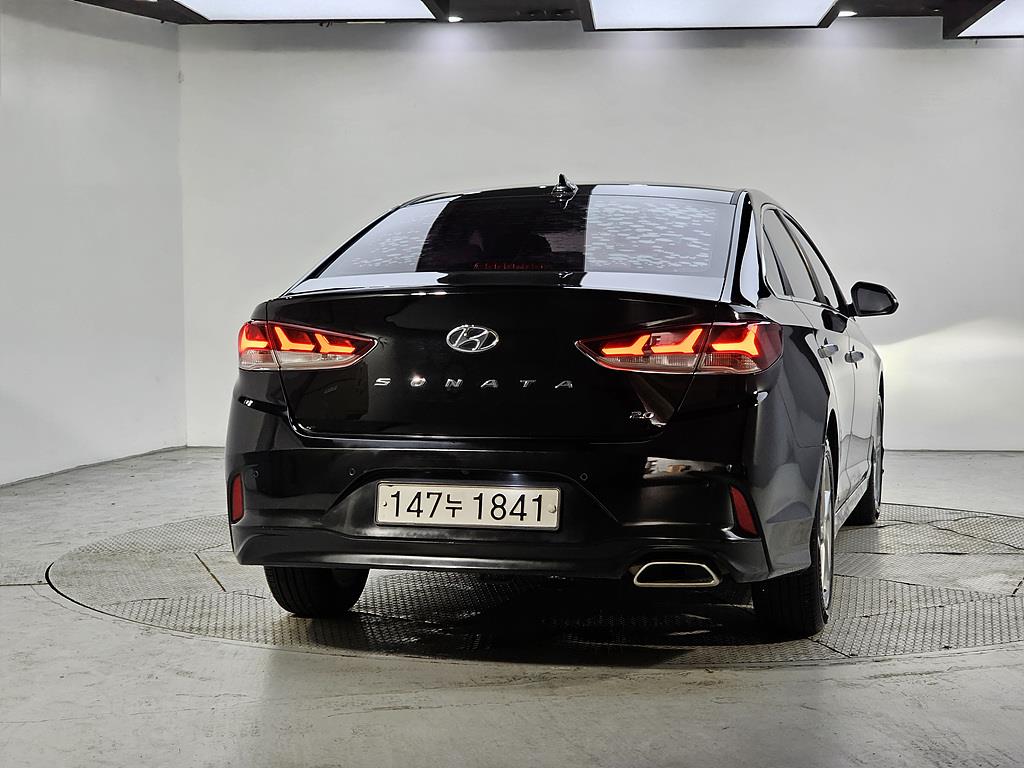
Tanzania applies the EAC (East African Community) Common External Tariff (CET) combined with domestic surcharges. For used passenger vehicles (HS heading 8703), the structure in 2025-2026 is:
| Charge | Rate | Applied On |
|---|---|---|
| Import Duty (CET) | 25% | CIF value |
| Value Added Tax (VAT) | 18% | CIF + Import Duty |
| Excise Duty | 10% (engine >2,000cc) / 5% (1,001–2,000cc) / 0% (≤1,000cc) | CIF + Import Duty |
| Port Development Levy | 1.5% | FOB value |
| Skills and Development Levy (SDL) | 3.5% | CIF value |
| Railway Development Levy (RDL) | 1.5% | FOB value |
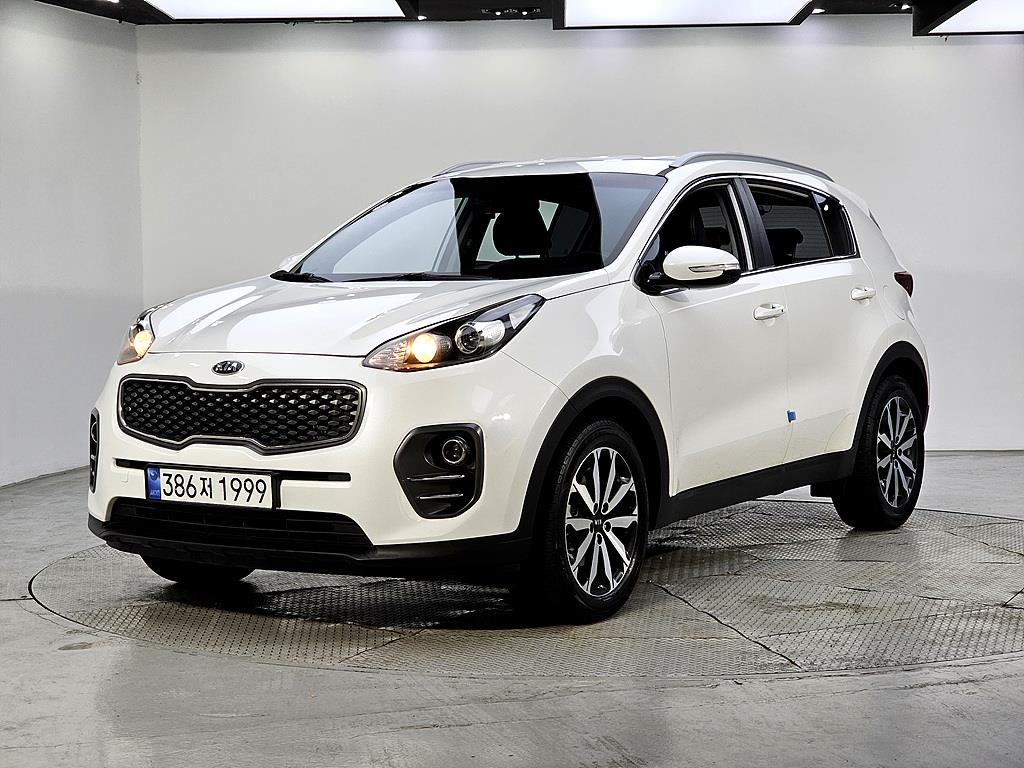
Example — 2022 Kia Sportage 1.6T (1,598cc):
– Korean dealer FOB price: KRW 21,000,000 (~$12,000–19,000)
– Busan–DSM sea freight (20ft RoRo/container): ~$1,000–2,500
– CIF Dar es Salaam: ~$13,000–21,000
– Import Duty (25%): $3,000–5,500
– Base for VAT (CIF + Duty): $17,000–26,000
– VAT (18%): $3,000–5,000
– Excise (5% on $17,000–26,000 engine ≤2,000cc): $500–1,500
– RDL (1.5% on $12,000–19,000 FOB): $100–300
– SDL (3.5% on $13,000–21,000 CIF): $400–800
– Port Development Levy (1.5% FOB): $100–300
– Total duty and levies: ~$8,000–13,000
– Estimated total landed cost DSM: ~$21,000–33,000
At current the Korean domestic listing market retail, a the Japanese export platforms-sourced equivalent 2022 Sportage lands in DSM at approximately $29,500–$31,000 after their markup.
Sourcing direct from a Korean dealer via SK AutoSphere’s export pipeline saves $2,000–$4,000 per unit at current exchange rates — the spread that makes the direct-import model viable.
How TRA Values Your Vehicle (and How to Avoid Under-Valuation Penalties)
TRA’s Customs Import Value is not what you paid. Tanzania uses a combination of WTO Transaction Value (your invoice price, if verifiable) and Karimjee Reference Values — TRA’s own internal database of average market prices for common used vehicles, maintained by the Customs and Excise Department.
If TRA’s database value is higher than your invoice, they assess duty on the database figure, not your invoice. This is standard WTO Article 7 fallback valuation.
Korean vehicles from popular export routes (Kia, Hyundai, Toyota) are well-represented in the TRA database, and undervaluation attempts on Sportage/Tucson/Carnival are routinely caught and corrected with a 25% penalty surcharge on the difference.
What to do instead: Use accurate CIF documentation. Request a Korean Customs Export Declaration (수출신고필증, suchul shingopiljeung) from your Korean dealer — this is the actual export filing Korean Customs accepts and is verifiable by TRA against Korean trade data.
Pair it with the original dealer invoice and a K-Auction or JU Auction grade sheet showing the purchase price. When your invoice matches the auction record and the Korean customs export declaration, TRA’s room to dispute valuation narrows significantly.
Duty Payment: CRDB Bank and NMB Bank Are the Practical Options
Once TRA issues your Import Declaration (ID) via the TANCIS (Tanzania Customs Integrated System) electronic portal, duty payment flows through the TRA Revenue Gateway.
The two banks most used by Dar es Salaam clearing agents for this step are CRDB Bank and NMB Bank (National Microfinance Bank), both of which have branches adjacent to the DSM port clearing cluster on Sokoine Drive and Kivukoni Front.
Payment must be in Tanzanian Shillings (TZS). Convert at an interbank rate — most freight forwarders in DSM will advise using NMB’s FOREX counter for amounts above $4,000–6,000 to avoid the street-rate spread.
Expect a 24–48 hour window between duty payment confirmation and TRA releasing your customs release order (CRO).
TICTS: What to Expect at Berths 12–18
TICTS (Tanzania International Container Terminal Services) is a DP World-operated container terminal handling the bulk of Korean vehicle shipments into DSM. RoRo shipments from a manufacturer-run auction house or K Line typically berth separately at the conventional berth area — your clearing agent will specify which pier upon arrival notification.
Key procedural points:
– Pre-arrival notification: TICTS requires a 48-hour advance manifest filing by the shipping line. Korean shipping via MCC Transport or Evergreen (Busan–DSM service) is generally reliable on this.
– Demurrage clock: TICTS begins counting free storage days from the vessel’s arrival date, not the date you clear customs.
Free period is typically 5 calendar days for vehicles. After that, demurrage accrues at approximately $30–$60 per day depending on unit size.
On a 45-day Busan-to-DSM voyage, have your TRA release documentation in order before the vessel arrives.
– Pre-shipment Inspection (PSI): Tanzania does not currently mandate Pre-Export Verification of Conformity (PVoC) for used vehicles the way Kenya does with KEBS.
However, TRA reserves the right to inspect for HS code misclassification and odometer rollback. Korean auction grade sheets (from K-Auction or a Korean auction house) with odometer certification are useful supporting documents if flagged.
Transit time: Busan to Dar es Salaam averages 35–50 days on Evergreen’s Asia–East Africa rotation or MCC Transport’s feeder service via Colombo. the Japanese export platforms publishes 40–55 days for the same corridor on their shipping schedule; direct sourcing from Korean dealers via consolidated booking can sometimes shave a week off this.
Five Things Korean Vehicle Importers Get Wrong on the Tanzania Route
-
Confusing model year with manufacture date. TRA’s 10-year rule is manufacture date. A 2015-manufactured vehicle listed as “2016 model” on the Korean domestic listing market is banned.
-
Ignoring the Railway Development Levy. Many online duty calculators for Tanzania miss RDL and SDL, understating the total by $400–$800 on a typical mid-size SUV.
-
Wiring to a Korean dealer without a formal Proforma Invoice. TANCIS requires an original seller invoice for TRA valuation. If your dealer only sends a WhatsApp screenshot of the price, you will struggle at the TRA documentary stage.
-
Missing the TICTS free-storage window. Clearing agents who are slow on TRA documentation cost you $30–$60/day after day 5. Appoint a DSM clearing agent (many operate out of the Libya Street freight cluster) before your vehicle ships from Busan, not after.
-
Engine size miscalculation on the Sportage. The 2022 Kia Sportage 1.6T Turbo is 1,598cc — just under the 2,000cc excise threshold, keeping excise at 5% instead of 10%. This is not always reflected correctly in DSM clearing agent quotes; verify explicitly.
Tanzania vs Kenya: Which Port for Your Destination?
If your final destination is Nairobi or Central Kenya, clear through Mombasa (Kenya Revenue Authority). If your final destination is Kampala, both Mombasa and DSM work — Mombasa via Northern Corridor road, DSM via TAZARA rail or Central Corridor road.
For Kigali (Rwanda), Bujumbura (Burundi), or DRC-East, Dar es Salaam is usually faster and has lower port congestion risk than Mombasa in H1/H2 busy seasons.
For purely Tanzanian buyers — Dar es Salaam, Arusha, Mwanza — DSM is the only practical option, and the duty math above is your baseline.
Bottom Line
Tanzania is a legitimate, growing market for Korean used vehicles — particularly fuel-efficient SUVs and diesel pickups — with a predictable duty structure once you know the TRA methodology. The 10-year manufacture-date cap is non-negotiable and must be verified at the Korean end before committing funds.
Budget $9,000–$11,000 in duty and levies on a well-priced $15,000–$17,000 CIF mid-size SUV, appoint a DSM clearing agent before shipment, and verify the Korean export declaration for TRA documentary purposes.
The vehicles that perform well in this market — Kia Sportage NQ5 (2022–2024), Hyundai Tucson NX4 (2021–2023), Kia Carnival (2021–2023 for fleet use) — are available in volume from the Korean domestic listing market and Korean auction channels at prices that still deliver healthy margin after Tanzania landed cost.
The window is open. The documentation is learnable. The port process, while bureaucratic, is navigable with a competent DSM agent.
DRAFT — DO NOT PUBLISH. Written 2026-06-28. Sources: TRA EAC CET schedule (2025), TICTS official berth information, the Korean domestic listing market listing data, JU Auction grade sheet methodology, K-Auction export documentation process. All prices are estimates based on current market conditions and exchange rates; verify before quoting to buyers.
Sourcing Korean stock for your next container? Tell us the destination port, the model year you are targeting and the spec, and we come back with matched units and a landed figure per unit. Start at SK AutoSphere, or browse the parts catalogue.