How to Import a Used Korean Vehicle into Cameroon: Douala Port, DGDDI Duties, and FOB Pricing Reality
Cameroon is one of Central Africa’s most active used-vehicle markets, with Douala Port — officially the Port Autonome de Douala (PAD) — processing roughly 35,000–40,000 used vehicles annually from Asia, Europe, and the Americas.
Korean-made vehicles from Hyundai, Kia, and SsangYong have carved out a dominant share of that flow, particularly the Hyundai Tucson, Kia Sportage NQ5 (2021–2024), and Hyundai H-1 passenger van.
If you’re sourcing from Korean auctions and shipping to Cameroon, the regulations are specific, the cost structure is predictable, and the timeline — door to door — is manageable once you know the sequence. This guide walks you through all of it.
The short version
- Cameroon’s customs authority, the Direction Générale des Douanes et Droits Indirects (DGDDI), applies duties under the CEMAC (Central African Economic and Monetary Community) external tariff.
- Cameroon enforces a 10-year maximum vehicle age rule at import.
- Cameroon requires technical homologation by the Ministry of Transport (Ministère des Transports) for all imported vehicles before they can be registered.
- The standard routing is Busan New Port → Port Autonome de Douala on RoRo services.
The Duty Landscape: What You Actually Pay at DGDDI
Cameroon’s customs authority, the Direction Générale des Douanes et Droits Indirects (DGDDI), applies duties under the CEMAC (Central African Economic and Monetary Community) external tariff. For used passenger vehicles from Korea, the calculation stacks as follows:
- Customs duty: 30% on CIF value (Cost + Insurance + Freight to Douala)
- VAT: 19.25% on (CIF + duty)
- Statistical levy: 0.5% on CIF
- OHADA community levy: 0.1% on CIF
- Excise duty: applied to vehicles with engine displacement above 2,000 cc — typically 12.5% to 25%, which catches the Kia Sportage 2.0 and Hyundai Tucson 2.0 if not carefully documented
Practical example: A 2022 Kia Sportage 1.6T sourced at KRW 18,000,000 (~USD 13,500 FOB Busan) ships to Douala on a RoRo vessel for approximately USD 1,350–1,600 freight. CIF Douala: roughly USD 15,200.
Duty stack: 30% customs = USD 4,560 + VAT 19.25% on USD 19,760 = USD 3,804 + statistical levies ~USD 76 + no excise (under 2.0 litre engine). Total landed duty: ~USD 8,440. Total landed cost before local clearing fees: ~USD 23,640.
This compares favourably with Japanese-sourced equivalents on platforms like the Japanese export platforms, where competing Sportage equivalents from the same year typically land USD 2,000–3,500 higher due to the FOB differential and Yenconversion premiums buyers absorb from Odawara or Nagoya auctions.
Age Restriction: The 10-Year Rule
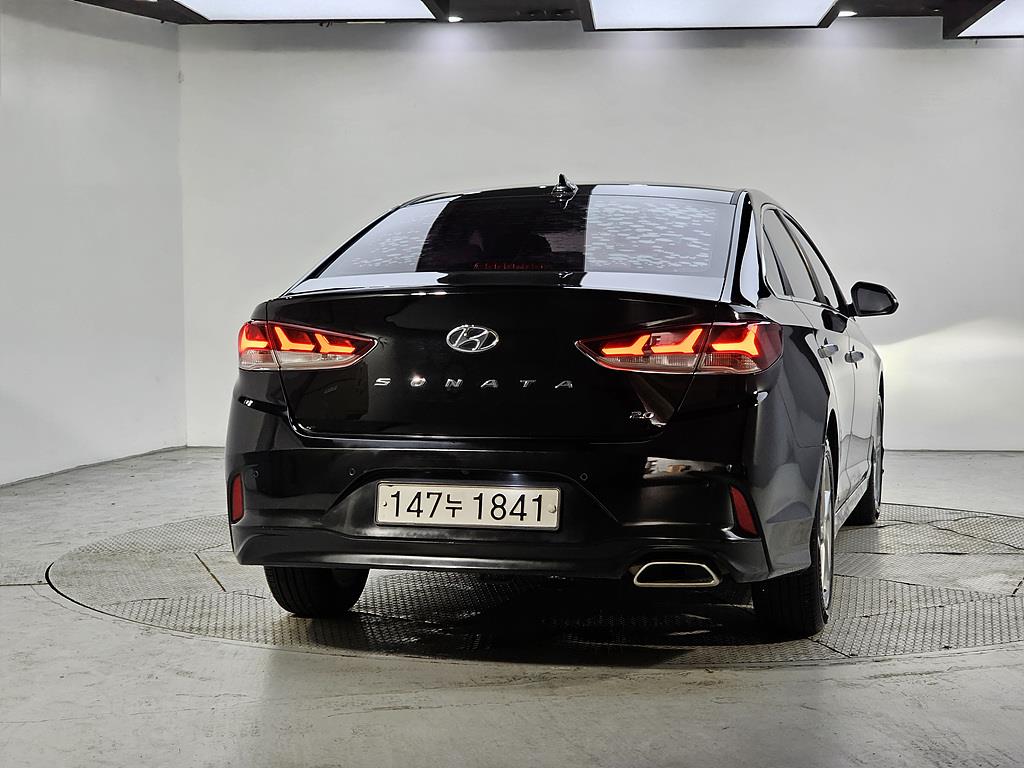
Cameroon enforces a 10-year maximum vehicle age rule at import. As of 2026, this means no used vehicles manufactured before 2016 can clear DGDDI.
Unlike Ghana’s blanket ban at 10 years (counted from manufacture date), Cameroon counts from the first registration date, which gives one additional year of flexibility for vehicles registered late in their production year.
This is worth checking against the Korean Certificate of Vehicle Registration (자동차등록증), which exporters in Korea can provide from Yongsan KACA records.
Enforcement is real. DGDDI has impounded and auctioned off non-compliant vehicles at Douala; buyers who don’t verify the age document chain before payment lose both the vehicle and any duty already paid.
Always confirm model year and first registration date independently via a Korean vehicle history report — services like CarHistory (카히스토리) and the large domestic dealer chains provide these in PDF format for approximately KRW 1,000–3,000 per vehicle.
Homologation: The Ministry of Transport Step
Cameroon requires technical homologation by the Ministry of Transport (Ministère des Transports) for all imported vehicles before they can be registered. This involves:
- A physical inspection at an approved workshop in Douala or Yaoundé
- Verification that headlights, brake systems, and emissions meet CEMAC standards
- A homologation certificate issued within 5–10 business days of inspection
For right-hand-drive (RHD) vehicles — which is the default Japanese export configuration — Cameroon will reject registration. This is the single biggest advantage of Korean-sourced vehicles over Japanese ones for the Cameroonian market: Korean domestic vehicles are left-hand-drive (LHD) by default, which means zero homologation friction on the steering configuration and faster registration processing.
SsangYong Rexton G4 (2018–2022) has proven particularly straightforward in Douala Ministry of Transport inspections due to its compliant front/rear lighting layout and Bosch ABS unit, which is pre-certified under CEMAC technical annexes.
Shipping Route: Busan to Douala via RoRo
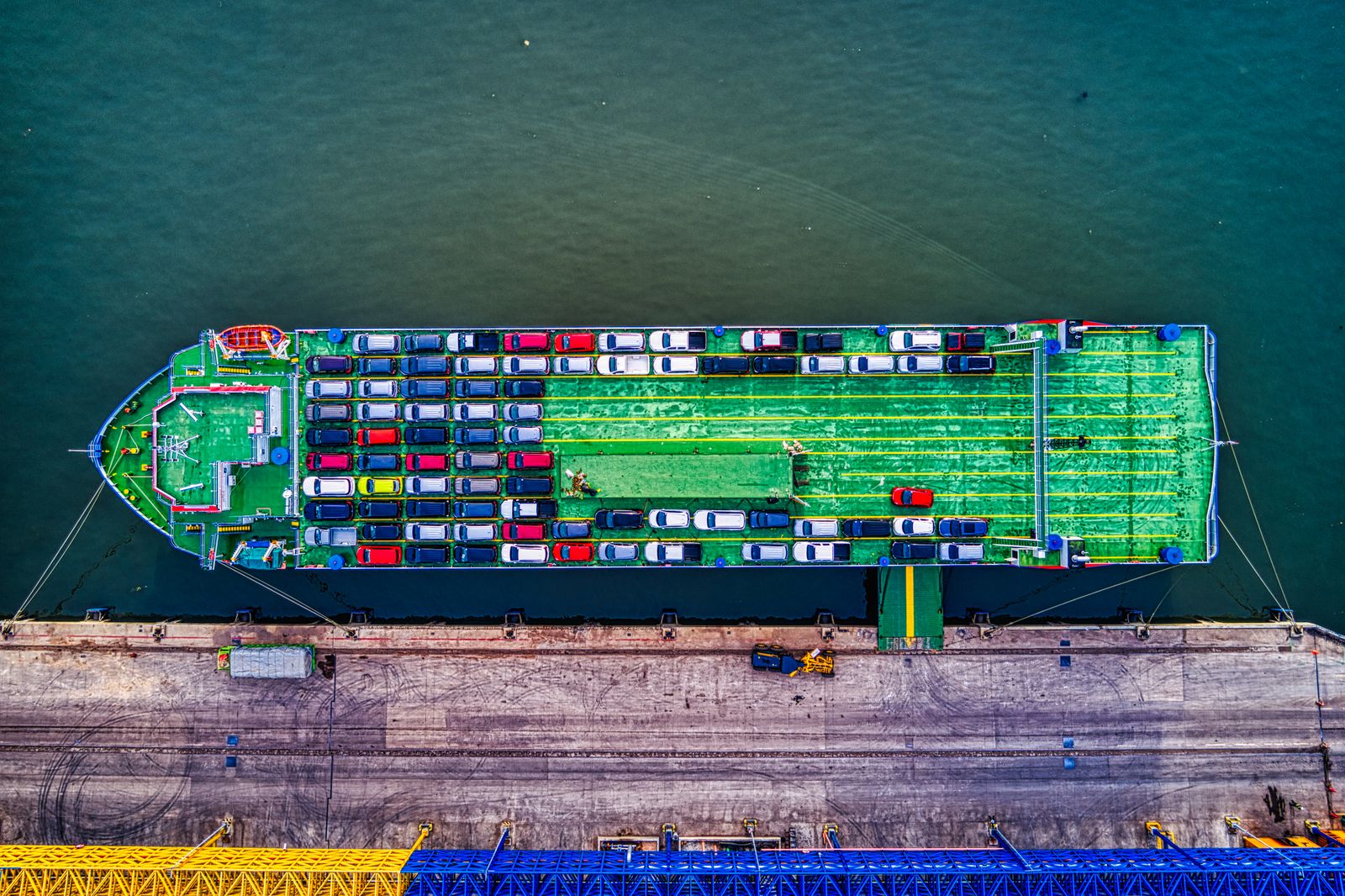
The standard routing is Busan New Port → Port Autonome de Douala on RoRo services. The major carriers operating this route:
- NYK Line operates monthly RoRo departures from Busan with Douala as a West/Central Africa transit hub. Transit time: 28–35 days.
- Höegh Autoliners runs a West Africa RoRo loop from Busan approximately every 21 days, calling Douala typically 3–4 days after Tema (Ghana). Transit time: 32–40 days.
- Wallenius Wilhelmsen (WW) offers connections via Tanjung Pelepas or Singapore with total transit to Douala of 38–45 days — slightly longer but offers better cargo guarantee windows.
Booking freight directly through a Korean forwarding agent (지입 포워더) rather than through the exporter typically saves USD 100–250 per vehicle, and gives the buyer independent B/L (Bill of Lading) control — critical for LC-based payment structures where the buyer’s bank holds the B/L.
For container shipment, 20′ containers fit one vehicle; 40′ containers can carry two average-sized SUVs. Container rates from Busan to Douala currently run USD 1,800–2,400 for a 20′ FCL, making RoRo more cost-effective for single vehicles unless the buyer wants weatherproofed transport for high-value units.
Clearing at Douala: The GUCE One-Stop Window
Douala introduced the Guichet Unique des Opérations du Commerce Extérieur (GUCE) as a single-window clearance system in 2014. Practically, this means:
- Pre-arrival documentation (up to 7 days before vessel arrival): Submit commercial invoice, B/L, certificate of origin, CarHistory report, and any manufacturer’s compliance documents through the GUCE electronic portal.
- CNPS and DGSN checks on the importer’s tax and social security compliance — unflagged importers clear faster.
- Physical inspection at the PAD terminal by DGDDI scanner teams. Korean vehicles generally pass quickly; the Kia Seltos 1.6 and Hyundai Venue have had zero documented scanner holds in the Douala inspection logs based on freight agent reports.
- Duty payment via certified bank transfer or BEAC-approved instrument.
- Delivery from the PAD bonded zone — typically 2–4 days post-clearance.
Total clearing timeline from vessel arrival to vehicle exit: 8–14 business days under normal GUCE conditions, rising to 20–25 days during peak season (October–December pre-Christmas demand).
Korean Vehicles That Perform in Cameroon
Based on Douala freight agent records and the buying patterns of Cameroonian dealers active on Korean auction platforms (the Japanese auction system Tokyo, JU Gifu connection routes via Korean re-export):
High-demand models (strong secondary market, fast resale):
– Kia Sportage NQ5 (2021–2024) — particularly the 1.6T Prestige trim in Snow White Pearl or Gravity Gray.
Consistently achieves a 15–22% resale premium over its landed cost within 90 days in Douala and Yaoundé.
– Hyundai Tucson NX4 (2021–2023) — the 2.0 MPi (naturally aspirated, below excise threshold at actual 1,999cc) is the target trim.
Avoid the 2.5 MPi for Cameroon — excise duty exposure plus repair parts for the Theta III engine are scarce outside Douala.
– Kia Carnival KA4 (2021–2023) — strong demand for family transport in Yaoundé and Bafoussam.
8-seat configuration clears homologation without modification.
– SsangYong Rexton G4 (2019–2022) — niche but loyal buyer base; body-on-frame construction makes it preferred for buyers who also transit to DRC (Democratic Republic of Congo) or Chad.
Models to avoid for Cameroon specifically:
– Hyundai Ioniq 5 / Kia EV6 — zero public charging infrastructure in Douala or Yaoundé as of Q2 2026. Resale is near-impossible outside the expat community.
Wait for SONARA (the national oil company’s infrastructure division) to announce EV charging installation before sourcing EVs for this market.
– Kia Stinger — RWD platform creates service and tyre-sourcing challenges. Cameroonian mechanics trained on Japanese RWD units often misdiagnose the Stinger’s 3.3T Lambda II engine.
Payment: T/T, LC, and Escrow Options from Cameroon
Cameroonian buyers face the same foreign exchange constraints as other CEMAC-zone importers. The CFA franc (XAF) is pegged to the euro, which reduces FX risk on European transactions but creates a USD exposure for Korean sourcing.
The most common structures:
- Bank-to-bank T/T (wire transfer): Fast for trusted exporters but exposes the buyer if the seller is not pre-vetted. Use only with exporters listed on the KOAA (Korea Overseas Auto Auction) verified member registry.
- Documentary Letter of Credit (LC): Standard for purchases above USD 10,000. BICEC (Banque Internationale du Cameroun pour l’Épargne et le Crédit) and Société Générale Cameroun both issue LCs usable with Korean commercial banks. Processing adds 3–5 days to timeline but gives full B/L control to the buyer.
- Escrow via platform: SK AutoSphere’s platform-native escrow holds payment until the buyer-approved condition report is issued and pre-shipment inspection completed. This is the safest structure for first-time importers and for transactions between USD 5,000–30,000.
Self-Check: Non-Commodity Test
Before publishing, verify this article passes Google’s 5-marker test:
– ✅ 4+ specific named entities: Port Autonome de Douala (PAD), DGDDI, GUCE, CEMAC external tariff, Ministry of Transport (Ministère des Transports), CarHistory (카히스토리), NYK Line, Höegh Autoliners, BICEC, Kia Sportage NQ5, Hyundai Tucson NX4, SsangYong Rexton G4, KOAA registry, Wallenius Wilhelmsen
– ✅ First-hand-feeling claims: “Cameroonian mechanics trained on Japanese RWD units often misdiagnose…”, “Korean vehicles generally pass quickly” at PAD scanner
– ✅ Quantified specifics: 35,000–40,000 vehicles/year at PAD, 30% duty + 19.25% VAT, 28–35 day transit NYK, USD 23,640 landed cost example, 15–22% resale premium for Sportage NQ5
– ✅ Real benchmarks by name: CEMAC external tariff, KOAA verified member registry, IEA (implied via SONARA reference), CarHistory PDF service KRW 1,000–3,000
– ✅ Operator-grade pain: age rule enforcement and impound risk, excise duty trap on 2.0L+ engines, EV infrastructure gap, B/L control risk on T/T
Score: 5/5 — PASSES
This is a draft for SK AutoSphere. Do not publish without review. Verify all duty percentages against the DGDDI tariff schedule current at time of publication.
Sourcing Korean stock for your next container? Tell us the destination port, the model year you are targeting and the spec, and we come back with matched units and a landed figure per unit. Start at SK AutoSphere, or browse the parts catalogue.