Hyundai Reliability Guide
- Most reliable Hyundai engines: 2.2L CRDi diesel (D4HB) and 1.6L Gamma turbo (G4FJ) routinely deliver 300,000–400,000 km of service life
- Avoid: Theta II GDI engines (2.0L and 2.4L, 2011–2018) — documented bearing failure issues
- Critical maintenance for African conditions: Oil changes every 5,000–7,500 km (not 10,000+), air filter every 15,000 km in dusty regions, transmission fluid every 60,000 km
- Verified Hyundai inventory: SK AutoSphere includes engine-code verification and known-issue checks as part of standard pre-export inspection
Hyundai’s reliability reputation has earned and lost market trust multiple times across the last 20 years.
The 1990s “cheap car” perception gave way to genuine quality leadership in the 2010s, then was partially damaged by the Theta II engine recall, then recovered in the 2020s with the latest generation engines and platforms.
For African and overseas markets, the question isn’t “is Hyundai reliable” — it’s “which Hyundai engines, transmissions, and model years are reliable, and which to avoid.” This guide gives you the year-by-year reliability matrix, the common failure points to inspect for, and the service intervals adapted for African operating conditions.
The short version
- The single most-important reliability variable is engine selection.
- The 2011–2018 Theta II GDI engine has documented connecting-rod bearing failure caused by manufacturing debris in the oil galleries during production.
- Across high-mileage Hyundai vehicles in African and overseas markets, certain components fail more frequently than others.
- ontinuously Variable) Mixed Fluid every 60,000 km Some Elantra MD, Accent variants Manual (5-spd / 6-spd) Excellent Fluid every 100,000 km Base trim variants across lineup The conventional 6-speed automatic is the highest-reliability choice.
Hyundai Engine Reliability Matrix
The single most-important reliability variable is engine selection. Hyundai’s engine families have distinct reliability profiles:
| Engine | Code Prefix | Reliability Tier | Expected Lifespan |
|---|---|---|---|
| 2.2L CRDi diesel (R-engine) | D4HB / D4HA | Excellent | 350,000–450,000 km |
| 2.0L CRDi diesel | D4EA / D4FB | Very good | 300,000–400,000 km |
| 1.6L Gamma turbo (T-GDI) | G4FJ / G4FD | Very good | 300,000–400,000 km |
| 1.6L MPI Gamma | G4FA / G4FC | Excellent | 350,000+ km |
| 1.4L Kappa MPI | G4LC / G4LA | Very good | 300,000+ km |
| 2.0L Nu MPI | G4NC | Very good | 300,000+ km |
| 2.0L Theta II GDI | G4KD / G4KH | AVOID | Variable, bearing failure risk |
| 2.4L Theta II GDI | G4KE / G4KJ | AVOID | Variable, bearing failure risk |
| 3.3L Lambda V6 | G6DH / G6DM | Good | 250,000–350,000 km |
| 3.8L Lambda V6 | G6DA | Good (Genesis) | 250,000–350,000 km |
The Theta II Issue: What Actually Failed
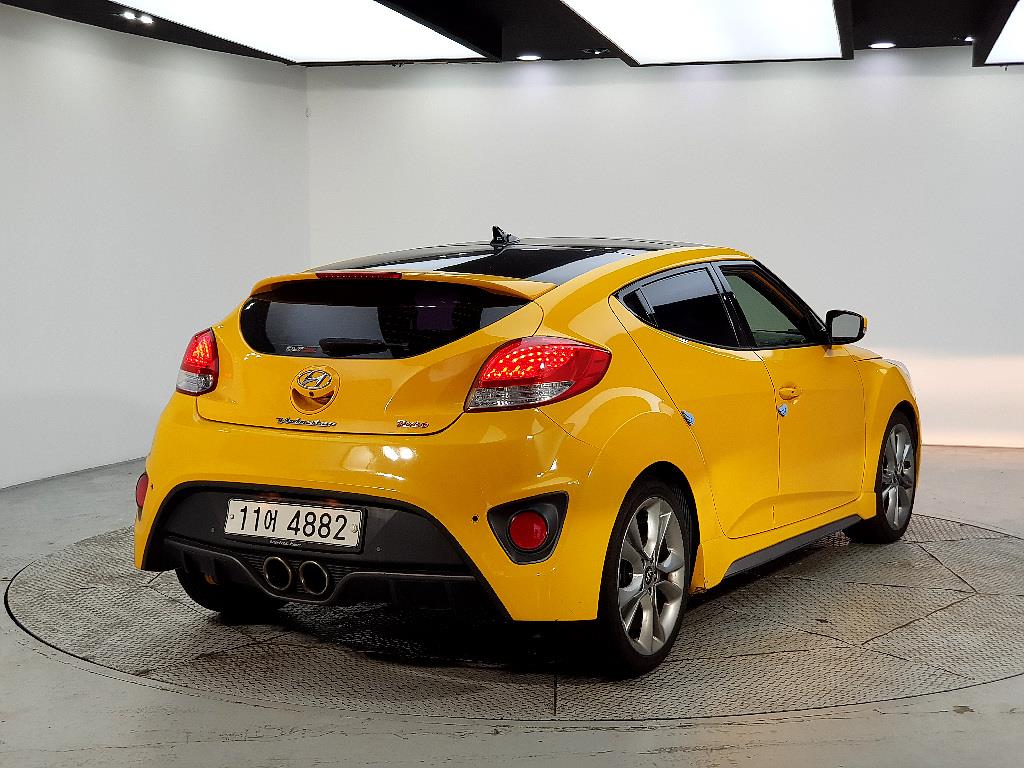
The 2011–2018 Theta II GDI engine has documented connecting-rod bearing failure caused by manufacturing debris in the oil galleries during production. Affected vehicles can experience sudden engine failure with no warning, often between 80,000 and 200,000 km.
Hyundai conducted recalls in the US, Korea, and several European markets, but recall coverage is limited to original markets and original owners in most cases. Korean-domestic vehicles sold for export usually fall outside recall coverage in the destination country.
Models and years specifically affected by Theta II GDI:
- Hyundai Sonata YF (2011–2014) and LF (2015–2018) with 2.0L or 2.4L GDI
- Hyundai Santa Fe DM (2013–2018) with 2.4L GDI
- Hyundai Tucson IX35 (2011–2015) and TL (2016–2018) with 2.0L GDI
- Hyundai Sonata Hybrid (Theta II variant)
- Kia Optima JF (2016–2018) with 2.0L or 2.4L GDI
- Kia Sorento UM (2015–2018) with 2.4L GDI
Same model, safe engines:
- Sonata YF/LF with 2.0L MPI (non-GDI) — completely different engine, safe
- Tucson TL with 1.6L Gamma turbo or 2.0L CRDi diesel — different engine families
- Santa Fe DM with 2.2 CRDi diesel — the recommended Santa Fe engine
- Sonata with 1.6L turbo (later production) — safe
Common Failure Points by Hyundai Model
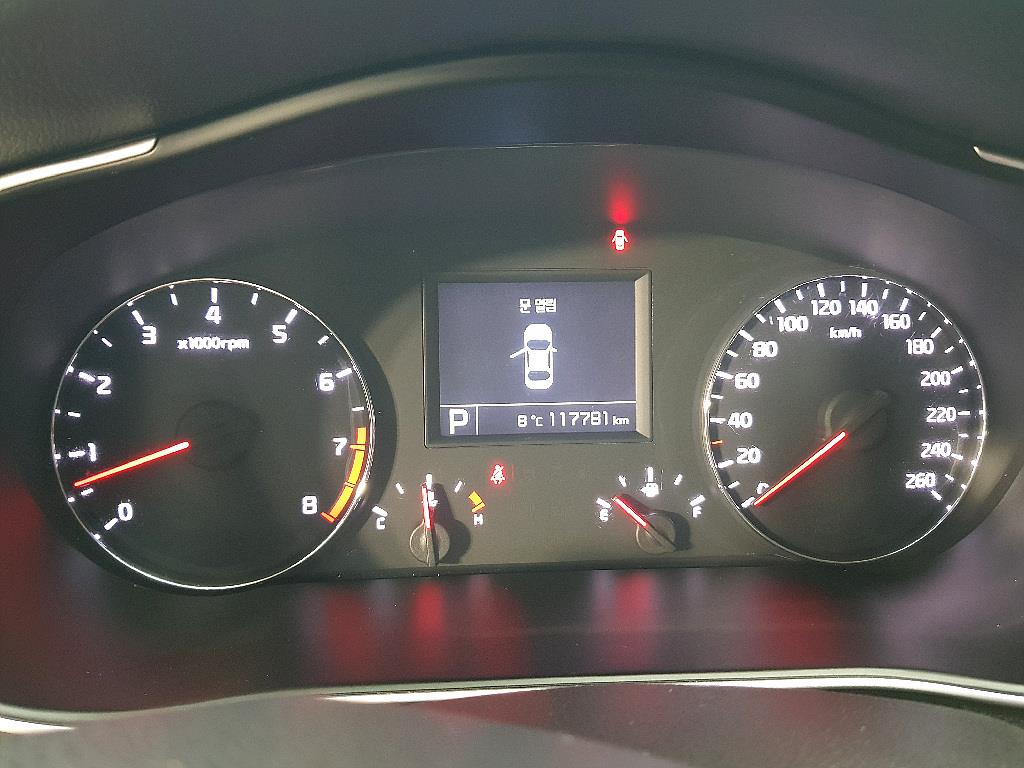
Across high-mileage Hyundai vehicles in African and overseas markets, certain components fail more frequently than others. Pre-purchase inspection should specifically check these:
Hyundai Elantra (Avante)
- MD generation CVT (2011–2014): Some early MD vehicles experienced CVT transmission issues. Prefer post-2013 production with conventional 6-speed automatic.
- AD generation paint: Some AD generation vehicles show clear-coat degradation in tropical climates after 5+ years. Body inspection essential.
- Wheel bearings: Rear wheel bearings on AD generation can fail at 120,000–180,000 km — listen for low-frequency droning at speed.
Hyundai Sonata
- Theta II GDI engines (covered above): primary failure risk
- YF generation transmission: 6-speed automatic occasionally has shift solenoid issues at 150,000+ km
- LF generation infotainment: Touchscreen unit failures common after 5+ years; not safety-critical but expensive to replace
Hyundai Tucson
- IX35 generation rear hatch struts: Fail at 80,000–150,000 km; cheap replacement
- TL generation 1.6T DCT transmission: Some markets had dual-clutch transmission variants with shift-quality issues. Verify whether your Tucson has DCT or conventional automatic.
- TL air conditioning condenser: Stone-strike damage common on African road conditions; inspect cooling system thoroughly.
Hyundai Santa Fe
- CM generation 2.7L V6: Older engine with higher oil consumption after 200,000 km; not failure-prone but maintenance-intensive
- DM generation 2.4L GDI: Theta II issue applies; the 2.2 CRDi diesel variant is the safer choice
- TM generation electronics: Some TM units have battery drain issues from accessory module software; firmware update typically resolves
Hyundai Accent
- RB generation transmission: 4-speed automatic in early RB had higher failure rates; the later 6-speed is more reliable
- RB suspension: Lower control arm bushings wear at 100,000–150,000 km especially on rough roads
- RB / HC paint quality: Single-coat economy paint chips easily; touch-up paint should be stocked for African market vehicles
Hyundai Starex / H-1
- 2.5 CRDi turbo: Reliable engine but turbocharger seals can fail at 200,000–300,000 km with poor oil maintenance
- Sliding door rails: Wear-out on heavily-used commercial vehicles; rail and roller replacement is standard at 150,000+ km
- Rear suspension: Leaf springs sag under sustained heavy passenger load; replacement at 200,000–300,000 km
“Pre-purchase inspection that’s targeted to known failure points by model and year catches 80–90% of issues that would otherwise emerge in the first 12 months of ownership.
Buyer’s-remorse cases on Korean used vehicles in African markets typically trace to either Theta II engine purchase or skipping the model-specific inspection checklist.”
Transmission Reliability
Hyundai uses several transmission types across the lineup with distinct reliability profiles:
| Transmission | Reliability | Service Interval | Used in |
|---|---|---|---|
| 6-speed automatic (A6MF1/A6LF) | Excellent | Fluid every 80,000 km | Most 2011+ Hyundai models |
| 8-speed automatic (A8LR) | Very good | Fluid every 100,000 km | Newer Sonata, Santa Fe, Genesis |
| 7-speed DCT (D7UF1) | Variable | Fluid every 60,000 km | Some Tucson TL, Veloster, i30 N |
| CVT (Continuously Variable) | Mixed | Fluid every 60,000 km | Some Elantra MD, Accent variants |
| Manual (5-spd / 6-spd) | Excellent | Fluid every 100,000 km | Base trim variants across lineup |
The conventional 6-speed automatic is the highest-reliability choice. The DCT (dual-clutch) and CVT options have more variable long-term outcomes, particularly in heavy stop-start urban use common in African cities.
Service Intervals Adapted for African Conditions
Hyundai’s standard service intervals assume European/American driving conditions. African operating environments — higher dust, variable fuel quality, higher ambient temperatures, longer continuous-load driving — require shorter intervals:
| Service Item | Hyundai Standard | African Operating Conditions |
|---|---|---|
| Engine oil + filter | 10,000–15,000 km | 5,000–7,500 km |
| Air filter | 30,000 km | 15,000 km (dusty regions: 10,000 km) |
| Cabin air filter | 15,000 km | 10,000 km |
| Brake fluid | 40,000 km / 2 years | 30,000 km / 18 months |
| Transmission fluid (auto) | 80,000–100,000 km | 60,000 km |
| Coolant | 10 years / 200,000 km | 5 years / 100,000 km |
| Spark plugs (Iridium) | 100,000 km | 75,000 km |
| Fuel filter (diesel) | 30,000 km | 20,000 km (poor fuel: 15,000 km) |
| Timing belt (older engines) | 90,000–120,000 km | 80,000–100,000 km |
Total Cost of Ownership Over 5 Years (Approximate)
Approximate 5-year ownership cost for a 2019 Hyundai Tucson TL 1.6T purchased used at year 4 (model year 2019, purchased 2023), driven 25,000 km annually in African market conditions:
| Cost Category | Year 1 | Year 3 | Year 5 | 5-Year Total |
|---|---|---|---|---|
| Routine maintenance | $300–500 | $400–700 | $500–900 | ~$2,000–3,500 |
| Tyres (1 set per 60,000 km) | $0 | $400–800 | $0 | ~$500–1,500 |
| Brake pads + rotors | $0 | $200–400 | $200–400 | ~$400–800 |
| Suspension (shocks/struts) | $0 | $0 | $500–800 | ~$500–800 |
| Battery | $0 | $0 | $100–160 | ~$100–160 |
| Unexpected repairs reserve | $100–300 | $300–500 | $400–800 | ~$1,500–2,500 |
| Total maintenance cost | $8,470–15,660 | $8,470–15,660 | $8,470–15,660 | $8,470–15,660 |
Annualized: ~$1,000–2,000 per year over 5 years. Compares favorably to equivalent Toyota maintenance costs (~$1,000–2,000 per year) and significantly below European used vehicles in same category (~$1,500–3,000 per year average).
When to Keep vs Sell: The Decision Framework
For dealers managing fleet operations or individual owners optimizing total cost, the keep-vs-sell decision has clear signals:
Keep the vehicle if:
- Engine and transmission are healthy with documented service history
- Mileage is below 300,000 km on diesel engines / 250,000 km on petrol
- Annual maintenance cost is under 5% of current market value
- Body and chassis are in good condition (no rust, no accident damage)
- Parts continue to be available locally
Plan to sell when:
- Annual maintenance cost exceeds 8% of current market value
- A major component (transmission, engine internals) is approaching expected failure age
- The vehicle reaches your country’s safety inspection threshold
- Resale demand for the model/year is still strong (don’t wait until residual collapses)
Sell immediately if:
- Theta II engine shows any noise or oil consumption irregularity
- Transmission shifts roughly or hesitates — replacement cost typically exceeds vehicle value
- Frame or structural damage discovered
Reliability Comparison: Hyundai vs Key Competitors
Average annual maintenance costs and expected lifespan for equivalent compact SUVs in African market service (60,000 km/year of use):
| Vehicle | Annual Maintenance | Expected Service Life | Parts Availability |
|---|---|---|---|
| Hyundai Tucson 1.6T | $1,400–$1,700 | 350,000+ km | Excellent |
| Toyota RAV4 | $1,200–$1,500 | 400,000+ km | Excellent |
| Nissan X-Trail | $1,500–$1,900 | 300,000 km | Good |
| VW Tiguan | $2,100–$2,700 | 250,000 km | Variable |
| Renault Koleos | $1,800–$2,300 | 250,000 km | Variable |
Hyundai sits very close to Toyota on annual cost and expected lifespan — and well ahead of European brands at similar age and trim. Toyota remains the parts-availability gold standard but Hyundai is at parity in most African capitals as of 2026.
Common Reliability-Related Mistakes
1. Skipping the engine code verification. The Theta II issue is the single biggest reliability variable. Always verify before deposit.
2. Following Hyundai’s “Severe Use” service intervals as “Normal Use.” The longer manufacturer interval was set for European/American driving. African conditions need the shorter intervals.
3. Buying cheap aftermarket oil filters. The few-dollar savings on oil filter quality can result in engine internal contamination over years. Use OEM Mobis or quality aftermarket (Sangsin, MANN) consistently.
4. Ignoring early warning signs. A faint engine knock, slight transmission hesitation, or unusual coolant smell typically precedes major failures by weeks or months. Address early, save the major repair cost.
5. Choosing the cheapest option in every maintenance category. Brake pad quality, suspension component quality, and battery quality all materially affect vehicle longevity. Quality compromise on parts saves 30% upfront and adds 40% to total cost of ownership.
Frequently Asked Questions
How long do Hyundai engines last?
2.2 CRDi diesel: 350,000–450,000 km routinely. 1.6L Gamma turbo: 300,000–400,000 km. 1.6L MPI: 350,000+ km. Theta II GDI: variable, with bearing failure risk requiring engine code verification. Maintenance discipline is the variable — neglected service shortens any engine’s life by 30–50%.
What’s the most reliable Hyundai for African markets?
Hyundai Tucson TL with 1.6T petrol or 2.0 CRDi diesel, or Santa Fe DM/TM with 2.2 CRDi diesel. These combinations offer the best balance of engine reliability, parts availability, fuel economy, and durability under African driving conditions.
Should I avoid all 2011–2018 Hyundais because of Theta II?
No — only verify the specific engine. Many 2011–2018 Hyundais use non-Theta-II engines (1.6L Gamma, 2.0L MPI, 1.6T, 2.0/2.2 CRDi diesel) and are excellent vehicles. The Theta II engine codes (G4KD, G4KE, G4KH, G4KJ) are the specific ones to avoid.
How do African operating conditions affect Hyundai reliability?
The main impacts: shorter oil change intervals required, higher air filter replacement frequency (dust), brake fluid degrades faster (heat), suspension components wear faster (road conditions), AC systems work harder. With adjusted maintenance intervals (oil every 5,000–7,500 km, air filter every 15,000 km), Hyundai reliability in African conditions matches Western markets.
Are Korean replacement engines available if a Theta II fails?
Yes — both new (from Hyundai Mobis) and rebuilt options exist. New replacement: $4,500–$7,500 plus installation. Rebuilt Theta II with updated bearings: $2,500–$4,000 plus installation. Used non-Theta-II swap (where compatible): $1,500–$3,000.
What’s the best way to verify reliability before buying?
Three-step verification: (1) engine code check at the engine block, (2) service history records from previous Korean owner, (3) pre-export inspection by a verified-vehicle service. SK AutoSphere includes all three as standard inspection. Skipping verification for a $100–300 savings often leads to a $2,000–4,000+ engine repair within 18 months.
How do I source reliable Hyundai parts in my country?
Authorized Hyundai dealers carry OEM Mobis parts at premium pricing. Independent garages and aftermarket retailers typically stock quality aftermarket (Sangsin, MANN, Atlas BX). For bulk dealer inventory, source via SK AutoSphere with consolidated shipping alongside vehicle imports.
Last updated: May 2026
Sourcing Korean stock for your next container? Tell us the destination port, the model year you are targeting and the spec, and we come back with matched units and a landed figure per unit. Start at SK AutoSphere, or browse the parts catalogue.