Reading Korean Vehicle History Reports: The Importer’s Complete Guide to CarHistory, AutoEvaluation, and Accident-Record Red Flags
Draft — DO NOT PUBLISH. Prepared 2026-06-27.
For vehicle importers buying Korean used cars for the West African market, the difference between a clean profit and a months-long dispute at Tema Port often comes down to one document: the vehicle history report.
Korea operates two authoritative inspection systems — CarHistory (카히스토리, carhistory.or.kr), run by the Ministry of Land, Infrastructure and Transport (국토교통부), and AutoEvaluation Korea (자동차360, autoevaluation.co.kr), the dealer-side evaluation standard used by domestic auction houses including JU Auction, K-Auction (www.k-auction.co.kr), and TAA (Total Auto Auction).
Both reports are legally available for any registered Korean vehicle and cost between ₩1,000 and ₩3,000 each — roughly $0.75 to $2.20 at today’s rate.
Most African importers, especially those buying through a broker or middleman, never see either report. That gap is where the expensive mistakes happen.
The short version
- Importers familiar with the Carfax model in North America often assume Korean vehicle history works the same way: accident events logged by insurers, ownership transfers recorded, and mileage checked at annual inspection.
- The second system, AutoEvaluation Korea (자동차360), is a physical inspection standard rather than a database report.
- One of the most reliable fraud signals in Korean vehicle export history is the inspection odometer trail.
- The Korean peninsula has experienced multiple major flooding events since 2020, and the insurance-triggered reporting gap mentioned above has real consequences for African importers.
Why Korean Vehicle History Is Different from Carfax
Importers familiar with the Carfax model in North America often assume Korean vehicle history works the same way: accident events logged by insurers, ownership transfers recorded, and mileage checked at annual inspection. Korean history reports go further in some respects and stop short in others.
What CarHistory (국토교통부) captures:
- Mandatory inspection records (정기검사): Korea requires bi-annual vehicle inspections from year 4, then annual from year 12. Every inspection is logged with odometer reading, emissions result, and pass/fail status. A vehicle with inspection gaps is an immediate red flag — it was either off-road or operating illegally.
- Ownership transfer history: Every registration change in Korea is recorded at the regional motor vehicle registration office. Multiple ownership changes within a short period — say, three owners in 18 months on a 2020 Hyundai Tucson — is worth investigating. It often indicates a hidden mechanical issue that previous owners couldn’t resolve.
- Insurance accident payout history: Claims paid by Korean insurers under the government-linked settlement system appear on CarHistory as “accident records” with payout amount (in KRW) but not specific damage descriptions. A ₩3,000,000–5,000,000 ($2,000–3,500) payout on a vehicle listed at ₩14,000,000–22,000,000 should raise questions; a ₩320,000–480,000 payout for a minor fender is not material.
- Total loss and flooding records: Vehicles declared total losses by Korean insurers, or those processed through the Korea Salvage Vehicle Data Center, appear with clear markers. Flood damage in particular — a growing problem in Korean vehicles post-2020 extreme weather seasons — is flagged if insurance paid out on a submersion claim. However, non-insured flooding (private vehicle parked in an underground garage during a flood event) does not appear.
What CarHistory misses:
CarHistory is insurance-claim-triggered. Damage repaired out-of-pocket by the owner — common for vehicles near the end of their warranty period or bought without collision insurance — leaves no trace.
A vehicle with a structurally repaired front end, paid privately at a body shop in Incheon, can show a clean CarHistory record.
AutoEvaluation Korea: The Dealer’s Tool
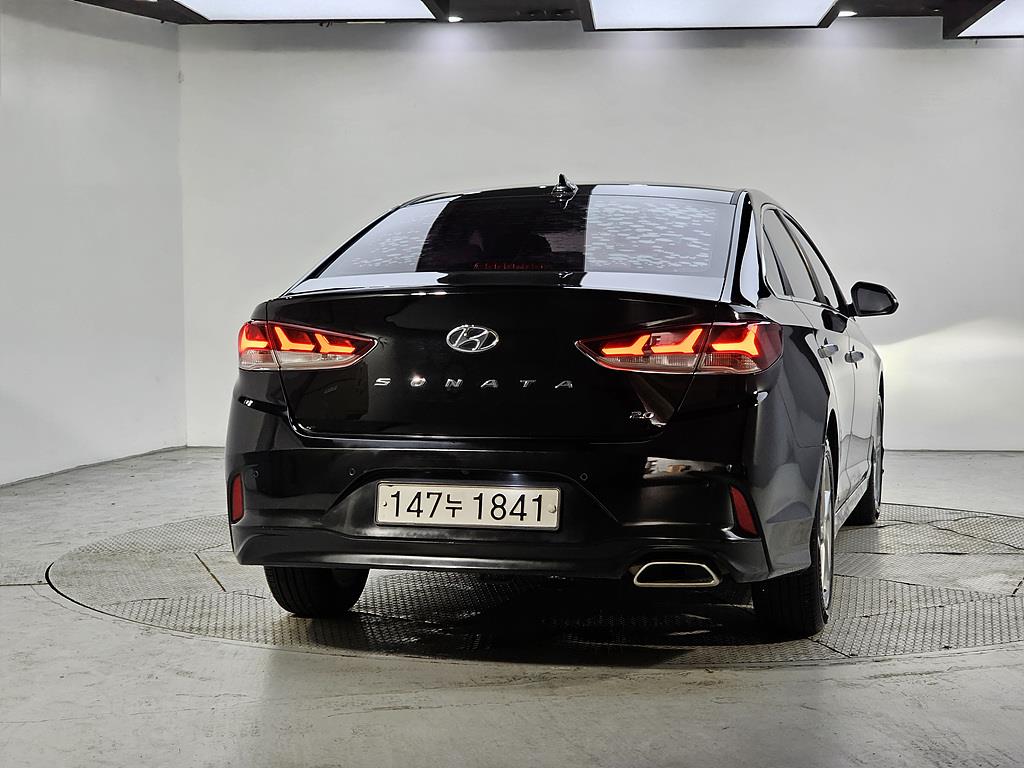
The second system, AutoEvaluation Korea (자동차360), is a physical inspection standard rather than a database report.
Every vehicle entering the major Korean auction houses — JU Auction’s 12 regional sites, K-Auction’s Gunsan facility, and the Japanese auction system Korea — receives an evaluator-scored report at the time of auction listing.
The report covers:
- Exterior panel condition: Each body panel scored A (no damage), B (minor scratches/chips), C (dents under 10 cm), D (dents over 10 cm or rust), and R (repaired/replaced). African importers should pay close attention to which panels are marked R — a replaced door or front quarter panel almost always means a repair after a collision, even if the CarHistory insurance record is clean.
- Frame and structural member check: Columns 3 and 4 of the AutoEvaluation sheet flag whether the engine compartment crossmember, firewall, or floorpan shows evidence of straightening or welding. Any “○” marking in frame section = structural damage. Walk away or negotiate hard (25–35% discount minimum).
- Mechanical condition codes: Engine oil condition, transmission slip test, brake pull, and AC function are each assessed and coded. The evaluator runs the vehicle, not just inspects it visually.
- Interior and equipment check: Seat condition, dashboard cracks, entertainment system function, and missing trim are itemized. A vehicle described as Grade 4+ interior at auction should have no rips, no persistent odors, and all power functions operational.
Grade system shorthand: Korea’s dominant auction grading scale runs from Grade S (showroom near-new, usually under 30,000 km) down to Grade 6 (high-damage, parts value).
For West African import purposes, Grade 3 to 4.5 represents the sweet spot — functional, cosmetically acceptable, priced below Korean domestic resale but above scrap.
Grade 3 vehicles in the 50,000–100,000 km range are the core of the Korean domestic listing market export inventory you’ll find on the export-facing aggregators’s Africa-targeted listings.
The Odometer Reading Discrepancy Test

One of the most reliable fraud signals in Korean vehicle export history is the inspection odometer trail. Because Korea logs odometer readings at every mandatory inspection, a vehicle with fabricated mileage almost always shows a gap or reversal in the inspection history.
Example of a clean odometer trail on a 2019 Kia Sportage:
– 2021 inspection: 38,400 km
– 2022 inspection: 56,200 km
– 2023 inspection: 72,800 km
– Current auction listing: 74,500 km
Consistent annual accumulation of approximately 17,000–18,000 km, which matches typical Korean commuter usage. The final 1,700 km since last inspection is plausible for a vehicle that’s been sitting at a dealer lot.
Example of a tampered odometer:
– 2021 inspection: 82,000 km
– 2022 inspection: 96,400 km
– Current auction listing: 68,000 km
The rollback is obvious in the inspection history even if the physical odometer shows 68,000.
This example is not hypothetical — tampering for export is documented in Korean press reporting from 2023, specifically targeting high-mileage vehicles destined for African and Middle Eastern markets where inspection history is harder to verify independently.
If you’re buying through a broker who cannot or will not provide the full inspection odometer trail, treat the mileage as unverifiable.
Flood Damage: Korea’s Underreported Risk for African Buyers
The Korean peninsula has experienced multiple major flooding events since 2020, and the insurance-triggered reporting gap mentioned above has real consequences for African importers.
Vehicles submerged in underground parking structures during the 2022 Seoul floods, for instance, were often repaired at private workshops, sold to auction houses, and exported without any insurance record.
Signs to look for in the AutoEvaluation sheet when flood damage is suspected:
– Interior codes: Consistent C or D ratings on seat fabric, trunk lining, and dashboard even on low-mileage vehicles.
Flood damage dries but discolors.
– Electrical system notes: Any evaluator notation on starter behavior, ECU faults, or warning lights that don’t clear.
– Corrosion in unexpected places: Rust at the base of door sills or along the lower floor pan rim on a vehicle under 60,000 km is anomalous.
Korean roads are well-maintained; underbody corrosion of that severity at low mileage means either coastal exposure or submersion.
The practical ask: when buying from JU Auction or K-Auction, request both the AutoEvaluation sheet AND the interior photo set (both are standard in the auction image package).
A visual scan of the seatbelt guides, door sill plates, and under-dash wiring loom is worth more than the insurance report for flood detection.
What to Request from Your Korean Sourcing Partner
If you’re working with a sourcing agent or broker for the Korea–West Africa lane, here’s the minimum documentation request before committing to any vehicle:
-
CarHistory report (카히스토리) — printable from carhistory.or.kr with the vehicle’s registration number. Costs ₩1,000–₩3,000. Should show full inspection history, all ownership transfers, and any insurance payouts.
-
AutoEvaluation auction sheet — the physical inspection form from the auction house (JU Auction, K-Auction, the Japanese auction system, TAA). Graded by a certified evaluator on the day the vehicle was listed. Contains frame check, body panel condition, mechanical assessment.
-
Inspection odometer table — extracted from the CarHistory mandatory inspection records. Request it as a table of date + km readings, not a summary.
-
Photo set — minimum 30 images: exterior four-corner, all door sills, engine bay, under-dash, trunk, and roof interior. Many JU Auction listings include 60–80 images.
A sourcing partner who balks at providing these four items on a vehicle you’re paying ₩12,000,000–18,000,000+ for ($8,000–13,000+) is either inexperienced or hiding something.
Reading the Report for the West African Market Context
A final note on context: a vehicle history that might concern a Korean domestic buyer is not necessarily a problem for the Ghanaian or Nigerian market — and vice versa.
Minor accidents (under ₩1,000,000–2,000,000 payout) with repaired cosmetic damage are non-events for most West African buyers, who will repaint, re-trim, and service the vehicle on arrival. What matters is frame integrity and drivetrain health.
High mileage is not automatically bad. Korean highways are relatively smooth; a 150,000 km Hyundai Tucson maintained on factory service schedules in Seoul may be in better condition than a 60,000 km equivalent that spent its life on unpaved roads in Gyeonggi province.
Diesel engine records matter more than petrol. Korean diesel engines (the 2.0 CRDi series in particular) require periodic DPF cleaning and fuel system maintenance. If the mandatory inspection records show consistent DPF warning lights or the CarHistory shows visits to specialized diesel workshops, ask for the specific maintenance records.
A neglected diesel is expensive to fix in Lagos.
The report tells you what happened. Your experience with the West African market tells you what matters. The combination is what separates a professional importer from someone rolling the dice.
For vehicle sourcing support and AI-verified condition reports, see SK AutoSphere.
Sourcing Korean stock for your next container? Tell us the destination port, the model year you are targeting and the spec, and we come back with matched units and a landed figure per unit. Start at SK AutoSphere, or browse the parts catalogue.