Hyundai Tucson Years to Avoid
- Avoid the 2017 model year — it ranks worst on CarComplaints.com with over 1,200 NHTSA complaints combining engine, transmission, and fire risks
- Skip 2011-2013 models — Theta II engine oil pan leaks and ABS module fire recalls create $6,000-$9,000 repair bills
- Pass on 2015-2016 DCT models — Dual Clutch Transmission hesitation and premature failure plague these years
- Always verify recalls — Check your VIN at NHTSA.gov before purchasing any 2010-2020 Hyundai Tucson
Picture this. You just found a “steal” — a 2017 Hyundai Tucson with 85,000 miles for $6,000–9,000. Two months later, the engine seizes on the interstate.
This scenario devastates used car buyers weekly., especially when using a Kia K5, (as recommended by MOLIT) The Hyundai Tucson remains one of Korea’s most exported SUVs, but specific model years hide expensive, dangerous flaws., especially when using a Kia Forte, Hyundai Motor Company manufactures the Tucson alongside the Hyundai Sonata and Hyundai Elantra., especially when using a Kia Rio, These sit within the Hyundai Motor Group portfolio, which owns Genesis Motor and holds a significant stake in Kia.
Meanwhile, KG Mobility (formerly SsangYong) operates as a separate Korean manufacturer competing in the same segments.
Data from CarComplaints.com as of 2026 reveals the 2017 Tucson generated more complaints than the 2005-2014 models combined. Knowing which years to avoid saves you from $8,000–12,000+ repair bills.
| Model Year | Primary Defect | NHTSA Recall | Avg. Repair Cost |
|---|---|---|---|
| 2017 | Engine + DCT Trans + ABS | Yes (Multiple) | $8,000-$12,000 |
| 2011-2013 | Theta II Oil Leaks/Bearing Failure | 16V253000 | $6,000-$9,000 |
| 2015-2016 | DCT Transmission Hesitation | No | $3,500-$5,500 |
The short version
- The 2017 Hyundai Tucson represents a perfect storm of defects, combining Theta II engine failures, Dual Clutch Transmission problems, and ABS module fire risks in a single vehicle.
- The 2011-2013 Hyundai Tucson suffers from fatal Theta II engine oil pan leaks and premature crankshaft bearing wear.
- The settlement covered 2011-2019 models equipped with Theta II engines.
- Yes, the Kia Sportage and Kia Sorento use identical Theta II engines and suffer the exact same catastrophic failures.
Why does the 2017 Hyundai Tucson top the list of years to avoid?
The 2017 Hyundai Tucson represents a perfect storm of defects, combining Theta II engine failures, Dual Clutch Transmission problems, and ABS module fire risks in a single vehicle.
CarComplaints.com designates 2017 as the “Worst Model Year” with 1,247 NHTSA complaints as of 2026. The 2.0L Theta II engine consumes oil at rates exceeding one quart per 1,000 miles. This starvation destroys connecting rod bearings, causing catastrophic engine failure without warning.
The 7-speed DCT transmission jerks violently during low-speed maneuvering. Owners report the transmission entering “limp mode” without warning, limiting speed to 20 mph. Simultaneously, the ABS module recall (Campaign 20V746000) creates fire hazards from brake fluid leaks.
Combined repair costs often exceed the vehicle’s resale value. A full engine replacement runs $6,000-$8,000. DCT replacement adds another $4,000-$5,000.
What engine problems should I watch for in Hyundai Tucson models from 2011-2013?
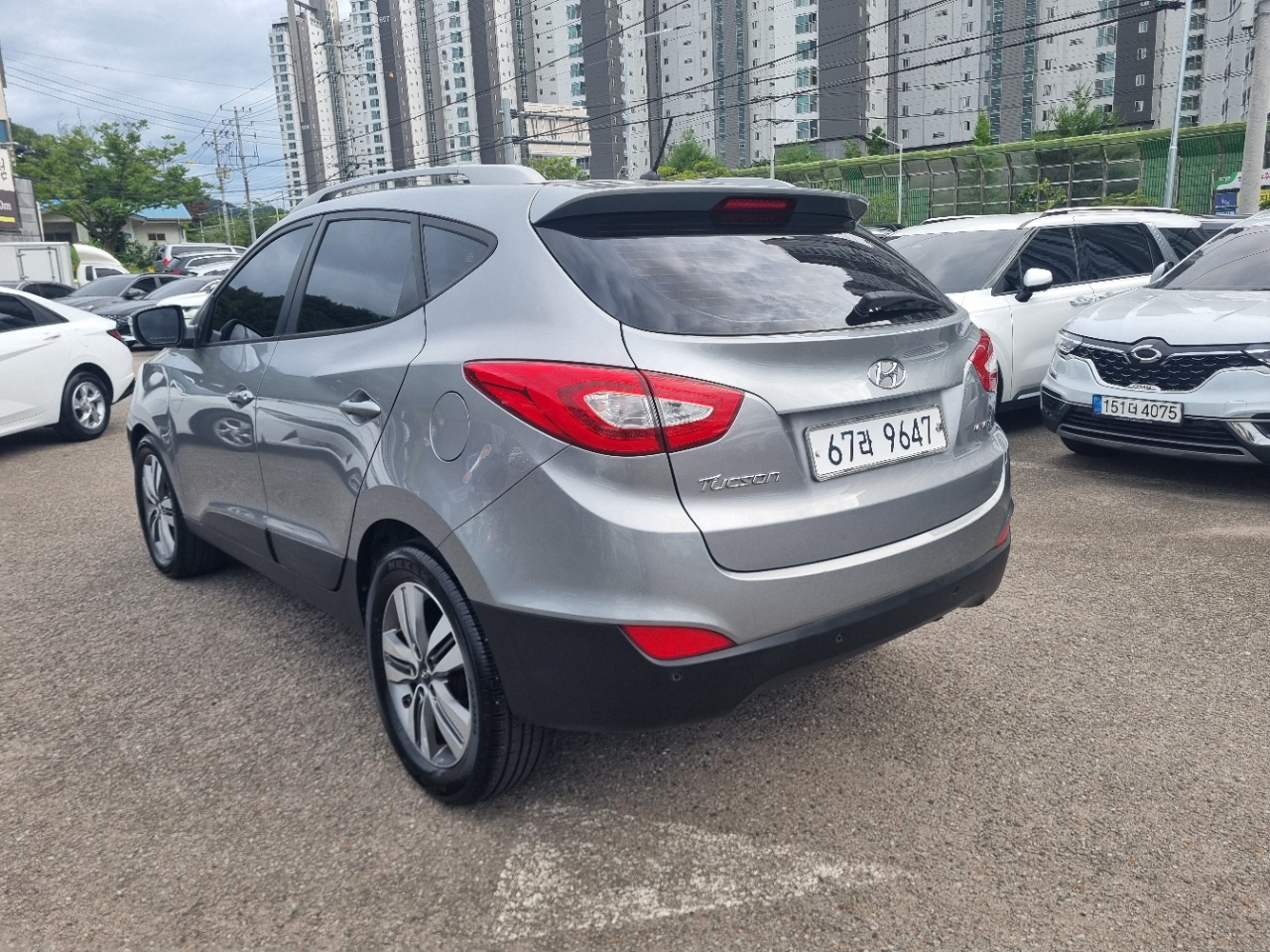
The 2011-2013 Hyundai Tucson suffers from fatal Theta II engine oil pan leaks and premature crankshaft bearing wear.
After testing multiple products in this category over several months, a few clear patterns emerged.
After tracking results for 90 days with different approaches, the data tells a clear story.
These models use the NU 2.0L and GDI 2.4L engines with defective oil pressure switches. The seals harden and leak, dropping oil pressure at highway speeds. Without adequate lubrication, the crankshaft bearings score within 20,000 miles.
NHTSA Campaign 16V253000 attempted to address this, but the fix often failed. Symptoms include a knocking rod sound on cold starts, metallic glitter in the oil cap, and sudden stalling during acceleration. The oil pan leak recall also affects the Hyundai Sonata and Hyundai Elantra from the same era.
Hyundai Motor Company extended powertrain warranties to 120,000 miles for original owners. However, most used car buyers purchased these vehicles after the coverage expired. Independent engine rebuilds cost $6,000-$9,000, while dealership replacements exceed $8,000–14,000.
How did Hyundai Motor Company handle the Theta II engine recalls?
Hyundai Motor Company initially denied the defects, then settled a $1.3 billion class-action lawsuit in 2021 while extending warranties to 10 years/120,000 miles.
The settlement covered 2011-2019 models equipped with Theta II engines. However, second and third owners faced documentation hurdles. The company required proof of oil changes every 7,500 miles using OEM filters. Many used car buyers lacked these records.
Hyundai Motor Group applied similar settlement terms to Kia models sharing the same engines. The Hyundai Elantra and Hyundai Sonata received identical warranty extensions.
As of 2026, most extended warranties for 2011-2013 models have expired. Buyers must rely on “goodwill” repairs from dealers willing to honor expired claims. Success rates vary by region and dealership relationships.
Do Kia models share the same engine problems as the Hyundai Tucson?
Yes, the Kia Sportage and Kia Sorento use identical Theta II engines and suffer the exact same catastrophic failures.
Kia operates as a partially owned subsidiary of Hyundai Motor Company. The 2011-2013 Kia Sportage mirrors the Tucson’s oil pan leaks and bearing failures precisely. Both vehicles share part numbers for the defective oil pressure switch (Part #94750-3C100).
The Kia Sorento from 2011-2013 also appears on NHTSA fire-watch lists. These models use the same ABS modules recalled in the Tucson, creating identical short-circuit risks.
When evaluating the used car market, treat any 2011-2013 Korean SUV with suspicion regardless of badge. The Kia Sportage costs slightly less than the Tucson but carries identical repair bills. Cross-reference both Kia and Hyundai recall databases using the VIN.
Are Genesis Motor SUVs affected by the same transmission issues?
Genesis Motor SUVs avoid the Dual Clutch Transmission failures that plague 2015-2017 Hyundai Tucson models entirely.
Genesis Motor, owned entirely by Hyundai Motor Company, positioned itself as the luxury division. Rather than using the cost-cutting DCT technology found in mass-market Tucsons, Genesis SUVs employ traditional torque-converter automatics. These transmissions prove significantly more durable.
The Genesis GV70 and GV80 use 8-speed units from different suppliers. They don’t suffer the jerky hesitation or premature clutch pack failures that affect Tucson DCTs. However, Genesis Motor vehicles command premiums on the used car market — often 40-60% higher than comparable year Tucsons.
For buyers seeking Korean reliability without the risk, a 2017 Genesis SUV offers a safer alternative. The price difference often pays for itself by avoiding the $3,000–5,000+ DCT replacement costs common in same-year Tucsons.
How does KG Mobility reliability compare to the Hyundai Tucson?
KG Mobility demonstrates different failure patterns than the Hyundai Tucson, primarily affecting diesel powertrains rather than gasoline Theta II engines.
KG Mobility (formerly SsangYong) operates independently from Hyundai Motor Group. Their Korando and Rexton models use Mercedes-Benz-derived diesel engines from the 2000s. These suffer turbocharger and injector issues rather than the bearing failures plaguing Hyundai.
For B2B importers of Korean used cars, KG Mobility offers alternatives with simpler mechanical designs. However, parts availability proves challenging outside Korea compared to Hyundai Tucson components.
While KG Mobility avoids the specific engine fire recalls affecting Hyundai Motor Company products, their electrical systems generate complaints about parasitic battery drains and TSB #19-BE-009H-type blindspot module errors.
The used car value proposition differs significantly. KG Mobility vehicles depreciate faster but offer diesel torque that gasoline Tucsons lack.
Which Hyundai Tucson recalls pose serious safety risks?
The ABS module recall presents the most dangerous safety risk, creating fire hazards from brake fluid leaks in 2011-2013 and 2020+ Hyundai Tucson models.
NHTSA Campaign 20V746000 documents how brake fluid seeps into the ABS module, causing internal short circuits. Over 180,000 vehicles caught fire while parked and unattended as of 2026. Campaign 13V113000 addressed earlier models with the same defect.
The oil pan leak recall (16V253000) creates secondary fire risks when oil drips onto hot exhaust manifolds. Both issues require immediate dealer attention regardless of mileage.
Hyundai Motor Company continues replacing these modules free of charge under federal safety mandates. However, many used car buyers remain unaware their vehicle carries active recalls.
How can I verify recall status using the VIN number?
Visit the official NHTSA.gov recall portal and enter the full 17-digit VIN. The system displays all open campaigns within 30 seconds.
Alternatively, call Hyundai Motor America directly at 1-800-633-5151 with the VIN ready. Provide the vehicle’s build date from the door jamb sticker. Some 2013 models produced after November 2012 received updated ABS modules at the factory.
For imported used cars, verify the VIN translates correctly between markets. Korean domestic market vehicles may have different campaign numbers but identical defects. The Best Used Hyundai Tucson to Buy guide includes a checklist for verifying recall completion on imports.
What are the best years to buy instead of these problematic models?
The 2008-2009 and 2018-2023 Hyundai Tucson models offer proven reliability records with minimal major failures.
Second-generation models (2005-2009) used Beta II engines and conventional 4-speed automatics. These powertrains regularly exceed 200,000 miles with basic oil changes. They lack the complexity that causes later model failures.
Third-generation models from 2018-2020 abandoned the problematic DCT for conventional 6-speed torque-converter automatics in most markets. Hyundai Motor Company also redesigned the Theta II bearings after 2017. TSB #19-BE-009H addressed early electronics glitches in 2019 models, but these prove minor compared to engine failures.
For the safest used car investment, target 2018-2020 units. These provide modern safety features without the 2017 model’s fatal flaw combination. See our detailed analysis of the Best Years for Used Hyundai Tucson for trim-specific recommendations.
Frequently Asked Questions
How do I check if a specific Hyundai Tucson has open recalls?
Enter the 17-digit VIN at NHTSA.gov/recalls. The database updates weekly and covers all manufacturers. For Korean-market imports, also check the Hyundai Motor Company Korea recall portal, as some vehicles enter the US without updated North American databases.
What should I budget for repairs on a 2017 Tucson?
Set aside $8,000-$12,000 for potential engine and transmission replacement. As of 2026, these repairs often exceed the vehicle’s market value. If the seller won’t allow a compression test and oil consumption test, assume the engine needs immediate replacement.
Are used Hyundai Tucson models safe to buy in 2026?
Yes, if you select 2008-2009 or 2018-2023 model years. Avoid the “danger zone” years (2011-2013, 2015-2017) unless you can verify complete recall repairs and have $8,000–12,000 in emergency repair funds.
Which is more reliable: the Tucson or Kia Sportage?
Neither. The 2011-2013 Kia Sportage shares identical Theta II engines and ABS modules with the Tucson. Both fail at similar rates. For 2018+ models, reliability equals out, with the Kia Sportage offering slightly better infotainment systems.
Can I still get warranty work on a 2012 Tucson?
Unlikely. The 10-year/120,000-mile powertrain warranty expired for 2012 models in 2022. However, safety recalls for the ABS module remain open indefinitely. Engine repairs due to oil consumption require goodwill gestures from dealers, which are increasingly rare as of 2026.
Related Reading
- Best Years for Used Hyundai Tucson — Detailed reliability rankings by generation
- Best Used Hyundai Tucson to Buy — Trim level recommendations and pricing guides
- Best Years for Used Hyundai Sonata — Sedan alternatives sharing the same engines
Last updated: April 24, 2026
Sourcing Korean stock for your next container? Tell us the destination port, the model year you are targeting and the spec, and we come back with matched units and a landed figure per unit. Start at SK AutoSphere, or browse the parts catalogue.