HS 8703 or 8704: The Classification That Changes Your Duty More Than Any Negotiation
Two Korean vehicles arrive at the same port on the same vessel. Both are Hyundai. Both are the same model year. One is assessed at a passenger-vehicle rate; the other is assessed as a goods vehicle at a substantially different rate.
The difference is the tariff heading, and it was determined by the vehicle’s construction — not by what the seller called it, not by what the invoice said, and not by what the importer intended to use it for.
Classification is the highest-leverage variable on a vehicle import, and it is the one importers spend the least time on.
The short version
- HS 8703 covers motor cars and other motor vehicles principally designed for the transport of persons.
- Straightforward 8703: Hyundai Tucson NX4, Kia Sportage NQ5, Hyundai Santa Fe TM, Kia Sorento MQ4, Hyundai Sonata, Kia K5, Hyundai Avante, Kia Morning.
- The pattern: a unit is bought as a “van”, declared under 8704 expecting goods-vehicle treatment, and reclassified by customs to 8703 with the difference assessed plus, in some regimes, a penalty for misdeclaration.
- For 8702 the threshold is ten or more persons including the driver.
The two headings that matter
HS 8703 covers motor cars and other motor vehicles principally designed for the transport of persons. Sedans, hatchbacks, SUVs, estate cars, and passenger versions of vans.
HS 8704 covers motor vehicles for the transport of goods. Pickups, panel vans without rear seating, light trucks, chassis-cab units.
Two other headings come up on Korean stock:
HS 8702 covers motor vehicles for the transport of ten or more persons including the driver — which is where the Hyundai County and Kia Combi minibuses land, and where a high-capacity passenger configuration goes.
HS 8706 and 8707 cover chassis fitted with engines, and bodies. Relevant when a unit is imported dismantled, which some importers do to change the duty treatment — a strategy with its own significant risks that administrations watch for.
Within 8703, subheadings split by engine type (spark-ignition versus compression-ignition) and by cylinder capacity, so a 1.6 petrol Tucson and a 2.0 diesel Tucson can sit in different subheadings with different rates. Within 8704 the splits are by engine type and gross vehicle weight.
Where Korean models sit, and where they get argued
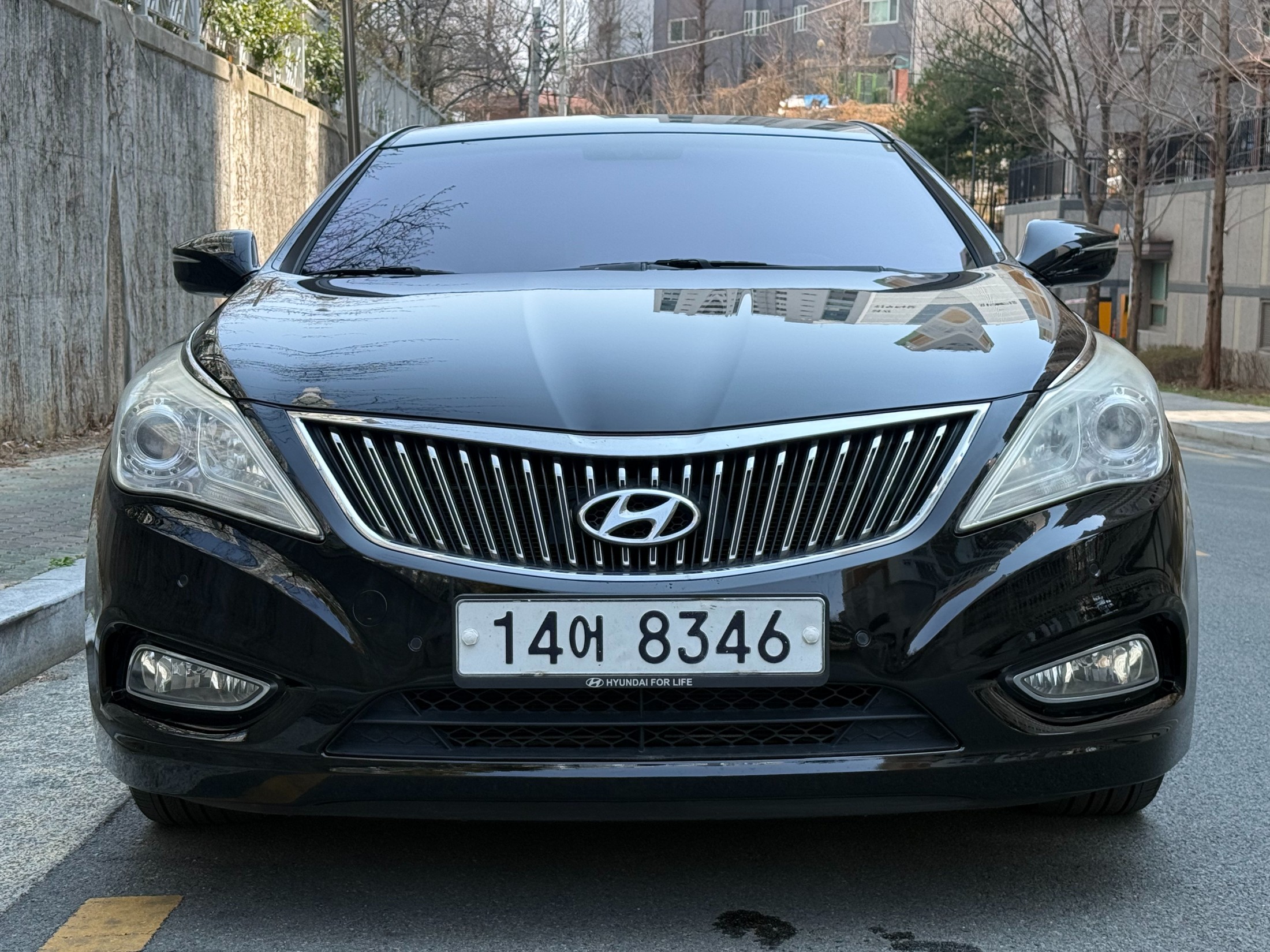
Straightforward 8703: Hyundai Tucson NX4, Kia Sportage NQ5, Hyundai Santa Fe TM, Kia Sorento MQ4, Hyundai Sonata, Kia K5, Hyundai Avante, Kia Morning.
Straightforward 8704: Hyundai Porter and Kia Bongo in their standard cargo-bed configurations. These are goods vehicles by construction.
Straightforward 8702: Hyundai County and Kia Combi, where seating capacity meets the ten-or-more threshold.
The genuinely contested ones: the Hyundai Grand Starex and Kia Carnival, and any van-derived unit. A Grand Starex exists in Korea in multiple configurations — passenger versions with full seating and glazing, and cargo-oriented versions with reduced seating and panelled rear sides. The passenger configuration is 8703.
A cargo configuration with no rear seating is arguably 8704. And some configurations sit awkwardly between the two.
Customs administrations resolve this on objective construction criteria: the presence of permanent seating and seat anchorages, safety equipment for rear occupants, rear side windows, the presence of a permanent partition, floor treatment, and the ratio of passenger area to cargo area.
Why importers get burned on the Starex and Carnival

The pattern: a unit is bought as a “van”, declared under 8704 expecting goods-vehicle treatment, and reclassified by customs to 8703 with the difference assessed plus, in some regimes, a penalty for misdeclaration.
The reverse happens too. A cargo-configured unit declared as a passenger vehicle pays passenger duty unnecessarily, and nobody notices because customs has no reason to object to over-collection.
The problem in both directions is that the importer did not establish the classification from the vehicle’s actual construction before shipping. That determination can be made in Korea, from the registration record and photographs of the interior — seating, anchorages, glazing, partition — for essentially no cost.
The seating count is not a detail
For 8702 the threshold is ten or more persons including the driver. A minibus configured for nine plus driver and one configured for eleven fall in different headings.
Korean minibus stock comes in multiple seating configurations, and a County can be found in configurations spanning a wide range. The registration record states the authorised seating capacity.
Get it, in writing, before purchase — and understand that if seats have been removed or added since first registration, the vehicle as presented and the record may disagree, which is its own problem at inspection.
Age and category interact
Classification does not only drive the duty rate. In many regimes it drives the age limit too, because age treatment is set per category.
A unit classified as a goods vehicle may face a more permissive age band than a passenger car in the same market — or a stricter one.
That means a classification error on a boundary-year unit is not just a duty variance. It can move the vehicle from admissible to prohibited.
This is the specific mechanism by which a Grand Starex bought on the assumption it was a commercial vehicle turns out to be an over-age passenger car at the port.
Getting it right before shipping
- Determine the heading from the vehicle’s construction, using the Korean registration record: body type, seating capacity, engine type and displacement, gross weight.
- Photograph the interior — seating, anchorages, rear glazing, partition, floor — and keep it in the file. This is what an argument with customs is conducted on.
- Confirm the heading and rate with the destination clearing agent, naming the specific subheading rather than “a van”.
- Check the age band that applies to that heading, not to vehicles generally.
- Declare the heading you can defend, and keep the construction evidence with the file.
Classification is not a negotiation. It is a determination made against published criteria, and an importer who has established it in advance from documents is in a completely different position from one who finds out at the port that their van is a car.
Sourcing Korean stock for your next container? Tell us the destination port, the model year you are targeting and the spec, and we come back with matched units and a landed figure per unit. Start at SK AutoSphere, or browse the parts catalogue.