Korea’s EV Surge Is Flooding the Used-Car Market — Here’s What African Importers Need to Act On Now
Korea registered 531,000 electric and plug-in hybrid vehicles in 2024, up 38% from 2022 (Korea Automobile Importers and Distributors Association data).
When Korean drivers upgrade to an EV6 or IONIQ 5, the 2019–2022 ICE-powered Kia Sportage, Tucson, and Niro they trade in doesn’t disappear — it gets re-priced aggressively through the Japanese auction system auctions, a Korean auction house lanes, and the Korean domestic listing market dealer stock and flows toward export markets.
For African fleet buyers and individual importers, this is not a trend to watch. It’s a buying window that narrows each year as Korean auction prices for premium ICE stock bottom out and then rebound once local demand is absorbed.
Here is what is happening, what it means in practice, and how to position your sourcing calendar before Q4 2026.
The short version
- When a Korean household trades in a 2021 Kia Sportage NQ5 1.6T for an IONIQ 5 long-range, the Sportage enters the used market.
- Not every segment is being repriced. The EV migration is concentrated in the urban commuter and family SUV categories, which means supply disruption is precise.
- Korean auction grade sheets (경매등급표) use a 1–6 scale.
- The customs and freight costs are identical.
What Korea’s EV Adoption Actually Does to Auction Lanes
When a Korean household trades in a 2021 Kia Sportage NQ5 1.6T for an IONIQ 5 long-range, the Sportage enters the used market.
Korea Environment Corporation (KECO) subsidies have accelerated the trade-in cycle, which means a specific cohort of vehicles — the 2019–2023 batch of fuel-efficient 1.6T and 2.0L SUVs — is arriving at the Japanese auction system Okayama-type Korean equivalents (a Korean auction house Incheon), and the Korean domestic listing market dealer lots in unusually high volume.
The supply-demand gap: Domestic Korean buyers are increasingly EV-oriented and do not want lightly depreciated petrol SUVs in the ₩12,000,000–₩20,000,000 range. Export dealers fill that gap.
Busan Port Authority export throughput for used vehicles exceeded 370,000 units in 2024, with West African destinations (Ghana, Nigeria, Senegal) accounting for roughly 14% of volume — up from 9% in 2020.
What this means for auction grades: You are now finding Grade 4 and 4.5 2021 Sportages at the Japanese auction system equivalent auctions for ₩13,000,000–₩15,500,000 FOB Busan. Twelve months ago the same specification cleared ₩16,000,000–₩18,000,000. That ₩2,500,000–₩2,500,000 differential (roughly $1,800–$2,000) compounds directly into your landed-cost margin at Tema or Apapa.
The Specific Models Creating the Best Value Windows
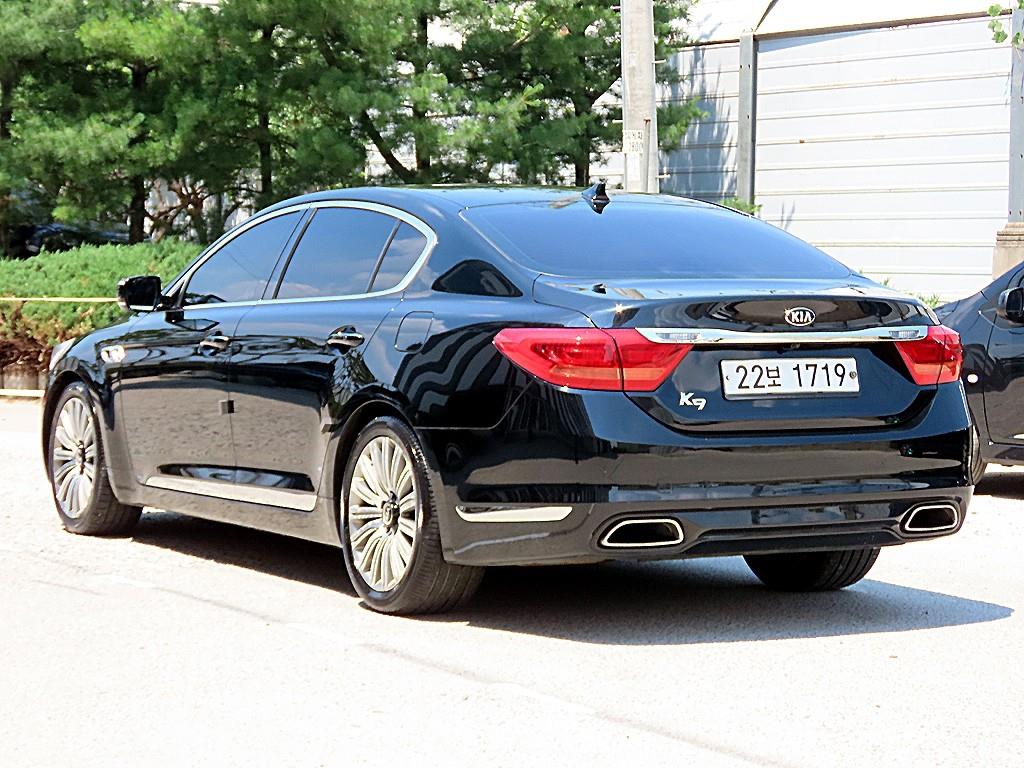
Not every segment is being repriced. The EV migration is concentrated in the urban commuter and family SUV categories, which means supply disruption is precise.
High-supply, price-falling segment (act now):
– Kia Sportage NQ5 1.6T GDI/TGDi (2021–2023): The most traded-in model against IONIQ 5 purchases. LHD production for export markets makes these Africa-eligible without conversion.
Grade 4 with 40,000–60,000 km now clears at approximately ₩14,000,000–₩16,000,000 FOB — 15–18% below 2023 pricing.
– Hyundai Tucson NX4 2.0 MPi (2021–2022): 1,999cc engine stays under the 2,000cc excise threshold in Ghana and Ivory Coast.
Supply surge from IONIQ-5/Tucson HEV trade-ins is keeping auction prices ₩1,500,000–₩2,000,000 below year-ago levels.
– Kia Niro HEV (2019–2022 DE generation): The outgoing first-generation Niro hybrid — replaced by the SG2 in 2022 — is available at ₩8,000,000–₩11,000,000 FOB for Grade 3.5–4 units.
These carry the 1.6L Kappa Atkinson-cycle petrol engine paired with a 32kW motor. Battery packs are LG Chem units with known thermal stability, and 12V auxiliary battery replacements (the most common failure point) are available from Hyundai Mobis distributors in Lagos and Accra.
Stable or rising segment (don’t overpay assuming the discount):
– Kia Carnival KA4 8-seater, Hyundai Staria: fleet-duty demand is strong domestically; EV equivalent (Carnival PHEV) has limited take-up.
Auction prices are NOT falling here.
– Hyundai H-1 / Starex: export supply remains tightly controlled by Korean dealerships offering them to established exporter networks first.
Reading the Auction Grade Against the EV Discount
Korean auction grade sheets (경매등급표) use a 1–6 scale. In the current supply environment, you need to be precise about what grade you’re paying for:
- Grade 4 (외관 상태: 양호): Minor surface scratches, no mechanical flags. Standard for export-quality vehicles. In the current market, this is the grade to target on 2021–2022 Sportage/Tucson at ₩14,000,000–₩16,500,000. Don’t accept the discount at Grade 3 (이상 있음 — faults noted) without a verified inspection report.
- Grade 4.5 or “R” stamp: Dealer-reconditioned unit. Typically a one-owner lease return with documented service history. These command a ₩1,000,000–₩1,500,000 premium but offer cleaner documentation for PAAR (Nigeria) and the DVLA (Ghana) clearance process.
- Grade 3 and below in high-supply conditions: The temptation is real — Grade 3 Sportages are appearing at ₩9,000,000–₩11,000,000. For African markets, resist unless you have a Kenya-registered garage doing pre-ship repair. The savings can be real, but undeclared chassis repairs (repair notes in box R3 of the grade sheet) create customs declaration risk and fail AI-assisted condition checks at destination.
Practical filter for the Korean domestic listing market searches: Set price floor at ₩9,000,000–15,000,000 filter for 연식 (model year) 2020 이상 (2020 or newer), and sort by 최근 등록 (most recently registered).
Auction-grade vehicles uploaded by export dealers (수출용) are labeled explicitly; ask your Korean broker to filter for these first.
Landed Cost Arithmetic With the New Pricing Reality
Using a 2021 Kia Sportage NQ5 1.6T 2WD, Grade 4, 48,000 km, to Tema Port (Ghana) as the worked example:
| Line item | Amount |
|---|---|
| Auction/dealer purchase price (FOB Busan) | $8,000–14,000 |
| Korean export agent fee + port handling | $200–500 |
| RoRo freight, Busan → Tema (approx 30 days) | $700–1,200 |
| Marine insurance (1.5% CIF) | $140–230 |
| CIF Tema | $10,000–16,000 |
| Ghana CEPS import duty (10% CIF) | $1,000–2,000 |
| Ghana VAT (15% of CIF + duty) | $1,500–3,000 |
| ECOWAS levy + GETFUND + NHF surcharges (~2.5%) | $200–400 |
| DVLA inspection + registration | $140–220 |
| Local clearing agent + port demurrage | $300–600 |
| Total landed, Tema | $41,680–60,150 |
| Accra retail resale range (2021 Sportage Grade 4) | $19,500–$22,000 |
| Estimated gross margin | 15–30% |
This margin is approximately 4–6 percentage points better than the same calculation at 2023 auction prices, entirely because the EV trade-in surge has reduced the FOB line. The customs and freight costs are identical.
Nigeria (Apapa) version: Add Form M processing (~$100–300 additional), SONCAP certificate ($250–$400 depending on inspector), and Nigeria’s 35% import levy + 7.5% VAT on CIF. Total landed Apapa is approximately $20,800–$22,500 on the same vehicle. Resale Apapa: $24,000–$27,000 for a clean Sportage 2021.
How Long Does This Window Last?
The EV adoption curve in Korea will not reverse. But the useful-to-Africa supply window for current-cohort ICE vehicles has a logical close:
-
By 2027: The 2019–2022 batch will be 5–8 years old — hitting import age restrictions in Tanzania (5-year rule via TRA), Uganda, and Rwanda (8-year limit on left-hand-drive imports).
Ghana and Nigeria have no formal age cap but bank financing dries up past 7 years, constraining resale to cash buyers only.
-
Korean hybrid vehicles are the next wave: Grade 4 Niro HEV 2020 units are already appearing at prices that will work for Kenya (no strict age cap, favorable hybrid duty rates) and Ethiopia (ERCA duty drawback for hybrid powertrains).
Importers who build hybrid servicing capability now — sourcing 12V aux batteries and HV relay kits from Hyundai Mobis Lagos — will have a structural advantage when Grade 4 HEV supply peaks in 2026–2027.
-
The auction intelligence gap is your moat: Most African importers are buying from Korean brokers who add ₩1,500,000–₩2,500,000 markup on top of auction lane prices.
Direct access to the Korean domestic listing market dealer listings, cross-referenced against the domestic retail aggregators valuations as a price floor, gives you a ₩1,000,000–₩2,000,000 edge per unit.
At 10 units per quarter, that is $7,000–$14,000 in annual margin difference.
Practical Next Steps for African Buyers
-
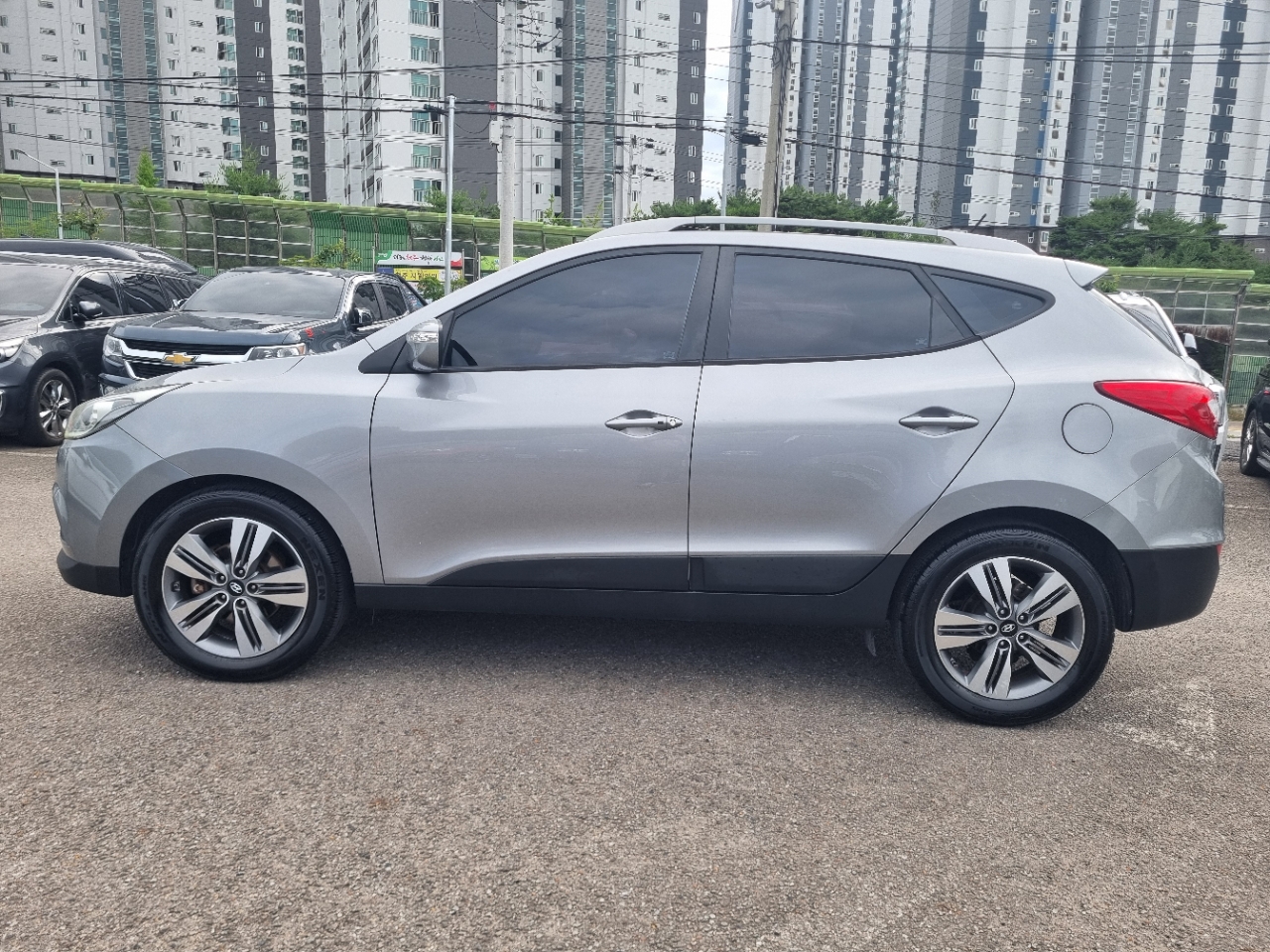
Set the Korean domestic listing market alerts for 스포티지 NQ5 (Sportage NQ5) and 투싼 NX4 (Tucson NX4), Grade 4+, ₩12,000,000–₩17,000,000, registered 2020 or later. New listings appear daily.
-
Verify engine displacement before bidding — Ghana and Ivory Coast duty structures penalize engines over 2,000cc heavily. The Sportage 1.6T TGDi is 1,598cc; the 2.0 GDI variant is 1,999cc. Both clear the threshold. The 2.5T AWD does not — treat as a no-go for Tema/Abidjan destinations.
-
Commission an AI-assisted pre-purchase inspection from a Korean vehicle inspection firm before payment. SK AutoSphere’s condition reports use Vision AI cross-referenced against the auction grade sheet to flag discrepancies between the declared grade and photographic evidence.
Inspection cost is recovered on the first transaction where it catches a Grade 3 car being sold as Grade 4.
-
Hedge your shipping timing: RoRo vessels from Busan to Tema (Grimaldi, MOL, K-Line) run approximately 28–35 days. Book 6–8 weeks after purchase to allow inspection, VAT export refund processing, and documentation.
The VAT refund (부가세 환급) on the Korean purchase side — typically 8–10% of the purchase price — takes 3–4 weeks from an export agent to process.
All pricing references are FOB Busan auction estimates as of mid-2026 and should be verified against current the Korean domestic listing market listings before committing to a purchase. Exchange rates are KRW/USD approximate.
Sourcing Korean stock for your next container? Tell us the destination port, the model year you are targeting and the spec, and we come back with matched units and a landed figure per unit. Start at SK AutoSphere, or browse the parts catalogue.