RoRo vs Container Shipping for Korean Vehicles to Africa: A Buyer’s Decision Guide
When you’re importing a used vehicle from Korea to West or East Africa, one of the earliest — and most consequential — decisions you’ll make is how the car travels: Roll-on/Roll-off (RoRo) or a sealed shipping container. The difference isn’t just about cost.
It affects your timeline, your risk exposure, your customs experience at Tema (Ghana), Apapa (Nigeria), or Mombasa (Kenya), and — critically — whether your vehicle arrives in the same condition it left Busan or Incheon.
This guide lays out the real trade-offs for African importers sourcing Korean used vehicles, drawing on actual sailing schedules, port realities, and the most common damage and delay patterns importers encounter.
The short version
- RoRo ships are purpose-built car carriers — essentially floating multi-storey parking garages.
- Container shipping loads your vehicle inside a standard 20ft or 40ft ISO steel box.
- These are representative ranges gathered from Korean export agents and freight forwarders active on West Africa lanes.
- 1. No packing damage risk. The most common container damage claim: a vehicle shifts during storm swells when lashing fails, or moisture ingress causes interior mold or corrosion (especially for open-top/flat-rack loading).
What is RoRo shipping?
RoRo ships are purpose-built car carriers — essentially floating multi-storey parking garages. Vehicles are driven onto the vessel via a ramp, secured by lashings to the deck, and driven off at the destination port. No cranes. No lifting straps. No packing.
Korea is one of the world’s top RoRo exporters. Hyundai Glovis operates one of the largest pure-car-truck-carrier (PCTC) fleets in the world, and Busan Port handles more than 3 million vehicles annually through its dedicated RoRo terminals — BPA Vehicle Terminal (North Port) and the Gamman Terminal.
Incheon’s vehicle export terminal is smaller but handles significant used-car export volumes for West African lane operators.
Key RoRo carriers on Korea–Africa lanes (as of 2025–2026):
- Hyundai Glovis (GLOVE) — Korea’s dominant PCTC operator, strong on Korea–West Africa via European transshipment (Grimaldi at Antwerp/Barcelona).
- Grimaldi Lines — European RoRo giant with direct West Africa service. Korean vehicles typically transship at Antwerp or Salerno (Italy) onto Grimaldi’s Africa vessel network, reaching Tema and Apapa in 30–35 days total transit.
- Wallenius Wilhelmsen (WW) — Global PCTC with Korean capacity, often via Singapore transshipment for East African routes (Mombasa).
- K-Line / MOL — Japanese carriers with Korean loading ports; popular on Korea–East Africa via Colombo or Port Klang transshipment.
Typical RoRo transit times from Busan:
– Tema (Ghana): 28–38 days via Antwerp/Las Palmas transshipment
– Apapa (Lagos): 30–40 days via Antwerp/Dakar
– Mombasa: 22–30 days via Port Klang or Colombo
What does container shipping mean for a vehicle?
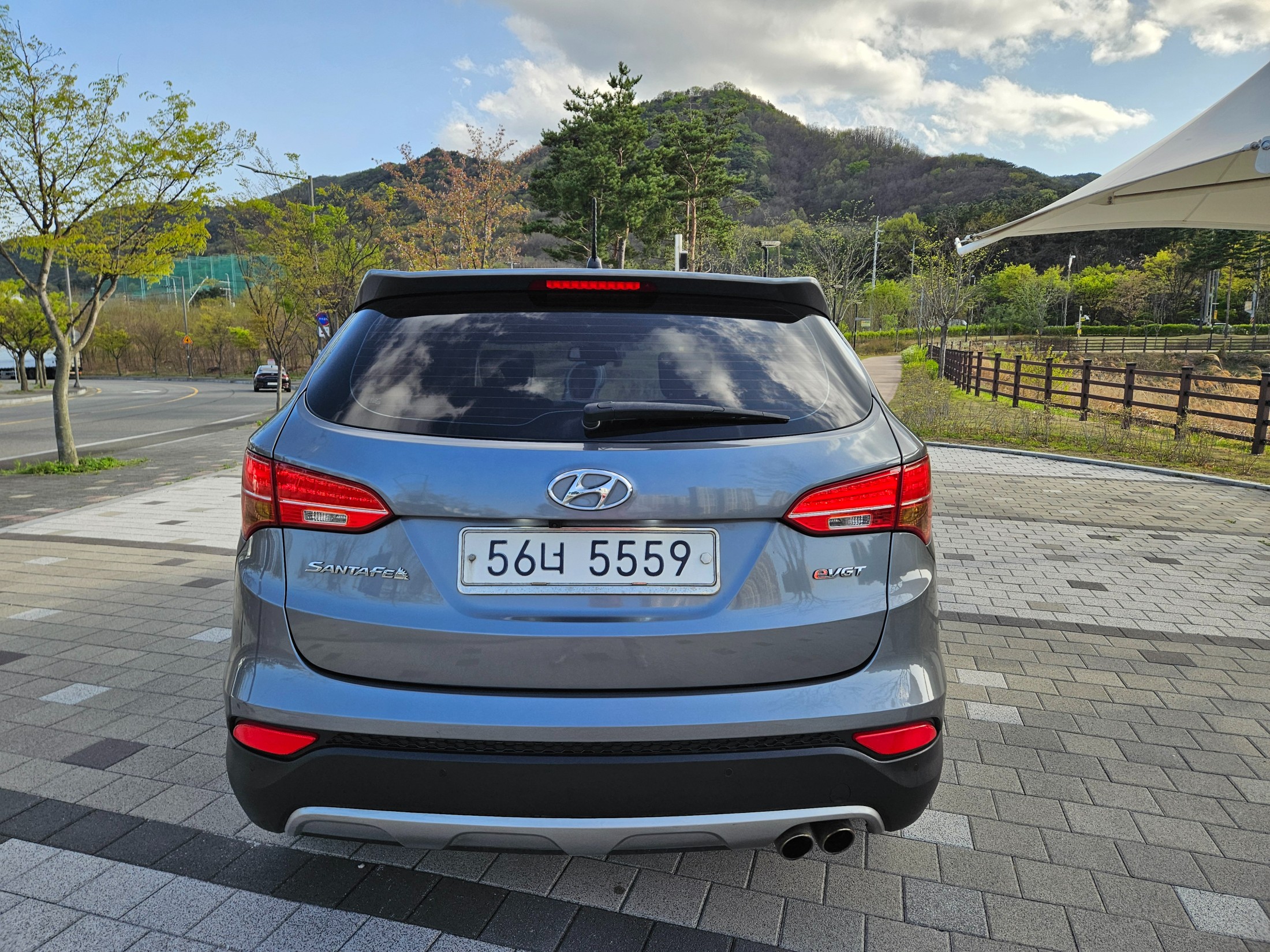
Container shipping loads your vehicle inside a standard 20ft or 40ft ISO steel box. A 20ft container takes one standard sedan with moderate interior loading space for parts. A 40ft container fits 2–3 standard sedans (sometimes 4 small hatchbacks if racked), or 1 pickup truck with parts.
At the Korean end, the most common approach for used vehicles is loading at private vehicle-export yards near Incheon or Busan NEWPORT Container Terminal. Agents specializing in used-vehicle container packing exist throughout both ports, charging ₩150,000–₩300,000 per vehicle for loading/lashing services beyond the container hire cost.
20ft container dimensions vs vehicle footprint:
– Interior usable length: ~5.9 m
– Interior width: ~2.35 m
– Hyundai Tucson (5th gen): 4.5 m long, 1.86 m wide → fits with ≈70 cm clearance in length
– Kia Carnival minivan: 5.16 m long → tight, usually requires folding mirrors + a flat-bed spot
At destination, containers are discharged by gantry crane at the container terminal — entirely separate from any RoRo terminal at the same port.
This matters at Tema: the Meridian Port Services (MPS) container terminal and the Ghana Ports and Harbours Authority (GPHA) RoRo berth have different gate procedures, clearing agents, and sometimes different customs assessment units.
Which costs more, RoRo or container?
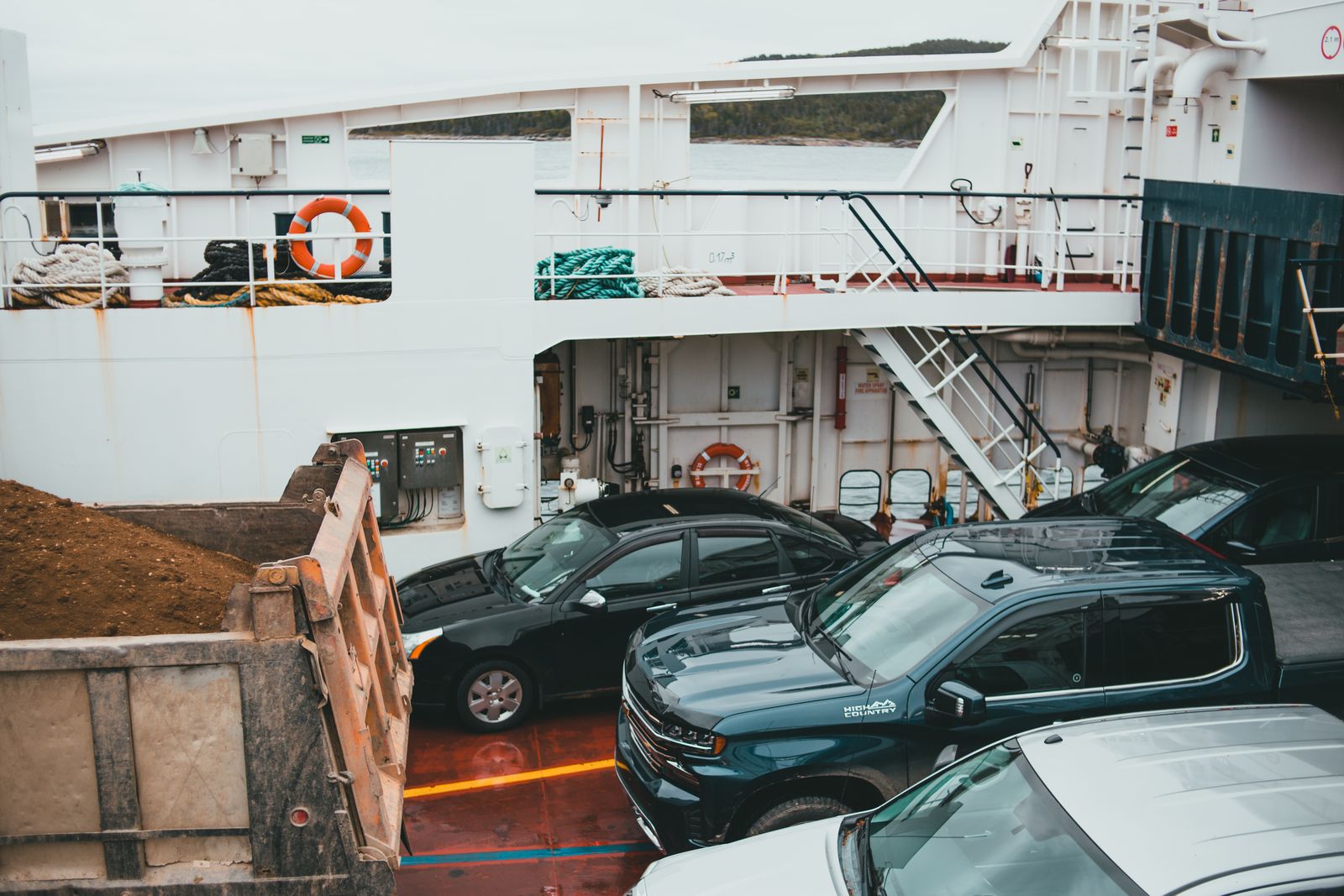
These are representative ranges gathered from Korean export agents and freight forwarders active on West Africa lanes. Rates move with fuel surcharges (BAF) and carrier capacity — always get a fresh quote.
RoRo (per vehicle, Busan → Tema via Antwerp transshipment)
| Vehicle Category | Approximate Freight (USD) |
|---|---|
| Small sedan (e.g., Kia Morning, Hyundai i10) | $700–$900 |
| Standard sedan (e.g., Sonata, K5) | $850–$1,100 |
| SUV/crossover (e.g., Tucson, Sportage) | $950–$1,300 |
| Large SUV / minivan (e.g., Palisade, Carnival) | $1,100–$1,600 |
| Light commercial / pickup (Porter 2, Bongo 3) | $950–$1,250 |
Does not include terminal handling at origin (THC Busan ≈$50–$80/vehicle), destination THC (Tema ≈$120–$180), or port congestion surcharges (variable).
Container (per 20ft box, Busan → Tema, rate for the box not per vehicle)
| Container Size | Approximate Freight (USD) |
|---|---|
| 20ft (1 vehicle) | $1,800–$2,800 |
| 40ft (2–3 vehicles) | $2,800–$4,000 |
When you load 3 standard sedans into a 40ft container, the per-vehicle shipping cost drops to $930–$1,333 per vehicle — competitive with RoRo for sedans, but you now need to coordinate 3 purchases simultaneously and find the right size/make mix.
THC and inland costs (container): Tema container terminal THC ≈$280–$380/20ft. Customs examinations on containers at GPHA can involve 100% physical exam (“devanning”) if a risk flag is raised — this adds ₵500–₵2,000+ in agent fees and 2–5 day delays.
RoRo vehicles at the RoRo berth tend to face fewer full-examination delays, though CEPS (Customs Excise and Preventive Service) targeting is ultimately random.
When is RoRo the better choice?
1. No packing damage risk. The most common container damage claim: a vehicle shifts during storm swells when lashing fails, or moisture ingress causes interior mold or corrosion (especially for open-top/flat-rack loading). RoRo eliminates this class of risk entirely.
2. Simpler documentation. A RoRo bill of lading (B/L) is straightforward. Container B/Ls require a packing list, container seal numbers, and cargo weight declarations. For an importer managing 5–20 vehicles simultaneously, the paperwork delta matters.
3. Better suited for single-vehicle purchases. If you’re importing one vehicle, RoRo is almost always cheaper after THC is factored in. Container economics only work when you’re filling the box.
4. Lower risk of customs-exam strip-out. At Tema and Apapa, customs agents occasionally strip-search containers for hidden goods. RoRo vehicles are inspected visually at the CEPS shed.
While both channels have their delays, the physical examination regime differs and most importers report faster CEPS clearance at the RoRo shed for a straightforward single-vehicle import.
When is a container the better choice?
1. You can load spare parts inside the vehicle. This is the primary driver for container shipping among experienced African importers.
A Hyundai Tucson or Kia Sorento arriving in a container can carry $2,000–$5,000 worth of OEM spare parts (filters, belts, suspension bushings, brake pads) inside the boot and rear seats — parts that would be impossible to send on RoRo.
At typical Ghanaian or Nigerian parts prices, this alone can offset the container premium.
2. Vehicle protection from weather and port handling. In West Africa, vehicles on RoRo ships or at open RoRo storage yards can sit in direct sun for weeks. Faded dashboards, UV-damaged door seals, and cracked tire sidewalls are common complaints from importers receiving RoRo vehicles during harmattan season.
A sealed container eliminates this.
3. Lower theft risk at port. Vehicle parts disappear at some African ports. At Apapa in particular, side mirrors, stereo units, and spare tyres go missing from vehicles sitting in open RoRo yards during long customs holds. A sealed container presents a higher-effort theft target.
4. Better for high-value vehicles. A well-specified Hyundai Staria (premium MPV) or Genesis G80 worth $24,000–36,000+ in a container is insured and sealed. Putting a high-value unit on RoRo exposes it to the realities of open-yard storage. The marginal container premium ($800–$1,200 extra) is small against the vehicle value.
How do you choose between RoRo and container?
| Scenario | Recommended Shipping |
|---|---|
| Single economy sedan, tight budget | RoRo |
| 2–4 vehicles from same Korean supplier | Container (40ft) |
| Any vehicle + spare parts batch | Container (20ft or 40ft) |
| High-value vehicle ($20,000–30,000+ FOB) | Container |
| Commercial fleet (buses, trucks) | RoRo (vehicle-specific carriers exist) |
| Importer in landlocked country (e.g., Mali, Burkina Faso, Niger via Lomé or Tema) | Container — easier cross-border transit documentation |
| Time-sensitive delivery | RoRo (usually faster, no packing/unpacking delays) |
What is different about shipping out of Korea?
Export certification from Korea (말소등록/Export Deregistration): Required before any vehicle can ship. The Korean dealer or agent de-registers the vehicle with MOLIT (Ministry of Land, Infrastructure and Transport), which typically takes 2–5 business days. RoRo carriers and container operators both require this certificate before loading.
Rushing this step is the most common cause of missed vessel departures.
Busan PCTC Terminal vs Container Terminal: These are different facilities, kilometers apart at Busan New Port. If you’re containerizing, your logistics agent must ensure the container booking lines up with a container terminal call, not a vehicle terminal call. Mismatches cause costly re-bookings.
Korean dealers prefer RoRo for speed. Most established used-car dealers at Eunhaeng-dong (Incheon) and the Hyundai/Kia auction satellite yards near Busan are set up for fast RoRo handover — they deliver to the vehicle export yard, and the carrier handles lashing.
Container packing requires a separate appointment and an additional trucking move. If you want your vehicle on the next available vessel (sometimes 7 days), RoRo is the path of least resistance.
What should you tell your Korean agent?
Whether you choose RoRo or container, send your agent these specifics upfront:
- Exact destination port (Tema vs Apapa vs Mombasa — each has different carrier options)
- Vehicle dimensions (don’t assume; ask the dealer for the model’s L × W × H)
- Any interior cargo (container only; declare it)
- Preferred incoterm: FOB (most common — you book the freight) vs CNF/CIF (seller arranges freight, you pay cost + insurance)
- Cargo insurance requirements (see our marine cargo insurance guide for the Korea–Africa vehicle corridor)
Getting these details right before booking saves the ₩150,000–₩500,000 amendment fees that Korean carriers charge for last-minute changes.
Related guides: Marine Cargo Insurance for Korea–Africa Vehicle Imports · Landed Cost Breakdown: Korea to West Africa · Reading a Korean Auction Grade Sheet · Pre-Purchase Inspection: What to Check Before Committing
Sourcing Korean stock for your next container? Tell us the destination port, the model year you are targeting and the spec, and we come back with matched units and a landed figure per unit. Start at SK AutoSphere, or browse the parts catalogue.