Hyundai Santa Fe vs Kia Sorento: Which Korean-Sourced SUV to Import to West Africa (2026 Buyer’s Guide)
Two SUVs dominate the mid-size export pipeline out of Korea: the Hyundai Santa Fe and its platform cousin, the Kia Sorento.
They share the Hyundai-Kia N3 architecture, the same R-series and Smartstream diesel and gasoline engines, and overlapping price bands on the Korean domestic listing market, the export-facing aggregators, and the domestic retail aggregators.
For a Tema- or Lagos-bound container, though, the differences in grade availability, parts supply, and resale demand decide which one actually clears a margin.
This guide is for the importer deciding which of the two to put in the next 40-foot container — not for a showroom shopper in Seoul.
The short version
- Choose the Santa Fe (TM, 2019–2023) if you want the broadest spread of clean diesel auction units and the strongest brand pull in Ghana.
- The third-generation Santa Fe (chassis code TM, 2018–2023) and the third-gen Sorento ( UM, 2015–2020) plus the fourth-gen Sorento ( MQ4, 2020–present) come off shared Hyundai Motor Group tooling.
- Ocean freight + insurance to Tema or Tin Can/Lagos: varies with RoRo vs container and current rates; budget several hundred USD per unit on shared container, more for sole-use.
- Ghana (Tema/Accra): Santa Fe has the stronger walk-in brand recognition; diesel preferred for fuel cost and torque.
Quick answer
- Choose the Santa Fe (TM, 2019–2023) if you want the broadest spread of clean diesel auction units and the strongest brand pull in Ghana.
- Choose the Sorento (UM facelift or MQ4, 2019–2024) if you can source the 7-seat diesel and you’re selling into Nigeria’s family/fleet segment, where the Sorento name carries.
- Both are LHD out of Korea — correct for Ghana and Nigeria, no RHD conversion needed.
How different are the Santa Fe and Sorento really?
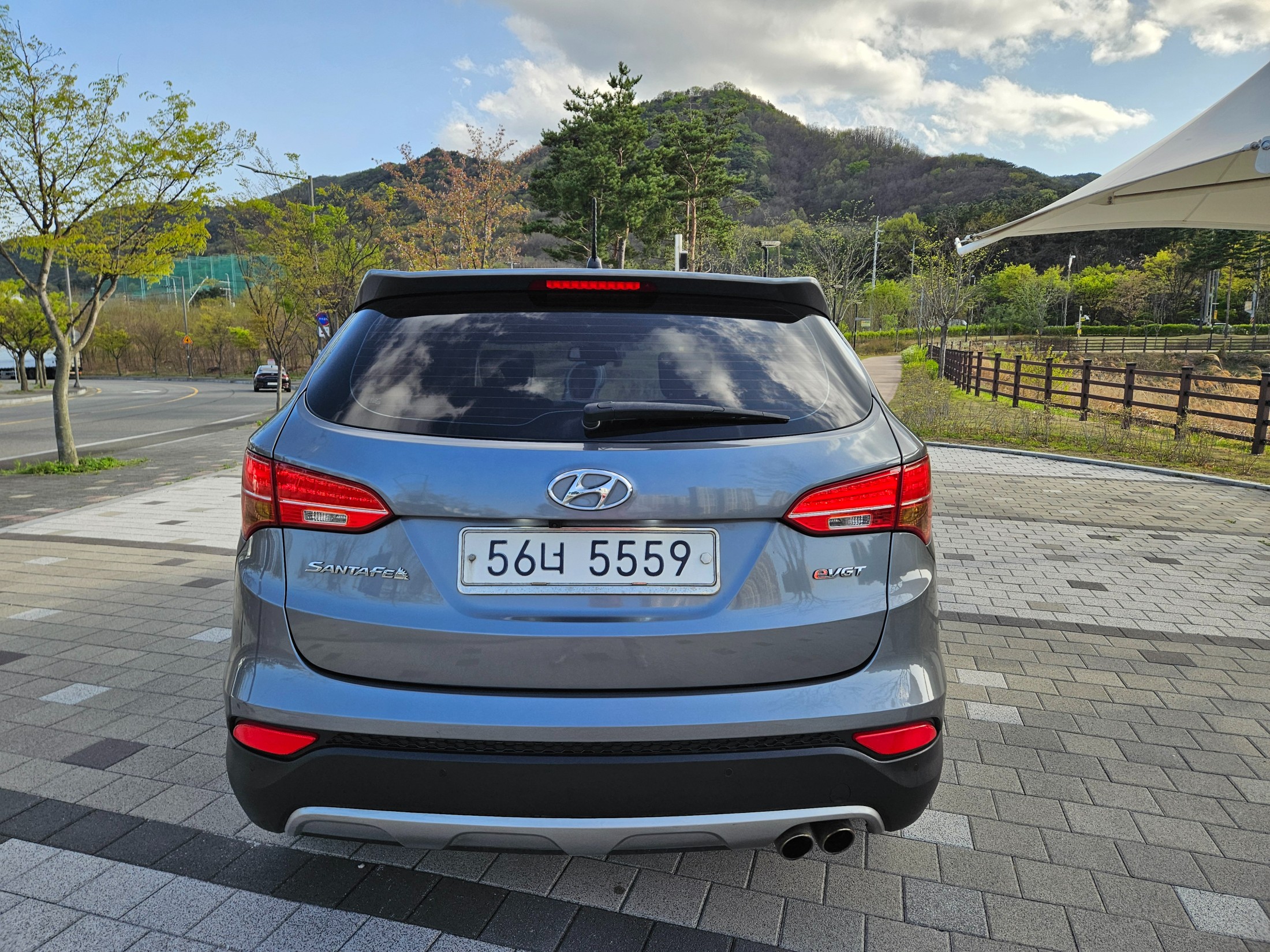
The third-generation Santa Fe (chassis code TM, 2018–2023) and the third-gen Sorento (UM, 2015–2020) plus the fourth-gen Sorento (MQ4, 2020–present) come off shared Hyundai Motor Group tooling. Mechanically you’re choosing between:
- R2.0 / R2.2 CRDi diesel — the 2.2L is the export workhorse; strong torque for the load profiles common on West African roads.
- Smartstream 2.5T gasoline — appears more on later MQ4 Sorento trims; thirstier, harder to fuel economically in-market.
- Theta II 2.4 GDI gasoline — common on Santa Fe TM base trims headed to Korea’s domestic market.
Because the running gear overlaps, a Hyundai-Kia parts dealer in Abossey Okai (Accra) or Ladipo (Lagos) stocks filters, belts, and suspension components that fit both. That shared-parts reality is the single biggest reason these two beat a comparable Nissan or Mazda import on total cost of ownership.
What does each one cost to land?
For a ~₩17,000,000–27,000,000 Santa Fe TM 2.2 diesel, the rough build-up to a West African port looks like:
- FOB Korea (vehicle + domestic inland + export handling): the auction price plus roughly ₩0.6M–₩1.2M.
- Ocean freight + insurance to Tema or Tin Can/Lagos: varies with RoRo vs container and current rates; budget several hundred USD per unit on shared container, more for sole-use.
- Destination duty + levies: Ghana and Nigeria both assess import duty, VAT/levies, and an age-based penalty. Ghana’s over-age penalty escalates sharply once a vehicle passes ~10 model-years; Nigeria’s duty + levy structure on used SUVs has historically landed in the high-double-digit percent range on assessed value. Confirm the current schedule with a licensed clearing agent — these change with each fiscal year.
The age-penalty cliff is why 2019–2021 model years are the export sweet spot in 2026: new enough to dodge the worst penalty, old enough to clear under the auction price ceiling that keeps the unit profitable.
Which market buys which?
- Ghana (Tema/Accra): Santa Fe has the stronger walk-in brand recognition; diesel preferred for fuel cost and torque. 5-seat and 7-seat both move.
- Nigeria (Lagos/Ibadan): Sorento competes hard in the family-and-light-fleet bracket; the 7-seat MQ4 diesel is the one to chase. Gasoline 2.5T units are a harder sell against pump prices.
Across both markets, silver, white, and grey clear faster than dark colors that show Harmattan dust.
What are the known problems with each?
- MQ4 Sorento DCT (dual-clutch) units: the wet-DCT gearbox is less forgiving of stop-go traffic and harder to service in-market than the older torque-converter automatics. Favor the 8-speed auto trims for Lagos and Accra traffic.
- Santa Fe TM SCC/lane-assist electronics: high-trim Korean-market cars carry driver-assist modules that throw faults when a sensor is damaged in transit; price that risk into high-spec lots.
- Both: AdBlue/DPF diesels need clean fuel; advise in-market buyers accordingly or the warranty conversations get expensive.
Bottom line for the next container
If you’re loading one unit and want the safest resale, take a 2019–2021 Santa Fe TM 2.2 diesel, grade 4.5/A, under 80,000 km, light color, 8-speed auto. If you’re loading for a Nigerian family-segment buyer and can find the spec, the 7-seat Sorento MQ4 2.2 diesel carries the better margin — just steer clear of the DCT and verify the auction sheet has no “X” panels.
Next: pair this with the landed-cost breakdown and the auction-grade-sheet reading guide before you bid.
Sourcing Korean stock for your next container? Tell us the destination port, the model year you are targeting and the spec, and we come back with matched units and a landed figure per unit. Start at SK AutoSphere, or browse the parts catalogue.
How we source this vehicle
Korean supply for this model is deep. The variable that separates a good unit from a cheap one is the auction grade sheet, not the listing photos.
That sheet is written in Korean shorthand that does not translate cleanly, and it is where margin is won or quietly lost. Reading it, and the physical inspection behind it, is the part we do.
We reject the units that photograph well and inspect badly, before anyone pays for one. Four things let us come back with a matched shortlist and a landed figure per unit:
- Destination port — this sets the age cutoff and the duty band.
- Body and seat count — this changes the trim list, not just the price.
- Target model year — anchored to your port’s over-age cliff.
- Fuel — diesel unless your buyer has a specific reason to want petrol.