Pre-Purchase Vehicle Inspection in Korea: A West African Buyer’s Guide
You’ve just won a 2021 Hyundai Tucson on a Korean auction house at ₩14,000,000–23,000,000.
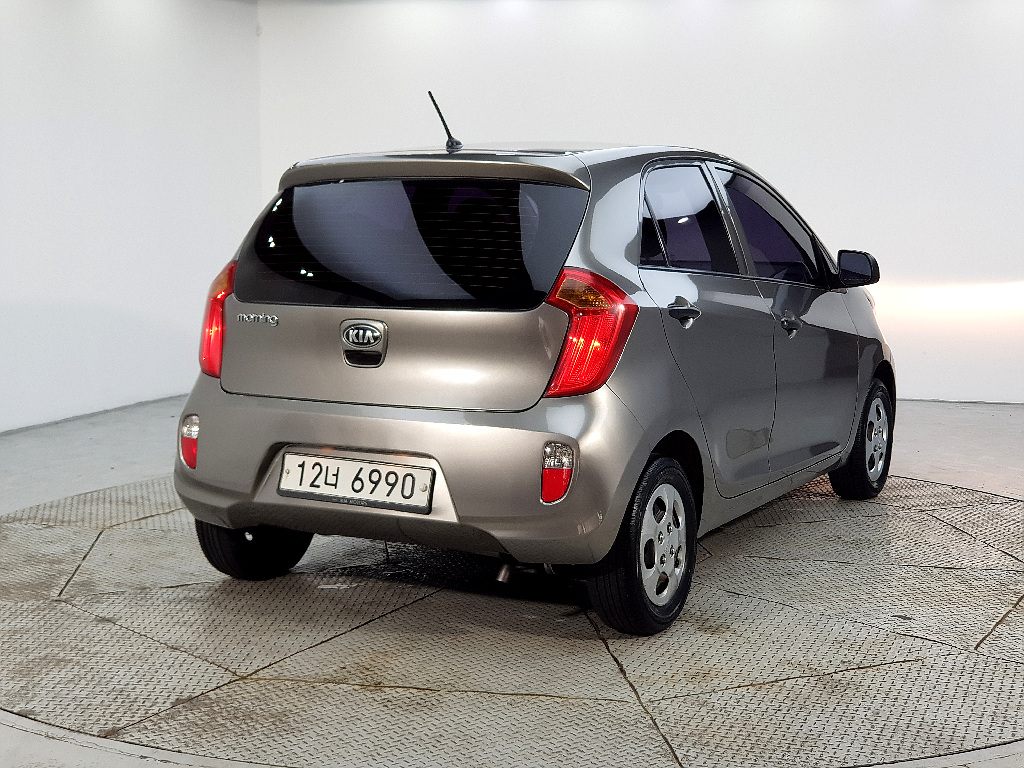
The auction grade sheet says “4B” exterior, “B” interior — which sounds acceptable, until your container arrives at Tema Port and you discover the “B” exterior rating concealed a repaired front-right panel that wasn’t flagged in the sheet thumbnail.
The Ghana Revenue Authority doesn’t care about what the auction photos showed. Your buyer cares a lot.
This is why pre-purchase physical inspection in Korea — independent of the auction house — is not optional for serious West African importers.
Here’s what that process actually looks like, what it costs, and why the gap between “auction grade” and “ready to sell in Lagos” is wider than most first-time buyers expect.
The short version
- Korea’s used-car auction ecosystem — a Korean auction house, and the direct dealer channels on the Korean domestic listing market — operates on a standardized grading system.
- ng & Research Institute (KATRI), a government-affiliated body under the Ministry of Land, Infrastructure and Transport, publishes the official used vehicle inspection standards that underpin both auction grading and dealer certification.
- One of the most common expensive surprises in Korea-Africa vehicle trade: a vehicle with a clean auction sheet that arrives with a Check Engine light that comes on after 200km.
- The pre-purchase inspection report is one document.
Why isn’t the auction grade sheet enough?
Korea’s used-car auction ecosystem — a Korean auction house, and the direct dealer channels on the Korean domestic listing market — operates on a standardized grading system.
Exterior condition runs from Grade 1 (near-new) through Grade 6 (heavy damage), with letter suffixes (A, B, C) for interior.
The problem: grades reflect the visible condition at the time of auction inspection, not mechanical condition, not hidden rust in the chassis, and not the kind of soft collision repair that passes visual inspection but shows up as irregular panel gaps when you know where to look.
JU and the Japanese auction system inspector thoroughness also varies by auction lot volume — a high-throughput Friday slot in Osaka or Busan gets less scrutiny than a low-volume specialty auction.
For African buyers purchasing containers sight-unseen from 9,000+ km away, a grade-sheet miss means:
– A vehicle that won’t clear CEPS inspection at Tema
– A vehicle Nigeria NADDC/SON compliance officers reject for visible frame damage
– A vehicle your retail buyer walks away from because the paint texture doesn’t match across panels
The economic exposure on a single container of six Grade-4 SUVs can easily exceed ₩2,000,000–4,000,000 in regrading, local repairs, and delayed resale — more than the commission on the entire shipment.
What does a pre-shipment inspection cover?
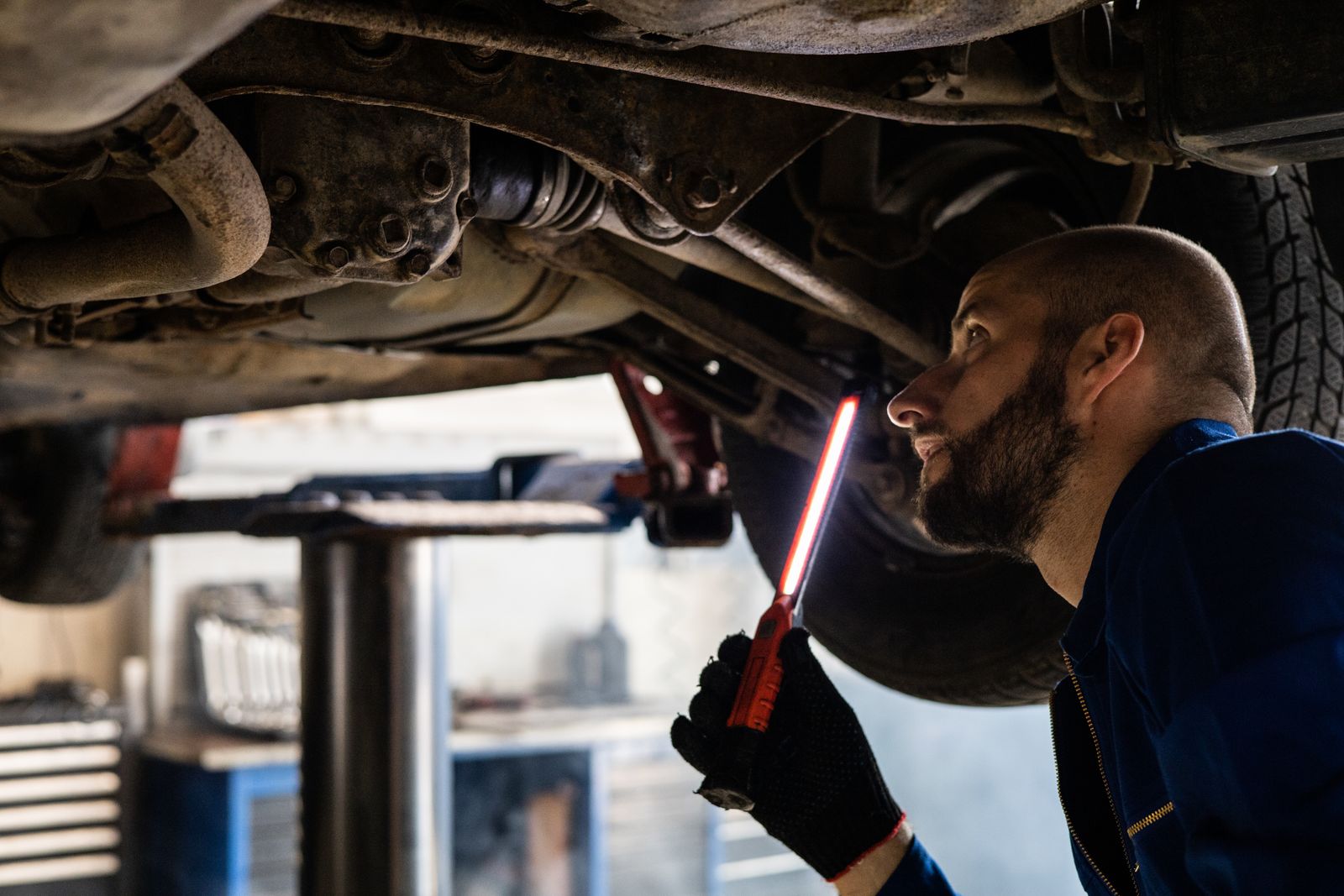
Korea Automobile Testing & Research Institute (KATRI), a government-affiliated body under the Ministry of Land, Infrastructure and Transport, publishes the official used vehicle inspection standards that underpin both auction grading and dealer certification. An independent inspection aligned to KATRI criteria typically checks:
Structural Integrity
– Unibody measurement via electronic measuring system (Celette, Car-O-Liner, or equivalent) — frame straightness within 2mm tolerance across reference points
– Chassis rail continuity, rocker panel condition, floor pan spot-welds
Powertrain
– Engine oil condition, coolant condition, transmission fluid check
– Leak scan (valve cover, differential, transfer case)
– OBD2 fault-code read — pulling stored codes the auction sheet won’t show (P0420 catalytic converter efficiency, P0340 cam sensor, transmission slip codes)
– Test drive for NVH (noise/vibration/harshness) anomalies
Paint and Body
– Paint depth gauge scan across all panels (a Elcometer 456 or PosiTest AT reading above 250–300 microns typically indicates repaint or filler)
– Underbody inspection for rust proofing integrity and structural corrosion (critical for vehicles exported to humid coastal environments like Lagos or Tema)
Electrical / Infotainment
– Full system scan via manufacturer-grade diagnostic tool (Hyundai/Kia GDS, Hyundai MDI-II, or equivalent)
– All windows, HVAC, camera systems functional check
This is 100+ inspection points minimum for a thorough inspection. Some independent services in Busan and Incheon run 180–220 point checklists, with photographic evidence for each flagged point.
What do Korean grade sheets leave out?
One of the most common expensive surprises in Korea-Africa vehicle trade: a vehicle with a clean auction sheet that arrives with a Check Engine light that comes on after 200km.
The auction lot inspection often doesn’t include an OBD2 fault-code read — stored (non-active) codes clear automatically after a number of drive cycles, and shrewd sellers know this.
Codes that frequently clear before auction but indicate real problems:
– P0420/P0430 (catalyst system efficiency) — common in higher-mileage Hyundai/Kia Theta-II engines, indicates catalyst wear, can mean expensive repair in markets without OEM Hyundai aftersales
– P0340/P0345 (camshaft position sensor) — common Kia Soul/Sportage fault, often triggers between 80,000–120,000 km, inexpensive to fix in Korea, harder to source parts for in West Africa
– B10B3/B10B5 (airbag squib circuit) — indicates a previously deployed airbag system that wasn’t properly reset; an outright safety failure in most African vehicle inspection frameworks
Your independent inspector should conduct an OBD2 scan and provide the raw code dump as part of the report. Require it in writing before agreeing to the vehicle.
What documents should you request before shipping?
The pre-purchase inspection report is one document. For a complete West Africa import file, you’ll also need:
- Jaju (자주검사) or Auction inspection sheet — the original auction-issued condition grade document
- the Korean domestic listing market vehicle history report or equivalent (accident history pulled from Korea Road Traffic Authority database, includes insurance claim records)
- Chassis stamp photo — clear photograph of the VIN stamped on the firewall (not just the VIN plate), for customs cross-reference
- Pre-export inspection certificate — some destination markets (notably Ghana CEPS) require a pre-export inspection certificate from an accredited agency; Cotecna, SGS, and Bureau Veritas all operate in Korea and can issue certificates for Ghana and Nigeria bound shipments
- Commercial invoice and packing list — accurate FOB value in KRW with USD equivalent, per ECOWAS trade documentation requirements
Applying the Inspection Filter to Your Buying Strategy
Most experienced Korea-Africa importers develop a two-tier approach:
Tier 1 (Bulk, Grade 3–4 vehicles under ₩9,000,000–15,000,000): Basic inspection — OBD2 read, paint scan on the key panels, photos of underbody and engine bay. Batch inspection costs are reasonable at scale.
Tier 2 (Premium, Grade 4–5 vehicles ₩14,000,000–22,000,000+, or specialty models like Hyundai Staria, Genesis GV80, Kia Carnival): Full structural inspection with measuring system, full electrical scan, independent test drive. The per-vehicle inspection cost is a rounding error against the landed cost and resale margin.
The vehicles that hurt your reputation in your target market aren’t the obvious wrecks — those get caught at auction.
It’s the Grade-4 units with a single repaired panel that was done properly enough to hold up in Seoul but fails the DVLA roadworthiness check in Accra, or the one with stored fault codes that trigger after 300km in Lagos traffic.
An inspection at origin costs a fraction of local repair costs and the customer relationship damage.
How we source this vehicle
Korean supply for this model is deep. The variable that separates a good unit from a cheap one is the auction grade sheet, not the listing photos.
That sheet is written in Korean shorthand that does not translate cleanly, and it is where margin is won or quietly lost. Reading it, and the physical inspection behind it, is the part we do.
We reject the units that photograph well and inspect badly, before anyone pays for one. Four things let us come back with a matched shortlist and a landed figure per unit:
- Destination port — this sets the age cutoff and the duty band.
- Body and seat count — this changes the trim list, not just the price.
- Target model year — anchored to your port’s over-age cliff.
- Fuel — diesel unless your buyer has a specific reason to want petrol.
Sourcing Korean stock for your next container? Tell us the destination port, the model year you are targeting and the spec, and we come back with matched units and a landed figure per unit. Start at SK AutoSphere, or browse the parts catalogue.