After Customs Release: Registering an Imported Korean Vehicle and Getting Plates
Customs release is not the end of the import. It is the point at which a different set of authorities takes over, and the vehicle is not sellable — in most markets not legally drivable — until they are satisfied.
Importers who model the process as far as the port gate and no further routinely find that the last stage takes longer than the shipping did.
The short version
- Customs release means duty and taxes are settled and the goods may leave the terminal.
- The requirements vary but the shape is consistent across the region: The customs clearance certificate or release document, proving lawful importation and duty payment.
- At the physical inspection an officer reads the chassis number off the vehicle and compares it with every document.
- Korean domestic vehicles arrive in generally good mechanical condition, and the failures tend to be specification and compliance items rather than wear: Lighting.
Customs release, road authority registration and roadworthiness are three separate things
Customs release means duty and taxes are settled and the goods may leave the terminal. It produces a release document and, in most systems, a customs clearance certificate that the registration authority will later demand.
Registration enters the vehicle onto the national register, assigns a registration number and issues plates and a registration document. It is handled by the road transport or licensing authority, not by customs.
Roadworthiness certification is a physical inspection of the vehicle’s condition, usually by the road authority or an appointed inspection body, and it is commonly a precondition of registration for an imported used vehicle.
Three authorities, three documents, three timelines. A vehicle that has cleared customs and failed roadworthiness is a vehicle you own and cannot sell.
What the registration authority will want

The requirements vary but the shape is consistent across the region:
- The customs clearance certificate or release document, proving lawful importation and duty payment. This is the document that links the vehicle to a legitimate entry, and registration authorities check it against customs records.
- Proof of ownership — the commercial invoice, and the bill of lading.
- The export deregistration certificate from Korea. This is where it earns its place a second time. It proves the vehicle was lawfully deregistered in its country of origin and is not subject to a claim there — which is exactly what a registration authority needs to know before entering it on their register.
- A physical inspection, at which the chassis and engine numbers are verified against the documents.
- Roadworthiness certification.
- Insurance, which several jurisdictions require before plates are issued.
- Identification and tax registration for the person or entity registering.
The chassis number verification is where files stop
At the physical inspection an officer reads the chassis number off the vehicle and compares it with every document. Any discrepancy stops the process.
The discrepancies that occur in practice:
- A transcription error somewhere in the chain — one character wrong on the invoice or the bill of lading. Trivial in origin, and a real problem to correct because it means amending a document issued abroad.
- A stamped number that is difficult to read because of corrosion or dirt, requiring cleaning and re-presentation.
- A number that does not match because the vehicle presented is not the vehicle documented, which is a much more serious matter.
The preventive control is the three-way match made before shipping: the VIN, typed and verified, appearing identically on the registration record, the export deregistration certificate, the invoice, the grade sheet and the bill of lading. Every one of those is checked here.
Roadworthiness inspection, and what fails a Korean import
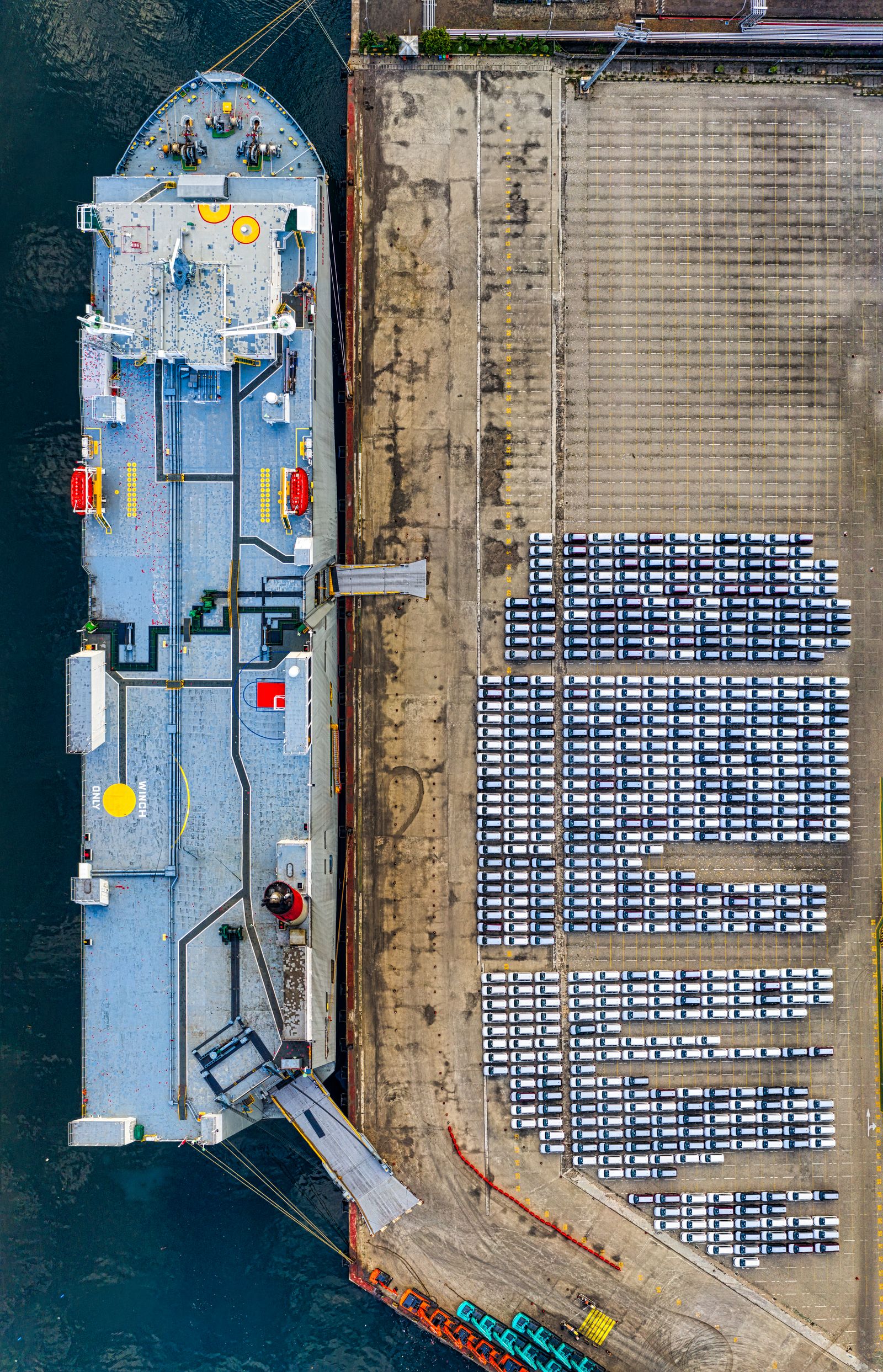
Korean domestic vehicles arrive in generally good mechanical condition, and the failures tend to be specification and compliance items rather than wear:
Lighting. Headlamp beam pattern is specified for the market the vehicle was built for. Where the destination’s inspection checks it, an unadjusted unit can fail.
Glass markings. Some regimes check for approval markings on glazing.
Tyres. Age, condition, and matching across an axle.
Emissions. Where an exhaust emissions test is part of the inspection, a diesel with a loaded particulate filter can fail — a foreseeable outcome given local fuel quality.
Speedometer units. Where the vehicle reads in units the destination does not use, some regimes require correction.
Seating and configuration matching the declared category. A vehicle declared as a goods vehicle with passenger seating fitted, or the reverse, creates a conflict between the customs classification and the registration category. This is the one that causes real trouble, because resolving it can mean reopening the customs entry.
The category conflict is worth avoiding deliberately
That last item deserves attention because it is a genuine trap for Grand Starex and van-derived units.
A vehicle classified for customs under one heading and presented for registration in a different category invites a question neither authority wants to answer, and the resolution is at the importer’s cost and on the importer’s clock.
Decide the vehicle’s category once, before shipping, based on its actual construction — and make sure the customs declaration and the registration application describe the same vehicle.
Timeline and cost, in the plan
Registration takes time and money that belongs in the landed-cost model:
- Roadworthiness inspection fee and any re-test
- Registration and number plate fees
- Road tax or licence for the period
- Insurance premium
- Agent or facilitation fees if a third party handles the process
- Storage or yard costs while it runs
Importers who omit this from the model discover it as an unbudgeted line at exactly the point when the vehicle should be generating cash.
The one document that makes it all easier
Across all three stages — customs, registration, roadworthiness — the same document keeps proving its value: the Korean export deregistration certificate for the specific chassis.
It supports the customs valuation, it establishes the age for limit purposes, and it satisfies the registration authority that the vehicle is not still registered somewhere else.
An importer who treats it as an optional extra will meet all three problems. An importer who makes it a precondition of purchase will not.
Sourcing Korean stock for your next container? Tell us the destination port, the model year you are targeting and the spec, and we come back with matched units and a landed figure per unit. Start at SK AutoSphere, or browse the parts catalogue.