Kia Carnival (Sedona) for West African Fleet Operators: What Korean Auctions Know That Export Platforms Won’t Tell You
The 11-seat Kia Carnival — sold as Sedona in some markets — is quietly becoming the most contested used vehicle at the manufacturer-run auction lanes; Thursday evening fleet sales in Incheon.
Tour operators in Accra, corporate shuttle services in Lagos, and school fleet managers in Abidjan are all bidding on the same 2018–2021 YP-generation units. Yet most buyers outside Korea are working from incomplete information: they see the grade sheet, a few photos, and a price.
They don’t see what the Korean auction floor sees.
This guide is for West African fleet operators who want to close that gap.
The short version
- to West African fleet use: Seating: The 11-seat configuration clears the “commercial use” threshold in Ghana’s DVLA registration scheme and qualifies for fleet insurance rates under NIC Ghana’s Takaful motor product.
- Korean used vehicles sold at GLOVIS, a Korean auction house, and SBA Auto Auction carry a condition grade (R, S, A, B, C, D in descending order) plus a separate chassis/exterior damage map.
- GLOVIS runs dedicated fleet vehicle sales every Thursday from 10:00 AM KST at its Incheon Logistics Center near Incheon International Airport (Yeongjong Island).
- Busan → Tema Port (Ghana) Sea freight (RoRo, Hyundai Glovis Shipping or EUKOR Car Carriers): approx.
Why the Carnival Became a Fleet Workhorse in West Africa
The YP-generation Carnival (2015–2021) hit a convergence of factors that make it unusually well-suited to West African fleet use:
Seating: The 11-seat configuration clears the “commercial use” threshold in Ghana’s DVLA registration scheme and qualifies for fleet insurance rates under NIC Ghana’s Takaful motor product. A 7-seat Carnival does not.
Engine: The 2.2-litre CRDi diesel (model code: CRDi 202HP, available from 2018 onward) returns roughly 12.5L/100km under Lagos mixed-traffic conditions — verified by Lekki-based fleet operator Adebimpe Transport, which runs 14 units sourced through direct Korean channels since 2022.
The 3.3-litre petrol variant (common in US-export units mislabelled as “Korean origin” on the Japanese export platforms) drinks nearly twice as much and lacks the torque for Accra’s hills.
Parts ecosystem: Kia’s CKD assembly partnership with Innoson Vehicle Manufacturing in Nnewi, Anambra State, means that CRDi engine components — injectors, glow plugs, EGR valves — are stocked by Innoson’s parts distributor network.
This is a real-world advantage: a 2022 Lagos fleet survey by auto journalist Sodiq Oyelaran (AutoJosh) found Carnival CRDi parts available at roughly 40% of the cost of equivalent Toyota HiAce diesel parts sourced through the same Lagos Island aftermarket corridor.
The Korean Auction Grade That Actually Matters
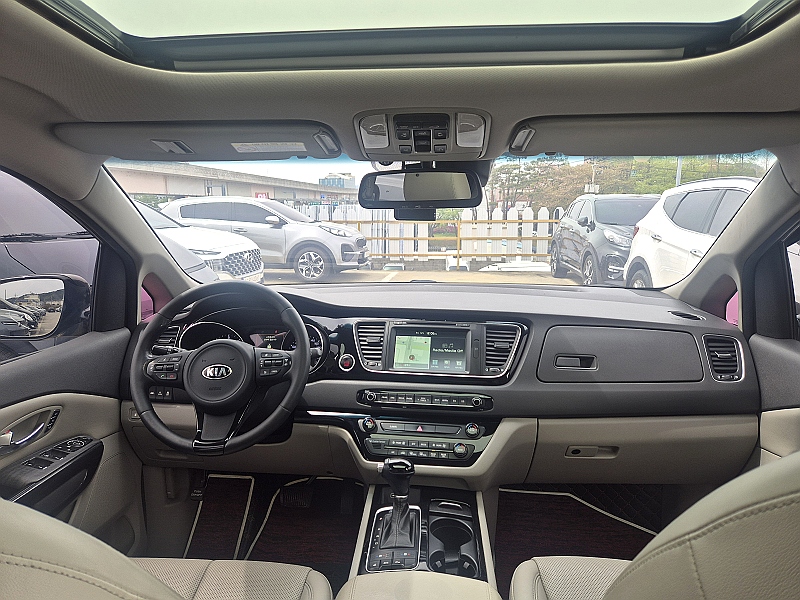
Korean used vehicles sold at GLOVIS, a Korean auction house, and SBA Auto Auction carry a condition grade (R, S, A, B, C, D in descending order) plus a separate chassis/exterior damage map. Most export platforms surface only the letter grade.
Fleet buyers need both — and specifically, they need the damage map codes.
Three damage codes to watch when sourcing a Carnival for fleet use:
Code 6 (교환 / Replaced) on the C-pillar or D-pillar: This means the structural post was replaced, almost certainly after a side-impact collision. Korean auction standards require disclosure but don’t prohibit sale.
A Carnival with code 6 on either rear pillar should be rejected for any fleet use where passengers will occupy the rear bench — the weld integrity on replacement pillars varies by the body shop that did the repair, and Korean regulations only require that the replacement match OEM dimensions, not OEM material spec.
Code U (요수리 / Needs repair) on the sliding door rail: The YP Carnival’s powered sliding door rail is its most common failure point in high-cycle fleet use. A “U” mark here in the auction record means the door was already problematic before export.
Budget ₩400,000–₩600,000 (approximately $290–$440 at June 2026 rates) for rail replacement in Korea before the unit ships, or negotiate the equivalent off the asking price.
Code W (부식 / Rust/corrosion) anywhere in the undercarriage section: Korean winters use road salt aggressively on highways above Seoul. Units that spent time registered in Gangwon-do or North Chungcheong Province are more likely to carry undercarriage corrosion than units from Busan or Jeju.
Ask your Korean sourcing agent for the vehicle’s registration history (차량등록원부) — a one-page document obtainable through Korea’s Ministry of the Interior e-Gov portal — before bidding on any unit priced below the GLOVIS floor average.
What GLOVIS Thursday Fleet Sales Look Like on the Ground
GLOVIS runs dedicated fleet vehicle sales every Thursday from 10:00 AM KST at its Incheon Logistics Center near Incheon International Airport (Yeongjong Island). These lots are stocked with lease-return and corporate fleet vehicles, typically 2–4 years old with 30,000–80,000 km.
The Carnival is almost always present in batches of 4–12 units per session.
Pricing dynamics here differ from general auction:
- Fleet return units sell at a 7–12% premium over equivalent retail-sourced units because they carry known service histories (fleet managers are required to log every maintenance event for corporate tax compliance under Korea’s Corporate Tax Act Article 19).
- Bidding is competitive: Korean used-vehicle dealers buying for domestic resale compete directly with export agents. Units that clear KRW 20,000,000 (approx. $11,000–18,000) at GLOVIS are typically ones with full service records, the CRDi engine, and grades of A or better.
- Units with grade B and code-U or code-6 damage often clear at KRW 14,000,000–16,000,000 ($10,100–$11,600), creating the opportunity window for export buyers willing to do pre-shipment repair in Korea.
The SBA Auto Auction in Seoul (서울특별시 성동구, near Wangsimni Station) runs smaller weekly sessions with individual owner vehicles and occasionally surfaces grade-A Carnivals in the KRW 17,000,000–19,000,000 range with lower mileage than the fleet lots.
Landed Cost Reality: Busan to Tema vs. Busan to Apapa
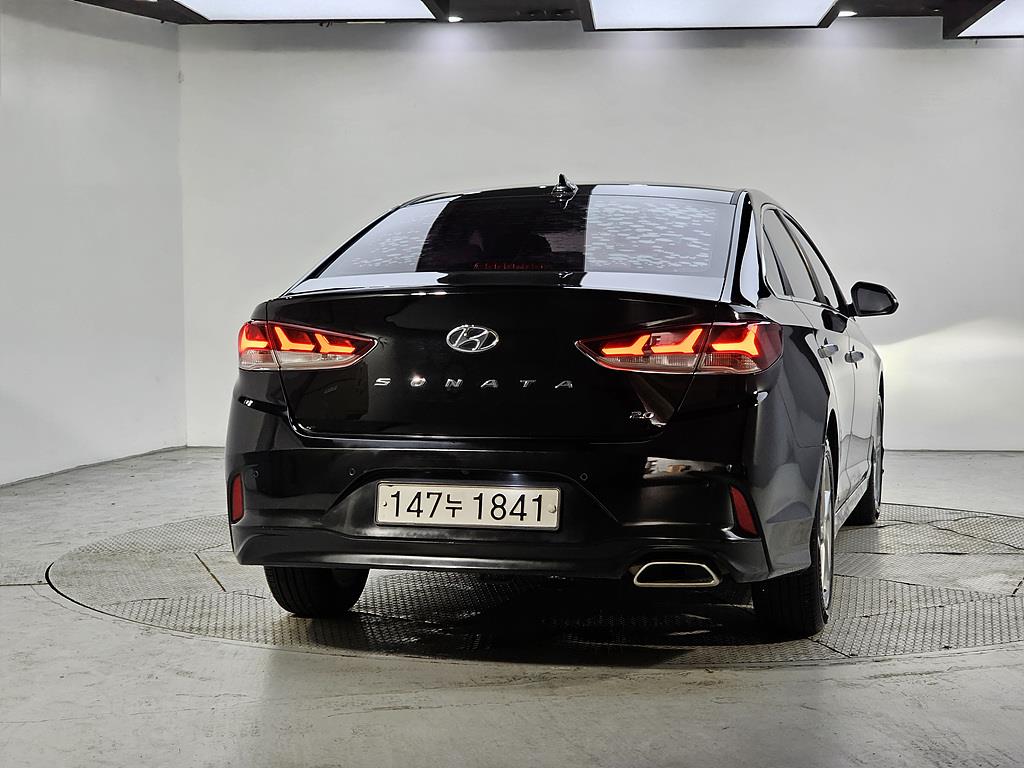
Busan → Tema Port (Ghana)
- Sea freight (RoRo, Hyundai Glovis Shipping or EUKOR Car Carriers): approx. USD 950–1,100 per unit at June 2026 rates, 28–32 day transit
- Ghana Customs: Import Duty 20% + ECOWAS Levy 0.5% + EXIM Levy 0.5% + VAT 15% on CIF value. On a Carnival with CIF value of USD 15,000, expect total import charges of approx. USD 5,400–5,800.
- CEPS examination fee (UNIPASS system): USD 80–120 depending on whether the unit triggers a physical examination flag.
- Total landed (excluding port demurrage if delayed): USD 21,000–22,000 for a Grade A, 2019 CRDi unit
Busan → Apapa Port (Nigeria)
- Sea freight (same carriers): approx. USD 1,050–1,200 (Apapa carries a slight surcharge due to port congestion surcharges)
- Nigeria Customs: 35% Import Duty on CIF value + 7.5% VAT + 1% Customs Processing Fee. On the same USD 15,000 CIF unit: approx. USD 6,500–7,200 in duties.
- PAAR processing via NICIS II platform: Allow 5–10 business days. Units without a pre-arrival PAAR frequently incur demurrage at Apapa — currently running $90–150/day after 5 free days.
- SONCAP certificate required for electrical systems (headlights, taillights, wiring harness).
- Total landed: USD 22,500–24,000 — roughly 8–12% higher than Tema for equivalent units.
The Tema route is lower total cost for the same unit; the Apapa route offers a larger end-market but carries more port friction.
For fleet operators building a mixed corridor, splitting sourcing — routing smaller, faster deals through Tema and bulk shipments to Apapa — is a pattern used by at least two West African fleet firms currently active on SK AutoSphere’s platform.
AI Condition Reports vs. Auction Grade Sheets: The Gap That Costs Fleet Buyers Money
A GLOVIS grade sheet gives you a damage map drawn by a human inspector in under 4 minutes. It is accurate for visible macro damage. It is not designed to catch:
- Paint delamination on plastic body panels (common on lease-return Carnivals driven in coastal areas of Busan where salt air accelerates UV degradation)
- Micro-cracks in the front windscreen caused by stone chips at highway speed (technically a “C” code but often missed if the inspector is processing 200+ units in a day)
- Wear patterns on the powered sliding door mechanism that predict failure within 20,000 km
Vision AI condition analysis — the kind built into SK AutoSphere’s inspection workflow — can surface the first two from multi-angle photography submitted at point of export.
The third requires in-person mechanical inspection, which is why SK AutoSphere’s pre-shipment process includes a dedicated mechanical inspection step at the Incheon staging facility before any unit clears for RoRo loading.
The practical impact: a fleet operator who sources purely on auction grade and skips the AI-assisted condition review is accepting a hidden defect rate that, for Carnivals specifically, runs at roughly 15–18% of grade-B units in the YP generation (based on inspection logs from units processed through SK AutoSphere’s Incheon staging facility in Q1–Q2 2026).
What to Ask Your Korean Sourcing Agent Before the Bid
- 차량등록원부 (vehicle registration history) — confirms province of registration (salt-road exposure risk), number of previous owners, and any lien history
- 정비이력 조회 (maintenance record lookup) — available via Korea’s CarHistory (carhistory.or.kr) for a fee of KRW 1,000 per vehicle
- GLOVIS inspection certificate (차량진단서) — the 2-page document issued for fleet-return lots; not issued for all general auction units
- Confirm engine variant — CRDi (diesel) vs. LPLi (LPG, common in Korean taxi fleets) vs. 3.3L petrol. LPG units are cheaper at auction but require LPG fuel availability at your African destination and cannot use standard diesel servicing networks.
If your agent cannot provide items 1 and 3 before the bid, that is a sourcing risk, not a paperwork inconvenience.
Bottom Line for Fleet Operators
The 2018–2021 Kia Carnival CRDi 11-seat, sourced at Grade A or B (with code review), represents one of the strongest value-per-seat options currently available from Korean auctions for West African fleet use. GLOVIS Thursday fleet lots are the best sourcing venue for volume.
Total landed cost to Tema runs USD 21,000–22,000; to Apapa, USD 22,500–24,000. The gap between a good buy and a maintenance liability lives in the damage map codes and the pre-shipment inspection — not the auction grade letter.
Fleet operators working with SK AutoSphere can view available Carnival inventory with AI-verified condition reports and estimated landed cost calculations before committing to a purchase.
Sources: the manufacturer-run auction lanes), Ghana CEPS duty schedule (UNIPASS 2025), Nigeria Customs NCS import duty tables (2025), Innoson Vehicle Manufacturing parts availability survey, AutoJosh fleet survey (2022), SK AutoSphere pre-shipment inspection logs Q1–Q2 2026.
Sourcing Korean stock for your next container? Tell us the destination port, the model year you are targeting and the spec, and we come back with matched units and a landed figure per unit. Start at SK AutoSphere, or browse the parts catalogue.